
The Digital Revolution Begins
Imagine you are painting a portrait on a canvas using only brushes and oil. Suddenly, someone hands you a magic wand that allows you to change the colors of your paint after the portrait is already finished. This shift from physical tools to flexible digital systems changed everything for movie makers in the eighties. Filmmakers began to see that the old way of building physical sets was no longer the only path to creating a believable world on screen. The arrival of early computers allowed artists to manipulate images in ways that were previously impossible to achieve with traditional film cameras.
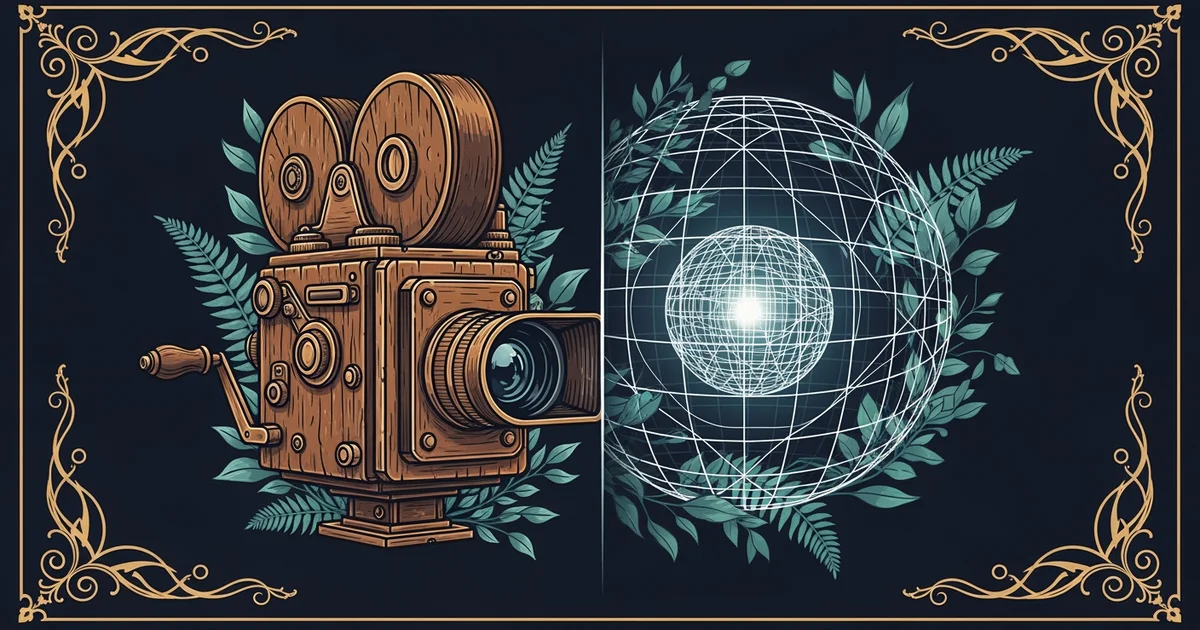
The Shift to Digital Processing
Before digital tools arrived, every special effect required a physical object or a clever camera trick. Artists spent weeks building miniature models or painting large backdrops to trick the eye of the viewer. When computers entered the scene, they introduced Computer Generated Imagery, often called CGI, which allowed for the creation of visuals from mathematical data. Think of this like moving from a typewriter to a modern word processor where you can move entire paragraphs around without starting over. This new flexibility meant that artists could experiment with complex movements without needing to rebuild their physical sets every single time they made a small mistake.
Early digital integration was quite limited because computers lacked the massive power we have today. Artists had to work with simple shapes and wireframe models that looked nothing like the final product on screen. Despite these limitations, the ability to calculate light and shadow mathematically gave filmmakers a new level of control over their scenes. They could now blend real footage with digital elements, creating a seamless transition that felt grounded in reality. This was a slow process, but it laid the foundation for the complex digital worlds that define modern cinema today.
Understanding Digital Integration
To understand how these systems grew, we can look at the main ways early digital tools changed film production. These methods allowed for greater precision and efficiency in the visual arts:
- Digital Compositing allowed artists to layer different visual elements into a single frame with perfect alignment, ensuring that the background and the foreground appeared as one cohesive image.
- Wireframe Rendering provided a way to map out complex 3D objects using lines and vertices, giving animators a skeleton to work with before adding color or texture to the final scene.
- Pixel Manipulation enabled technicians to alter individual tiny dots of light on the screen, which gave them the power to remove unwanted artifacts or smooth out rough edges in the final output.
These advancements were not just about making things look better; they were about making the impossible look real. By moving from physical craft to digital data, the film industry gained the ability to iterate on ideas rapidly. A director could see a rough version of a scene, request a change, and have the artist adjust the data rather than rebuilding a physical model. This economic shift saved time and allowed for much bolder creative choices in storytelling. The transition was not overnight, but it changed the industry forever.
Key term: Digital Compositing — the process of combining visual elements from separate sources into single images to create the illusion that all those elements are parts of the same scene.
While the early tools were primitive by today's standards, they represented a massive leap in how artists approached storytelling. The reliance on physical props began to fade as digital tools became more reliable and easier to use. This evolution did not happen in a vacuum, as it required a new generation of artists to learn programming alongside traditional art techniques. The marriage of art and technology became the new standard for success in the competitive world of visual effects and photography.
The digital revolution began when artists replaced physical construction with mathematical data to gain total control over every pixel in a frame.
The next Station introduces the power of blue screen, which explains how digital tools interact with specific color ranges to isolate actors from their backgrounds.