
Checks and Balances
Imagine a high-stakes game where one player holds all the cards and makes every single rule. If that player decides to change the game mid-round to suit their needs, the other participants lose their ability to compete fairly. This scenario highlights why power must be split among different groups to ensure fairness for everyone involved. Without these limits, a single group could easily dominate the entire system and ignore the needs of the people they represent. Democratic societies prevent this disaster by using a framework known as checks and balances to distribute authority across separate branches.
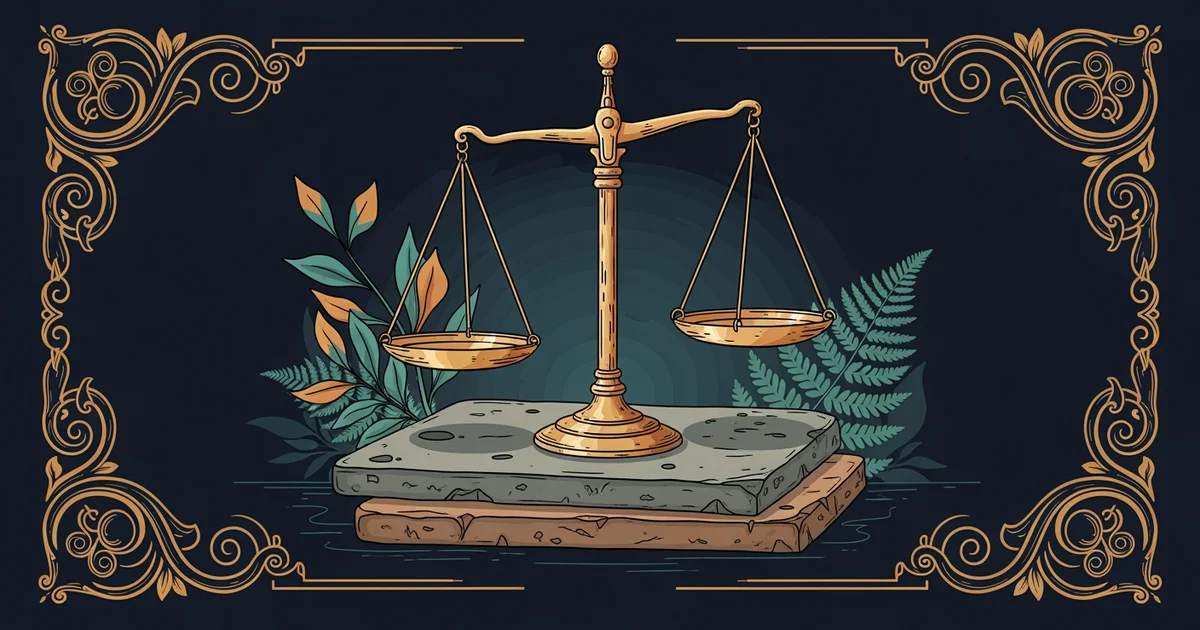
The Architecture of Distributed Power
When a government divides its duties into distinct branches, it creates a structure where each part monitors the others. This process prevents any one branch from becoming too powerful or ignoring the laws that govern the nation. You can think of this like a household budget where one person earns the money, another person approves the spending, and a third person checks the receipts for accuracy. If the person spending the money decides to buy a luxury car without permission, the person checking the receipts steps in to stop the transaction immediately. This interaction ensures that no single person controls the entire process from start to finish without oversight.
Key term: Checks and balances — the system of overlapping powers in a government that allows each branch to limit the actions of the others.
This distribution of authority typically involves three primary branches: the legislative, the executive, and the judicial. Each branch possesses specific tools that allow it to challenge the actions of its peers when necessary. If the legislative branch passes a law that violates the constitution, the judicial branch can declare that law invalid to protect the rights of citizens. Similarly, the executive branch might hold the power to veto legislation, forcing the lawmakers to reconsider their decisions or find a compromise. This constant cycle of interaction creates a stable environment where decisions require broad support rather than unilateral control.
Mechanisms for Preventing Authority Abuse
Beyond the basic division of labor, specific mechanisms exist to ensure that these branches actually hold each other accountable during daily operations. These tools serve as safety valves that activate whenever one branch attempts to overstep its defined constitutional boundaries. The following list details how these branches interact to maintain a healthy balance of power throughout the political system:
- The executive branch holds the power to veto bills passed by the legislature, which forces lawmakers to achieve a larger majority to override that specific decision.
- The legislative branch maintains control over the national budget, ensuring they can restrict the funding of projects that they believe are against public interest.
- The judicial branch exercises the power of judicial review, which allows them to examine and strike down government actions that conflict with established laws.
- The legislative branch can impeach officials from other branches, providing a formal process to remove individuals who abuse their power or violate their oath of office.
These mechanisms function like a series of interconnected gears in a clock, where the movement of one gear directly influences the speed and direction of the others. If one gear attempts to spin too fast or move in the wrong direction, the surrounding gears provide resistance that forces it back into alignment. This constant tension is not a sign of a broken system, but rather a sign that the system is working exactly as intended. By requiring cooperation and mutual consent, the government ensures that no single group can force its will upon the rest of society without debate. This structure protects the long-term stability of the nation by forcing leaders to consider multiple viewpoints before they enact any significant changes to existing laws.
| Mechanism | Branch Initiating | Branch Affected | Primary Purpose |
|---|---|---|---|
| Veto | Executive | Legislative | Stop bad bills |
| Budgeting | Legislative | Executive | Control spending |
| Review | Judicial | Legislative | Ensure legality |
This table illustrates how different branches exert influence over one another to maintain equilibrium. When these mechanisms function correctly, the government remains responsive to the needs of the people while avoiding the dangers of concentrated power. The goal is to create a process where every decision is vetted and approved by multiple independent groups before it becomes a reality. This slow and steady approach to governance may seem inefficient at times, but it provides the essential protection needed to preserve democratic integrity for future generations.
The system of checks and balances ensures that power remains dispersed by forcing branches of government to cooperate and monitor one another constantly.
But what does it look like in practice when political parties begin to dominate these separate branches?
Want this with sources you can check?
Premium Learning Paths for Political Science & Sociology are researched against open-access libraries — PubMed, arXiv, government databases, and more — with their distinctive claims cited to real sources and independently checked.
See what Premium includes