
Utility Systems Design
Imagine turning a kitchen faucet and expecting clean water, only to find the pipes are completely dry. This simple frustration highlights how our daily lives rely on complex, hidden networks that deliver essential resources to every single home.
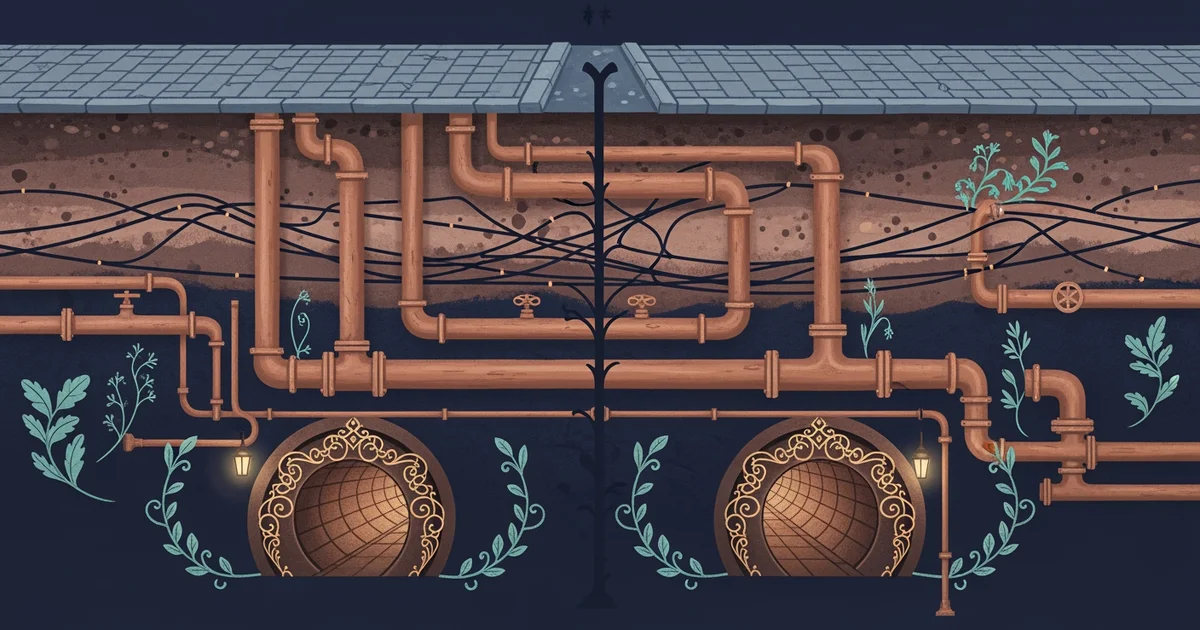
The Anatomy of Urban Utility Networks
Modern cities depend on utility systems to function, acting as the invisible circulatory system of our built environment. Just as your body requires a steady flow of blood to deliver oxygen and remove waste, a city needs a constant supply of energy and water to survive. These systems are not merely pipes and wires buried under the pavement; they represent a massive, coordinated effort to maintain public health and safety. Without these systems, high-density living would be impossible because we could not provide clean water or remove sewage efficiently. The design of these networks reflects our collective choices about how we prioritize resources and manage the growth of our communities over many decades.
Key term: Utility systems — the interconnected infrastructure networks that deliver essential services like water, electricity, and waste management to buildings.
Think of these utility networks like the complex plumbing in a large apartment building where every unit connects to a main line. If the main line develops a leak or gets clogged, the individual units lose their connection to the source regardless of how well their internal pipes work. This analogy illustrates why city planners must design these systems with redundancy and capacity in mind. A city cannot simply add more houses without upgrading the primary utility lines, because the existing capacity would eventually fail under the increased demand. Good design balances the immediate needs of current residents with the long-term requirements of a growing population to ensure stability.
Essential Services for Housing
To keep a residential area functional and safe, city engineers must integrate three specific services into the development process. These services form the backbone of modern housing standards and define the quality of life for all inhabitants. Each service requires its own unique delivery method and maintenance schedule to prevent system-wide failures.
- Potable water supply delivers clean, treated water through pressurized mains to ensure every household has access to safe drinking and cooking resources.
- Sanitary sewage disposal carries away liquid waste through gravity-fed pipes to processing plants where it is cleaned before returning to the environment.
- Electrical power distribution manages the flow of high-voltage energy through transformers that step down power for safe use in homes and appliances.
These three services must be carefully mapped out during the initial planning stages to avoid conflicts with other infrastructure like roads or transit lines. If a water main breaks because it was placed too close to a subway tunnel, the entire neighborhood suffers a service interruption. Engineers use detailed utility maps to coordinate these layers, ensuring that repairs can happen without disrupting other vital services. This level of coordination is the hallmark of a well-designed city that prioritizes the long-term wellbeing of its residents over short-term construction costs.
Balancing Capacity and Demand
As cities grow, the pressure on these systems increases significantly, requiring constant monitoring and periodic upgrades to prevent system bottlenecks. Planners must forecast population growth to ensure that power grids and water treatment plants do not reach their breaking point during peak usage times. This requires a deep understanding of both human behavior and physical engineering limits. When we design for the future, we are essentially building the foundation for the next generation of urban life. By investing in resilient and flexible utility networks today, we ensure that our cities remain habitable and efficient for everyone who calls them home.
The physical layout of utility systems determines the long-term reliability and health of our urban environments by managing the flow of vital resources.
The next Station introduces public space philosophy, which determines how we design the areas that connect these essential utility systems.