
Future Geophysical Challenges
Deep beneath our feet, the planet hides secrets that current sensors cannot fully reach or interpret. Scientists struggle to map the core because the materials exist under pressures that defy our current laboratory limits. We possess data from seismic waves, but interpreting these signals requires better models than we currently have. Future geophysical study must bridge this gap to understand how our planet maintains its magnetic shield against solar winds. This challenge represents the next frontier in planetary science and fundamental physics.
Advancing Deep Earth Imaging
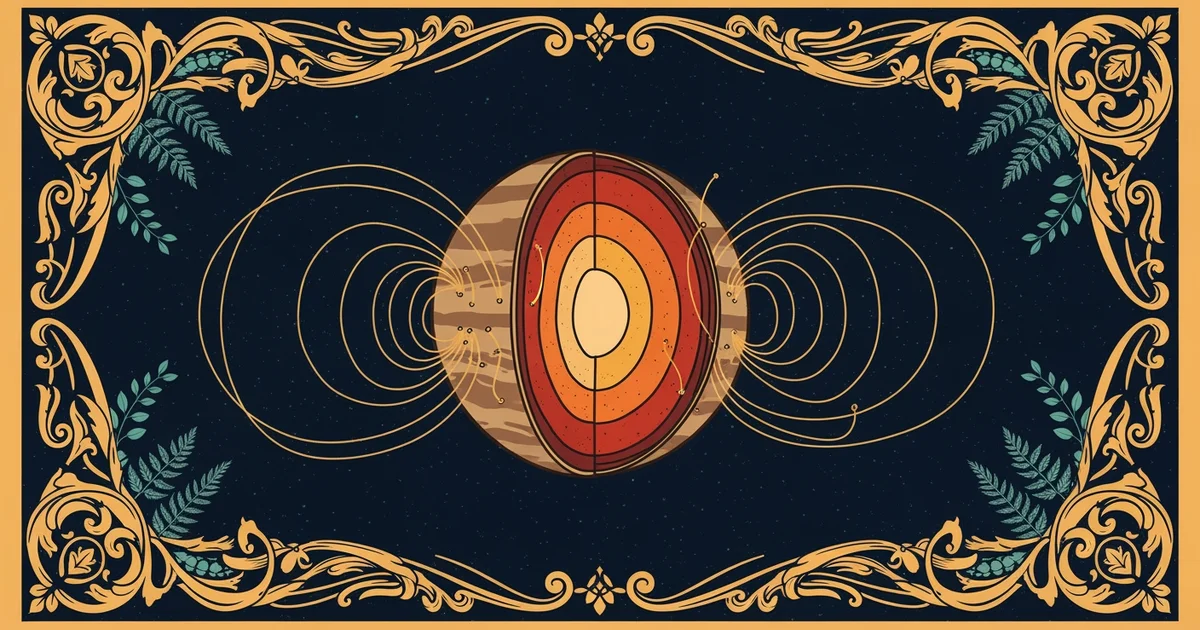
Mapping the interior of the Earth requires tools that can interpret complex seismic waves as they travel through varying densities. Current methods provide a blurry image, much like trying to identify objects in a dark room using only echoes. We need higher resolution sensors to detect the subtle shifts in the outer core that drive global magnetic changes. These shifts happen over decades, making them difficult to track with our limited historical records. By deploying arrays of sensors across the ocean floor, we can capture data that remains hidden from land-based stations. This expansion of our sensor network will allow for a more precise view of the convection currents within the mantle.
Key term: Geodynamic Modeling — the use of computer simulations to represent the physical forces and material flows occurring within the Earth's interior.
Improving these models involves processing massive amounts of data to simulate how heat moves from the core to the surface. We must integrate our knowledge of Global Climate Feedback Loops with these deep Earth processes to see the full picture. The interaction between the liquid outer core and the solid mantle creates the magnetic field that protects our atmosphere. If we can predict how this field changes, we might better understand long-term climate cycles. Understanding these deep processes is like managing a complex global supply chain where a small delay at the source impacts every downstream delivery.
Future Frontiers in Planetary Physics
Researchers now face the task of integrating quantum mechanics into our understanding of planetary interiors at extreme pressure levels. We need to know how atoms behave when squeezed into states that do not exist on the surface. This research will require new materials that can withstand the intense heat of a simulated core environment. Several key areas will define the next decade of geophysical research:
- Neutrino Tomography uses subatomic particles to map the density of the Earth's core without needing traditional seismic sources — this method offers a cleaner signal than mechanical waves.
- Quantum Sensing allows for the detection of tiny changes in gravity that reveal the movement of magma beneath volcanoes — these sensors provide early warnings for catastrophic events.
- High-Pressure Mineralogy examines how rocks change their structure under conditions found deep in the Earth — this helps us predict how the crust might shift over time.
| Technology | Primary Function | Research Goal |
|---|---|---|
| Seismic Arrays | Wave tracking | Mapping mantle flow |
| Quantum Sensors | Gravity mapping | Detecting magma shifts |
| Neutrino Detectors | Density analysis | Imaging the core |
These tools will allow us to form better hypotheses about the stability of the planet over millions of years. We must move beyond simple observation to active prediction of how the Earth will evolve. By combining these technologies, we can finally answer how the invisible forces shape our world from the deep core to the crust. This synthesis of geology and quantum physics is the only way to secure our future understanding of the planet.
Future geophysical discovery relies on integrating subatomic sensing with planetary-scale models to predict the hidden forces that drive our world.
Geophysical science will continue to evolve as we develop the tools to see through the solid rock of our planet.