
Emergence Explained
Imagine a flock of birds moving in perfect harmony across the sky without a single leader. You might wonder how they avoid crashing into one another while changing directions so rapidly. This phenomenon is a perfect example of how individual parts work together to create complex group behaviors. When simple entities follow basic rules, they produce outcomes that no single member could ever achieve alone.
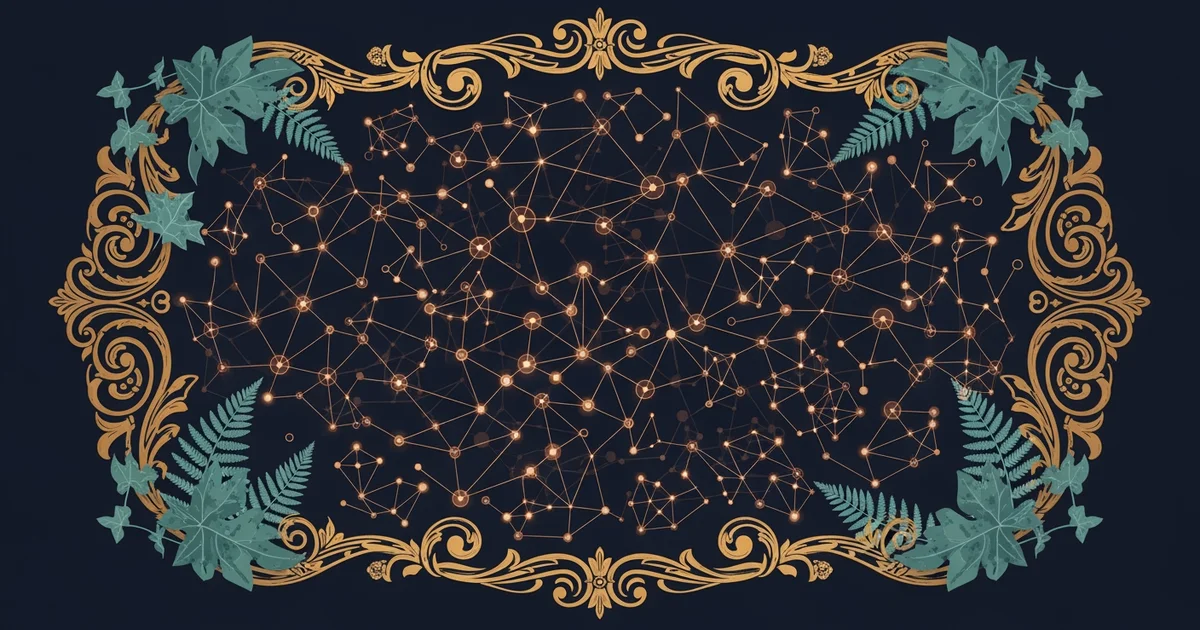
The Mechanics of Collective Behavior
To understand this process, we must look at emergence, which describes how complex systems arise from simple interactions. Think of a bustling city during the morning rush hour. Every person follows simple rules like walking on the right side of the path or stopping at red lights. No central authority tells every person exactly where to step to keep the flow moving smoothly. Instead, the overall pattern of the crowd emerges from these local interactions between neighbors. The system displays a form of intelligence that is not contained within any single individual.
Consider an analogy involving a large group of people at a stadium creating a wave. One person stands up and sits down, then the next person follows that simple action at the right time. The wave travels across the entire arena, yet the wave itself is not a physical object. It is a pattern that exists only because each person follows the movement of the person sitting next to them. If you look at one person in isolation, you see no wave. When you view the whole group, the complex behavior becomes clear and organized.
Key term: Emergence — the process where complex patterns arise from the collective interactions of many simple, independent parts.
This behavior relies on local information rather than global knowledge of the entire system. Each bird in a flock only cares about the position of its immediate neighbors. By maintaining a specific distance from those nearby, the entire flock moves as one fluid unit. This decentralized control allows the group to react much faster than any leader could command. The system remains flexible and robust because it does not depend on a single point of failure.
Rules for Simple Agents
When we examine these systems, we see that they rely on predictable local rules. These rules dictate how an individual interacts with its immediate environment or peers. While the rules are simple, the resulting behavior is often quite sophisticated and difficult to predict. Scientists use mathematical models to study these interactions, often representing agents as points in a field. The movement of these agents follows specific rules that can be expressed through simple equations.
| Rule Type | Description | Effect on Group |
|---|---|---|
| Separation | Avoid crowding neighbors | Prevents collisions |
| Alignment | Match velocity to neighbors | Creates uniform flow |
| Cohesion | Move toward average center | Keeps the group together |
These three rules allow agents to form coherent structures without needing a master plan. If an agent follows these rules, the group naturally organizes itself into a cohesive unit. This structure persists even when members leave or join the group at random times. The beauty of this system lies in its ability to adapt to changes without external input. Such systems demonstrate that intelligence does not always require a brain or a central command unit to function effectively.
By following these rules, the group achieves a level of coordination that seems intentional, yet it is entirely automatic. The complexity we observe in nature, such as ant colonies or schools of fish, stems from these basic interactions. We see that the whole is truly greater than the sum of its parts. Understanding this concept helps us explain how life organizes itself across many different scales of existence.
Complex group behaviors arise automatically when individual parts follow simple local rules rather than a central plan.
The next Station introduces feedback loops, which determine how these local interactions influence the future state of the system.