
The Electric Spark of Life
Imagine you are holding a tiny, invisible battery that powers every single movement you make. You do not need to plug your body into a wall to recharge after waking up. Your cells hold a hidden charge that keeps your heart beating and your brain thinking. This internal energy allows you to react to the world around you every second. You are essentially a living, breathing machine that runs on tiny pulses of electricity.
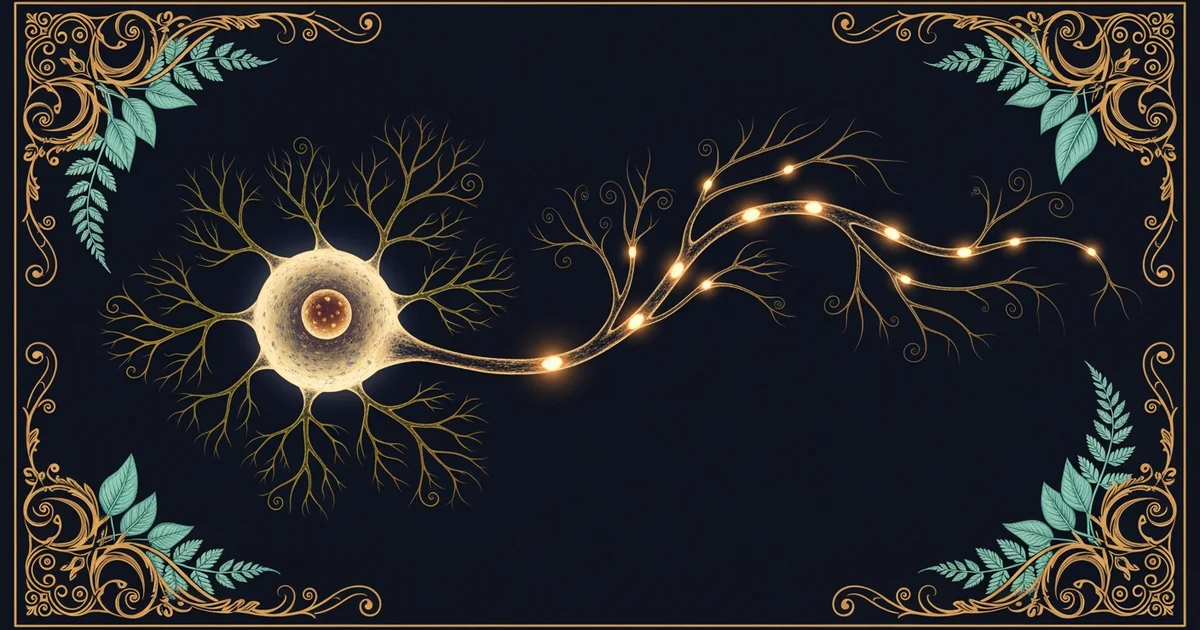
How Your Cells Function Like Tiny Batteries
Every cell in your body acts like a small, biological power plant that stores potential energy. This storage happens because of an uneven distribution of charged particles called ions across the cell membrane. Think of this like a water dam that holds back a massive lake behind a concrete wall. The water wants to flow downward to reach a lower point, just as ions want to cross the membrane. When the cell opens tiny gates, these ions rush through to balance the charge on both sides. This movement creates a brief pulse of energy that the body uses to send vital signals.
Key term: Bioelectromagnetism — the study of how living organisms produce and respond to electrical fields and currents.
This process is the foundation for how your nerves talk to your muscles during exercise. When you decide to lift your arm, your brain sends a rapid electrical signal down your spine. This signal acts like a command that tells your muscle cells to open their ion gates. The sudden rush of charged particles triggers a contraction that physically moves your arm in space. Without this constant flow of ions, your muscles would remain completely still and unable to perform any task.
The Role of Charged Particles in Biology
Your body relies on specific elements to maintain this electrical balance throughout your entire life. These elements exist as ions, which are atoms that carry either a positive or negative electrical charge. The most important ions for your survival include sodium, potassium, and calcium particles found in your blood. These ions move in and out of cells to create the voltage needed for your nervous system. The following list explains how these specific ions contribute to the overall health of your body:
- Sodium ions stay mostly outside the cell to create a high-pressure zone for signals.
- Potassium ions sit inside the cell and help reset the charge after a signal passes.
- Calcium ions act as messengers that bridge the gap between nerve cells and muscle fibers.
These ions ensure that the electrical signals arrive at the right place at the right time. If the concentration of these ions becomes unbalanced, your body struggles to send clear, accurate messages. You might feel weak or sluggish because your internal batteries cannot reach their full power potential. Maintaining the right balance of these minerals through food and water is essential for your survival. Your body constantly monitors these levels to keep your internal electrical systems running at top efficiency.
| Ion Type | Primary Location | Function in the Body | Effect of Imbalance |
|---|---|---|---|
| Sodium | Outside cell | Starts the signal | High blood pressure |
| Potassium | Inside cell | Resets the signal | Muscle weakness |
| Calcium | Cell channels | Triggers movement | Nerve instability |
This table shows how different ions work together to maintain a stable environment for your cells. Each ion has a specific job that prevents your biological circuits from shorting out during activity. When these ions move through the membrane, they create a measurable voltage difference across the cell wall. Scientists measure this difference to understand how healthy your nerves and muscles are at any time. By studying these tiny movements, researchers can learn how to treat injuries or improve human physical performance. You are learning the fundamental principles that allow your body to function as an integrated electrical system.
The complex coordination of charged ions across cell membranes creates the electrical currents that power your thoughts and physical movements.
By the end of this path, you will understand how these internal currents interact with the world to shape your entire human experience.