
Eco-Utopian Visions
When the city of Copenhagen decided to prioritize bicycles over cars in the 1970s, they fundamentally reshaped how citizens interact with their urban environment. This shift serves as a practical example of Eco-Utopianism, which is the belief that social harmony arises from living in balance with our natural surroundings. This is a direct application of the sustainability goals discussed in Station 10, showing how physical design shapes human behavior. By choosing to reduce carbon output through infrastructure, the city proved that environmental health and personal freedom are not mutually exclusive goals for modern societies.
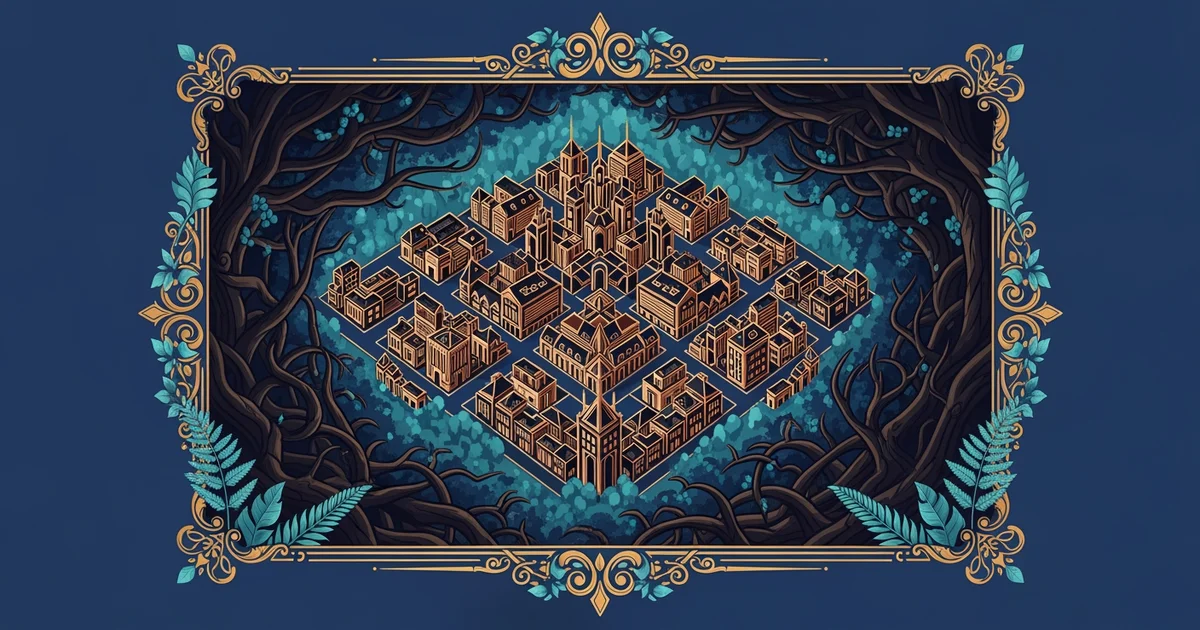
Designing Sustainable Social Growth
Creating a society that thrives within planetary limits requires a shift in how we value growth. Many traditional models view nature as a resource to be consumed, but eco-utopian visions treat the environment as a partner that sustains all economic activity. Think of this like a household budget where you only spend what you earn, rather than relying on credit that you cannot pay back. If a society burns through its natural resources faster than they can replenish, it eventually faces a bankruptcy of the environment. This economic analogy highlights why sustainable growth must prioritize long-term stability over the short-term gains that often define current industrial models.
To achieve these goals, planners often look toward decentralized systems that distribute power and resources more evenly across a population. Centralized systems often create large environmental footprints because they require massive transportation networks and heavy energy use. By contrast, localizing production reduces the need for long-distance shipping and encourages residents to take direct responsibility for their own food and energy needs. This transition requires a move away from mass-production habits toward community-based solutions that foster local resilience. When people see the direct impact of their choices on their immediate area, they are more likely to protect the resources they use every day.
| Strategy | Primary Benefit | Potential Challenge |
|---|---|---|
| Urban Gardening | Local food access | Limited land space |
| Renewable Grids | Energy autonomy | Initial high costs |
| Circular Design | Waste reduction | Complex supply chains |
The Role of Technological Integration
Technological progress in an eco-utopian vision does not mean abandoning machines, but rather redesigning them to work within natural cycles. True innovation focuses on efficiency and the complete elimination of waste, ensuring that every byproduct of one process becomes the raw material for another. This approach, often called circular design, mirrors the way a forest floor functions where fallen leaves provide nutrients for new growth. When we build systems that mimic these natural loops, we stop viewing waste as a problem and start seeing it as a design flaw that we can easily fix.
Societies that adopt these methods must also balance the desire for high-tech convenience with the need for low-impact living. Technology should act as a tool to monitor resource use and optimize distribution, rather than a way to isolate humans from the natural world. This balance ensures that our pursuit of comfort does not lead to the environmental degradation seen in the dystopian models we explored in the previous station. By integrating smart sensors with traditional conservation practices, communities can maintain a high standard of living while keeping their ecological footprint within safe and sustainable boundaries.
Key term: Circular Design — an industrial model where waste is eliminated by ensuring that the outputs of one process serve as the inputs for another.
Ultimately, the success of these visions depends on the ability of citizens to prioritize collective health over individual convenience. If everyone acts only for their own immediate benefit, the shared environment suffers and the system eventually collapses under the weight of its own consumption. Building a sustainable future is not just about new technologies, but about changing the social contract to include the natural world as a stakeholder in our daily decisions. This requires a shift in mindset that values the preservation of resources as much as the creation of wealth.
True eco-utopian success depends on balancing human innovation with the natural cycles that sustain all life on Earth.
But this vision faces massive resistance when it clashes with existing economic systems that rely on constant consumption.