
Neural Synchronization
When you tap your foot to a song, your brain is doing much more than just keeping simple time. Your neural networks are actually aligning their electrical firing patterns with the rhythmic pulses of the music you hear. This remarkable process allows your internal biological clock to match the external beat of a drum or a melody. By syncing these frequencies, your brain creates a shared rhythm that bridges your internal state and the external environment.
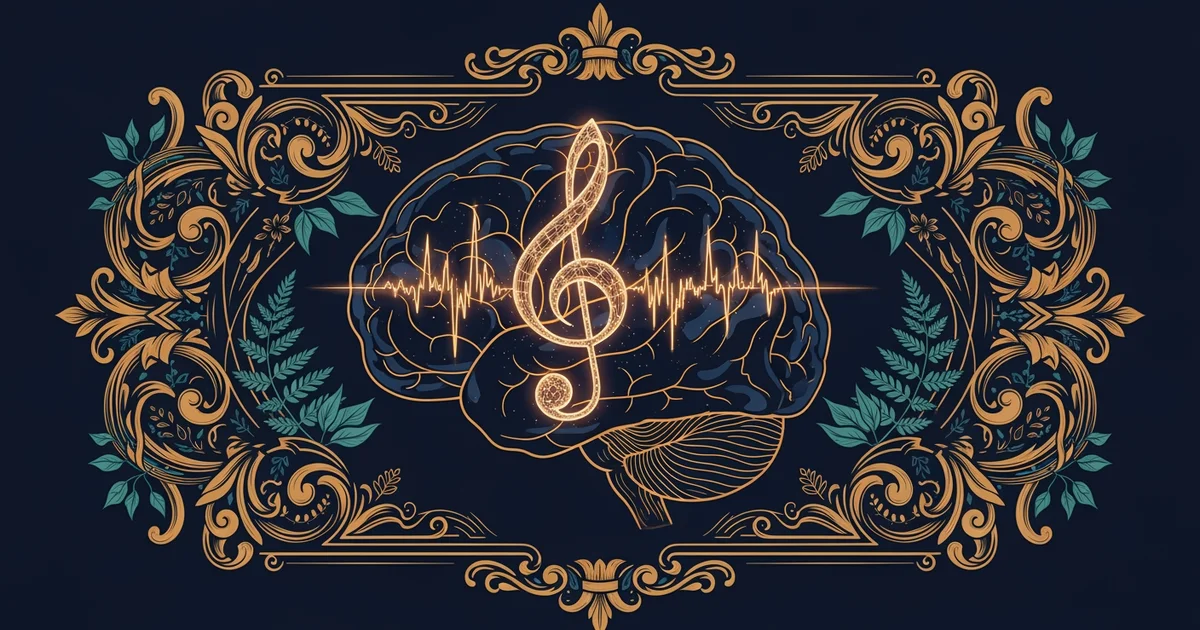
The Mechanics of Neural Entrainment
This process is known as neural synchronization, which describes how groups of neurons fire in unison to match an external stimulus. Think of this like a crowd of people at a concert who all start clapping at the exact same moment. Even though each person has their own pace, the music forces everyone to align their movements into one unified rhythm. In your brain, the auditory cortex receives sound waves and converts them into electrical signals that pulse at specific rates. When these signals repeat at a steady tempo, your brain waves begin to oscillate in harmony with that beat. This alignment makes it easier for your mind to predict when the next note will arrive, which helps you process complex musical sequences with very little effort.
Key term: Entrainment — the natural tendency of biological rhythms to align and lock into the pace of an external periodic signal.
This process of entrainment is essential for how we perceive time and structure in music. Without this ability to lock onto a beat, music would sound like a chaotic collection of random noises rather than a coherent experience. Your brain uses these synchronized oscillations to highlight the most important parts of the sound, such as the downbeat or a recurring melodic hook. By focusing its resources on these predicted moments, the brain saves energy while maintaining a high level of engagement with the music. This efficiency explains why we feel such a strong physical urge to move or dance when we hear a steady, driving rhythm.
Brain Waves and Musical Beats
Different types of brain waves reflect how your mind processes this constant stream of rhythmic information. When you listen to music, your brain often shifts its activity into frequencies that match the tempo of the song. If the music is fast and energetic, your neural activity increases to match that intensity, which can make you feel more alert and focused. Conversely, slower and more melodic music encourages your brain to settle into a relaxed state of synchronization. This dynamic relationship means that music acts as a tool for managing your internal state, allowing you to shift from a high-energy mood to a calm one by simply changing the rhythm you hear.
| Brain Wave Type | Frequency Range | Typical Mental State | Musical Influence |
|---|---|---|---|
| Beta | 13-30 Hz | Alert and focused | Fast, complex beats |
| Alpha | 8-12 Hz | Relaxed and calm | Steady, soft tempos |
| Theta | 4-8 Hz | Deeply meditative | Slow, ambient sound |
This table shows how your brain activity fluctuates based on the rhythmic input it receives from your environment. Music essentially provides a scaffold for your neural activity, guiding your brain to maintain specific states through the power of synchronization. By understanding these mechanics, you can see why certain songs help you study while others are better suited for physical exercise or rest. The brain does not just hear the music; it actively joins in the performance by mirroring the rhythmic structure within its own electrical architecture.
Neural synchronization allows the brain to process complex auditory information by aligning internal electrical oscillations with the rhythmic structure of music.
But what does this alignment process look like when the brain begins to store these musical memories for the long term?
Want this with sources you can check?
Premium Learning Paths for Music & Performing Arts are researched against open-access libraries — PubMed, arXiv, government databases, and more — with their distinctive claims cited to real sources and independently checked.
See what Premium includes