
The Skeletal Framework
Imagine a skyscraper that can move, repair itself, and adapt to heavy stress every single day. Your bones act as the steel beams of this living structure, providing the essential support needed to keep you upright and functional.
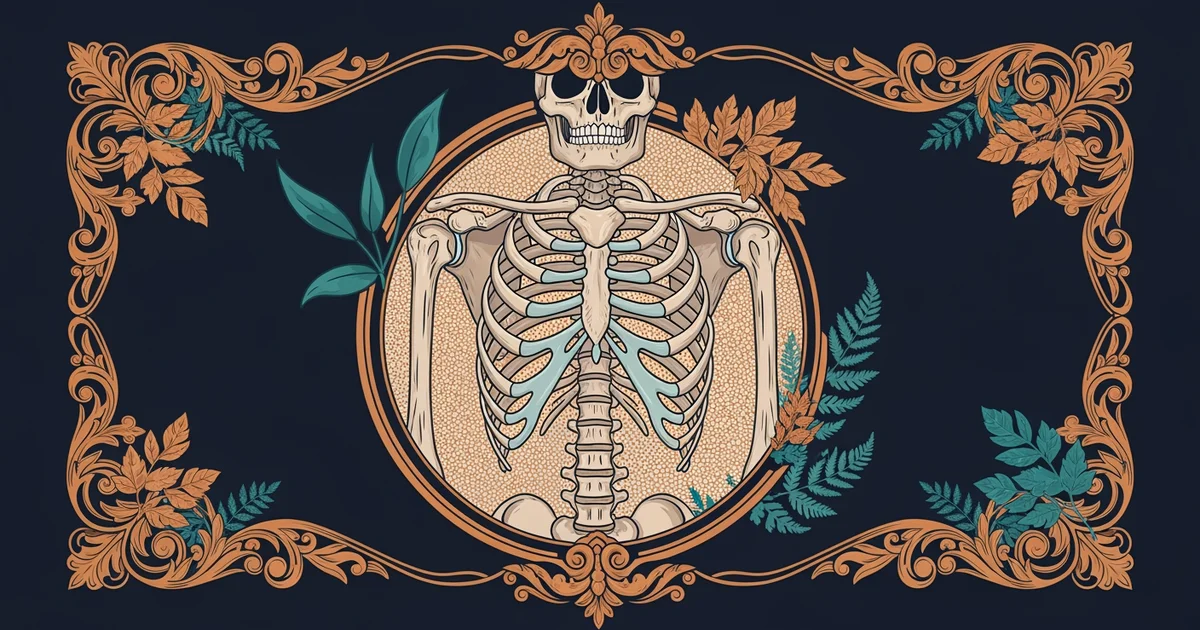
The Architecture of the Human Skeleton
Because the human body faces constant gravity, it requires a rigid internal framework to maintain its shape. This skeletal system functions like the structural steel of a building, offering a stable anchor for muscles and protecting delicate internal organs. Without this framework, the human body would collapse into a shapeless mass of tissue unable to perform any complex tasks. Scientists categorize the skeleton into two distinct sections that serve different roles in movement and protection. These sections work together to ensure that the body stays strong while remaining flexible enough for daily activities. By organizing the bones into these specific groups, the body can distribute weight efficiently and protect vital systems like the heart and brain.
Key term: Skeletal system — the complex internal framework of bones and cartilage that provides structure, supports movement, and protects vital organs.
To understand how these bones function, consider a large construction project involving a central tower and several movable cranes. The central tower represents the core, while the cranes represent the limbs that extend outward to perform specific labor. This analogy helps clarify why the body needs a rigid center and flexible extremities to interact with the world. The central part of the body, known as the axial skeleton, forms the main axis that supports the head, neck, and torso. The outer parts, known as the appendicular skeleton, include the arms and legs that allow people to reach, grab, and move across surfaces.
Categorizing Skeletal Components
The axial and appendicular systems differ in their primary responsibilities throughout the human lifespan. The axial skeleton focuses on stability and protection, while the appendicular skeleton focuses on mobility and interaction with the environment.
| Component | Primary Function | Included Structures |
|---|---|---|
| Axial | Protection | Skull, spine, ribs |
| Appendicular | Mobility | Arms, legs, girdles |
Understanding these categories helps explain how the body maintains its balance while moving through space. The axial bones create a safe shell for the brain and lungs, which are essential for survival. Conversely, the appendicular bones provide the levers necessary for walking, lifting, and grasping objects. These two systems must coordinate perfectly to ensure that the body remains both stable and mobile during physical exertion.
Researchers identify several key differences between these two systems that influence how they function during daily life:
- The axial skeleton consists of eighty bones that protect the central nervous system and the primary organs of the chest cavity.
- The appendicular skeleton consists of one hundred and twenty-six bones that form the limbs and the girdles attaching them to the trunk.
- The axial framework provides the rigid foundation required for posture, while the appendicular framework allows for the wide range of motion needed for human tasks.
By splitting the workload in this manner, the body ensures that the most critical organs remain shielded while the limbs remain free to explore. This division of labor represents an efficient biological design that has evolved to meet the demands of a dynamic environment. Every bone in both systems contributes to the overall integrity of the human structure, allowing for complex movements and long-term durability. The next Station introduces muscular movement patterns, which determines how the skeletal framework interacts with soft tissue to generate force.
The human skeletal system functions as a dual-purpose framework that balances the need for rigid internal protection with the requirement for flexible external movement.
The next Station introduces muscular movement patterns, which determines how the skeletal framework interacts with soft tissue to generate force.
This content is educational only and does not constitute medical advice. Always consult a qualified healthcare professional for personal health decisions.