
History of Genetic Discovery
Imagine you are trying to solve a massive, complex puzzle without knowing what the final picture looks like. Scientists faced this exact challenge for decades while they struggled to decode the hidden instructions inside every living cell. Early researchers knew that traits passed from parents to children, but they lacked the tools to see the physical molecules responsible for those patterns. This mystery drove early genetic discovery, turning biology into a search for the chemical language of life. Understanding how we moved from observing simple garden plants to mapping the entire human code helps explain why modern medicine is now shifting toward personalized care.
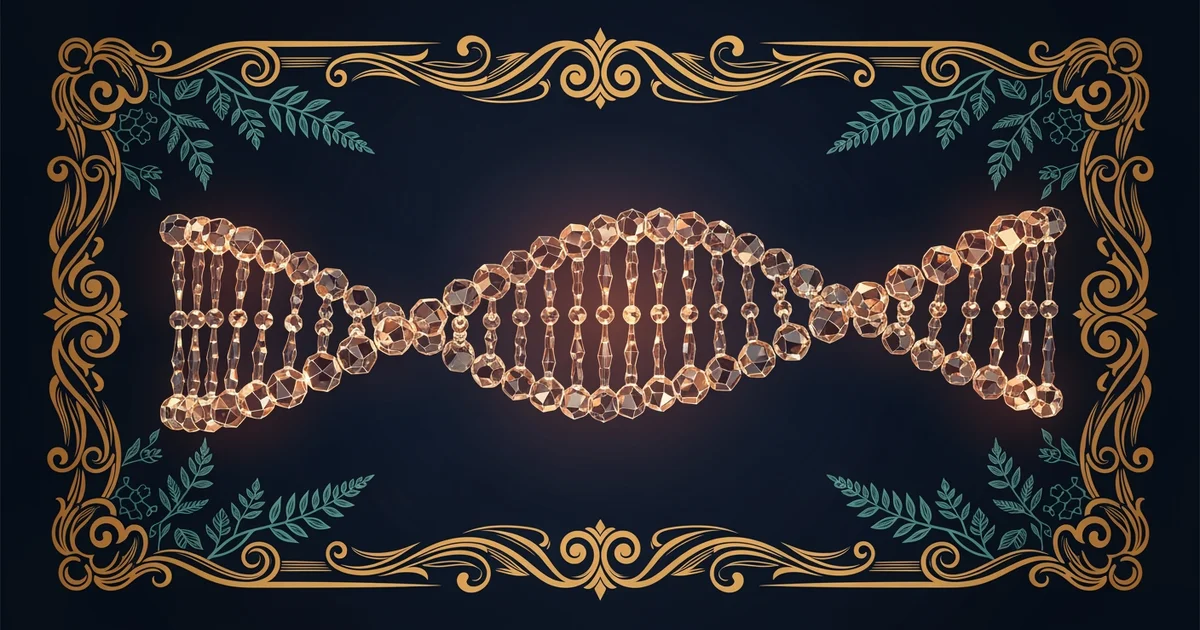
The Roots of Genetic Discovery
Before researchers could identify complex molecules, they had to understand how traits move through generations. Early studies used simple organisms to track how specific features appeared in offspring over time. This work established that biological information acts like a set of instructions, rather than a random mix of traits from parents. Think of this process like an investment portfolio where each asset represents a specific trait inherited from a previous generation. Just as an investor tracks how different stocks perform over time to predict future growth, these early scientists tracked physical traits to predict future patterns. They discovered that these instructions remain stable, allowing scientists to map out the basic rules of inheritance without needing to see the underlying chemical structure at all.
Key term: Genetics — the scientific study of how traits and biological instructions pass from parents to their offspring.
Once the basic rules of inheritance were clear, the focus shifted to finding the physical site of these instructions. Researchers began to isolate the cellular components that carry this vital information. They realized that the nucleus of a cell serves as the primary vault for this data. This discovery was a major turning point because it moved science away from abstract theories and toward concrete observation. By narrowing the search to the cell nucleus, scientists could finally start asking how that material was structured. This transition mirrors how a librarian organizes a massive archive by first identifying the correct room, then the specific shelf, and finally the exact book containing the required information.
Unlocking the Chemical Code
After locating the cell nucleus, the next challenge involved identifying the specific molecule that stores the data. Scientists conducted experiments to see which substances could carry complex, lasting information across many generations. They eventually identified a long, twisted molecule that serves as the universal blueprint for all living things. This molecule acts as an alphabet, using four chemical bases to write the instructions for every unique individual. This breakthrough changed the field forever, turning biology into a data-driven science. It allowed researchers to read the code directly, rather than just observing the physical results of those instructions.
| Discovery Stage | Focus Area | Primary Goal |
|---|---|---|
| Inheritance | Whole organism | Track trait patterns |
| Cellular | Cell nucleus | Find the storage site |
| Molecular | Chemical bases | Decode the instructions |
This table illustrates how the focus of genetic research narrowed over time. Each stage built upon the previous one to provide a clearer picture of human biology. By moving from the level of the organism to the level of the individual chemical base, scientists gained the power to predict health outcomes. This shift is essential for the future of medicine, as it allows doctors to treat the root cause of a condition rather than just the symptoms. Understanding this history reveals why we can now use DNA data to create tailored health plans for individuals.
The history of genetic discovery represents a transition from observing physical traits to decoding the chemical instructions that build every human being.
The next station will explore how this decoded information defines the modern field of genomic medicine.
This content is educational only and does not constitute medical advice. Always consult a qualified healthcare professional for personal health decisions.