
The Evolutionary Timeline
Imagine your body is a high-speed computer running software written millions of years ago. While your phone updates its operating system every few weeks, your biological hardware remains largely stuck in the Stone Age. This disconnect creates a massive tension between the environment we inhabit today and the environment our bodies were built to survive within. Evolution acts like a slow-moving glacier, while human culture moves like a lightning-fast bullet train. This mismatch explains why modern lifestyles often clash with our ancient, deep-seated survival instincts.
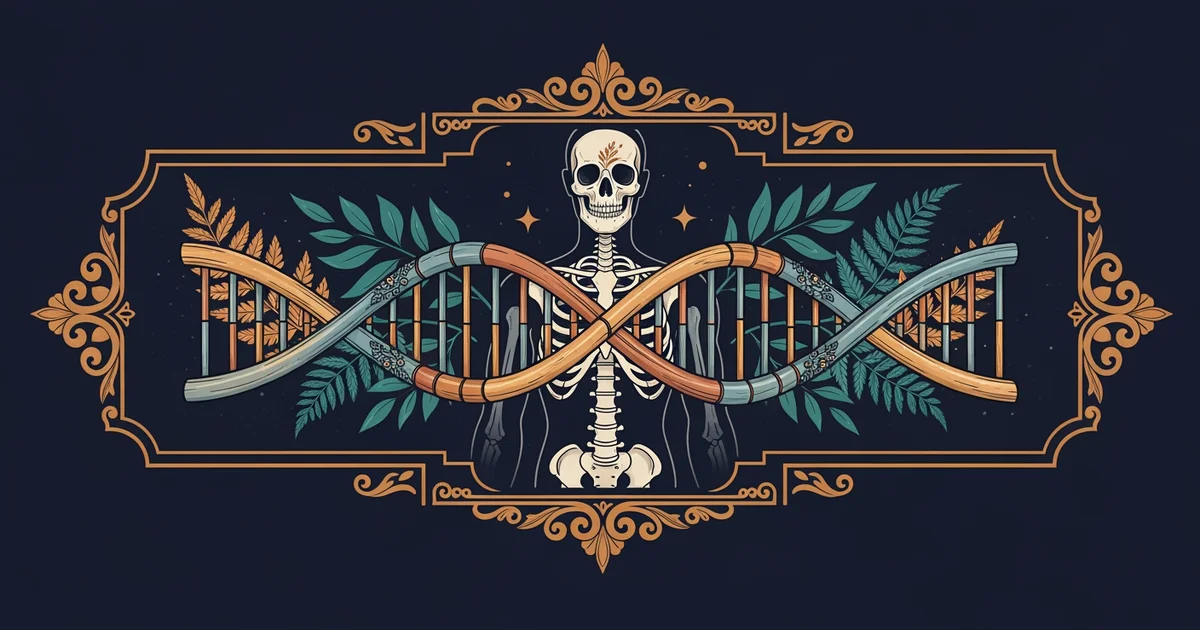
The Pace of Biological Change
Biological evolution requires vast amounts of time to alter the structure of our bodies. Changes occur through the slow process of genetic mutation and the gradual filtering of natural selection. If a specific trait provides a survival advantage, it takes thousands of generations to become common within a population. This glacial pace means that our basic human physiology has not changed significantly for over ten thousand years. We possess the same digestive systems and stress responses that helped our ancestors survive in wild, unpredictable landscapes. Because these systems were designed for scarcity, they often struggle to manage the abundance found in modern society.
Key term: Biological evolution — the slow process by which physical traits change across generations due to genetic variation and natural selection.
Cultural evolution, by contrast, operates on an incredibly rapid timescale compared to our slow genetic development. We invent new tools, change our diets, and alter our social structures within a single human lifetime. This creates a situation where our environment changes faster than our genes can possibly keep up. Think of it like trying to run modern, complex software on a computer built in the nineteen eighties. The hardware lacks the capacity to process the new data efficiently, leading to system crashes and performance errors. We are effectively living in a world that our bodies were never designed to navigate.
Cultural Shifts and Health Impacts
When we look at the timeline of human existence, the shift from hunter-gatherer lifestyles to modern urban living happened in a blink of an eye. For most of our history, individuals moved constantly to find food and avoid predators. Today, most people spend their days sitting in chairs while surrounded by constant access to high-calorie food. This drastic change in lifestyle creates a significant burden on our ancient internal systems. Our bodies still prioritize fat storage because our ancestors lived in a world where food was rare and hard to obtain.
| Feature | Ancestral Environment | Modern Environment | Impact on Health |
|---|---|---|---|
| Activity | High physical demand | Sedentary habits | Metabolic strain |
| Diet | Seasonal and sparse | Constant and dense | Chronic issues |
| Stress | Immediate physical | Long-term mental | Systemic fatigue |
This table highlights how our current reality forces our bodies to function in ways they were not optimized to handle. The following list outlines why this rapid cultural shift creates such a persistent health challenge for modern populations:
- Mismatch of expectations occurs because our genes expect physical exertion that we no longer perform in our daily office-based work routines.
- Nutritional confusion arises when the body encounters processed sugars that were never available to our ancestors during their long evolutionary history.
- Chronic stress activation happens because our fight-or-flight response triggers in response to emails or deadlines instead of actual physical predators.
By examining this timeline, we see that modern health issues are often side effects of our success as a species. We have changed our world so quickly that our biology remains trapped in a previous era. This gap between our ancient design and our current lifestyle is the primary reason for many modern health concerns. Understanding this timeline allows us to see our bodies with more patience and clarity.
Human health struggles today because our rapid cultural advancements have far outpaced the slow, steady speed of our biological evolution.
Next, we will explore how this specific gap leads to the development of modern chronic diseases.
This content is educational only and does not constitute medical advice. Always consult a qualified healthcare professional for personal health decisions.