
Generative Art Systems
Imagine a paintbrush that draws itself by following a secret set of logical instructions. Most artists start with a blank canvas and decide where every stroke should go manually. In the world of computer art, we instead design the rules that govern how the image appears. This shift turns the artist into a gardener who plants seeds of code to watch patterns grow. By defining these mathematical constraints, we can create visuals that no human could ever draw by hand. The beauty of this process lies in the tension between rigid logic and the unexpected results that emerge.
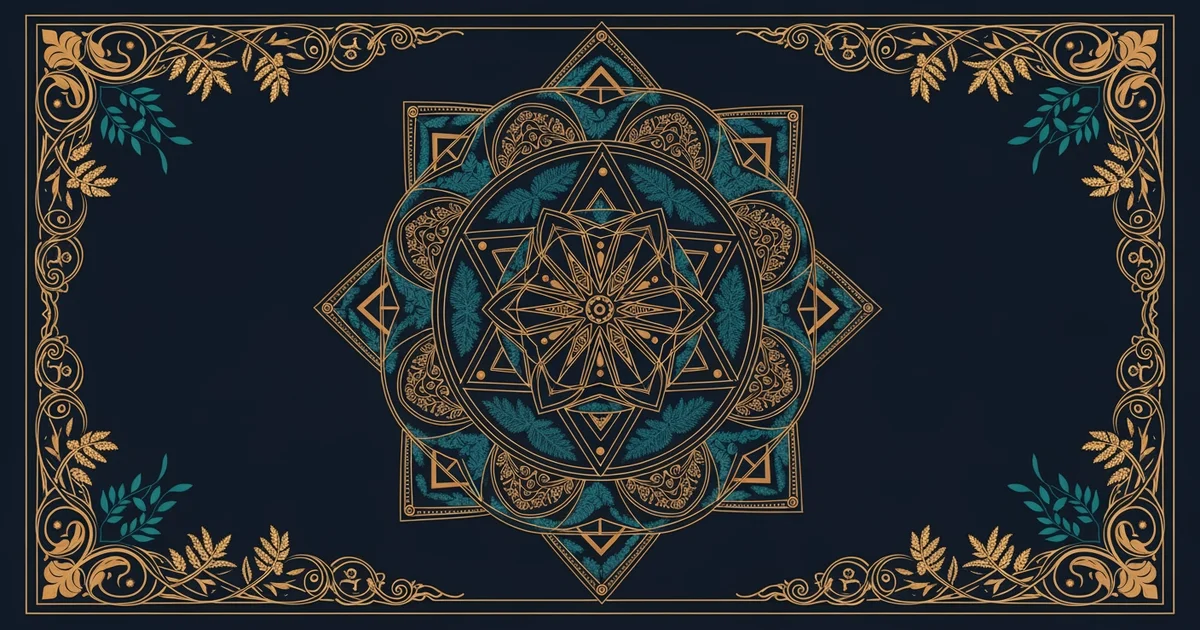
The Mechanics of Generative Systems
When we build a generative art system, we start by defining a set of parameters that control the output. Think of this like setting the rules for a board game where the pieces move on their own. You might define how a line curves based on the distance between two points on the screen. If the distance is small, the line remains straight and simple for the viewer. If the distance grows, the code forces the line to spiral into a complex, chaotic shape. This simple interaction between variables allows us to build visual complexity from a tiny amount of logic.
Mathematical beauty emerges when these simple rules repeat themselves across the entire digital canvas. We often use loops to execute the same logic thousands of times in a single second. Each iteration might change a single value, like the color hue or the rotation angle of a shape. This process mirrors how nature builds patterns in clouds or leaves through repetitive growth cycles. Just as a tree follows a genetic code to branch out, our software follows a script to fill the screen with intricate designs.
Key term: Generative art system — a digital framework where an artist defines a set of rules that allow a computer to create unique visual patterns automatically.
To manage these complex interactions, we often categorize the components of our code based on their specific roles. Each part of the system performs a distinct task that contributes to the final aesthetic result. We can compare these components to the staff in a professional kitchen, where each person handles a specific job to create a unified meal.
| Component | Primary Function | Mathematical Role |
|---|---|---|
| Variables | Store data values | Define the starting state |
| Iterators | Repeat processes | Control the growth scale |
| Functions | Perform actions | Transform raw numbers to pixels |
Synthesis of Mathematical Logic
We must synthesize these concepts to answer how abstract numbers transform into visual beauty. Earlier, we explored architectural geometry and learned how structural stability relies on precise geometric ratios. Generative systems take these same ratios and apply them to dynamic motion instead of static buildings. By combining the stability of geometric shapes with the fluidity of random number generators, we create art that feels alive. This integration forces us to think about math as a creative tool rather than a cold, calculating machine.
One common challenge involves balancing order and disorder within our code. If the system is too rigid, the output looks like a boring grid that lacks any real artistic soul. If the system is too random, the output becomes a messy blur that lacks any coherent visual structure. The best results happen when we introduce a stochastic process to provide controlled randomness. This allows the computer to make creative choices within a safe boundary that we define beforehand. It keeps the art surprising while ensuring it remains pleasing to the human eye.
As we look toward the future of math art, we must ask if the machine is truly the creator or just a tool. If we write the rules, are we responsible for the beauty that emerges from the code? This question bridges the gap between traditional craft and modern digital innovation. We are no longer just drawing lines, but building systems that define their own existence through logic. Every line, shape, and color shift is a testament to the power of numbers to define our visual world.
True generative art emerges when the artist balances strict logical constraints with controlled randomness to create unique, emergent visual patterns.
Next, we will explore how these generative systems might evolve as artificial intelligence begins to interpret our mathematical rules in new ways.