
Historical Text Challenges
Imagine trying to read a handwritten letter where the ink has faded and the paper is crumbling away. You must guess the missing words based on the context of the nearby sentences. This struggle is exactly what computers face when they attempt to process ancient documents for digital archives. While we might find this task frustrating, a computer sees these gaps as significant data errors that complicate every analysis. Understanding these hurdles is essential for anyone who wants to use technology to explore our shared human history.
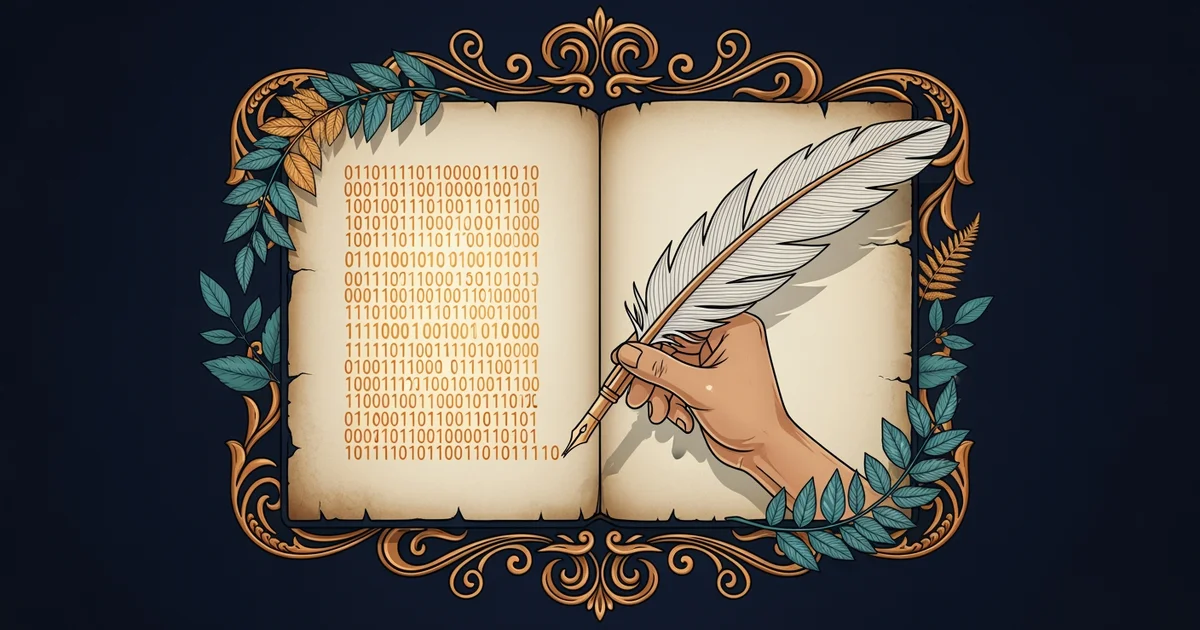
The Complexity of Ancient Textual Records
When we digitize old books, we often rely on software that translates images of text into machine-readable characters. This process, known as Optical Character Recognition, frequently struggles with the unusual fonts or ink stains found in manuscripts from past centuries. Think of this like a person trying to read a blurry sign from a moving train; the general shape might be clear, but the specific letters remain hidden. Because historical texts often contain irregular spacing or faded print, the computer frequently misidentifies characters. These errors create a ripple effect that ruins later attempts to analyze the meaning of the document. Researchers must then spend hours fixing these digital mistakes before they can even begin their actual study.
Key term: Optical Character Recognition — the technological process of converting images of printed or handwritten text into machine-encoded digital characters.
Beyond the physical damage, the actual language used in older documents presents a massive challenge for modern software. Language evolves over time, meaning that words which were common hundreds of years ago might be entirely absent from modern dictionaries. If a computer only knows current vocabulary, it will view these archaic terms as nonsense or spelling errors. This linguistic drift forces developers to create specialized tools that recognize older spelling patterns and varying grammatical structures. Without these custom tools, the computer simply ignores the most important parts of a historical record because it cannot define them.
Navigating Linguistic and Physical Obstacles
To better understand why these records are difficult to process, we can categorize the primary problems that researchers encounter during the digitization phase. These issues often overlap, making the recovery of information a multi-layered task that requires both human intuition and algorithmic precision.
| Obstacle Type | Primary Characteristic | Impact on Digital Analysis |
|---|---|---|
| Physical Decay | Paper tears or ink fading | Data loss and missing characters |
| Archaic Syntax | Outdated sentence structure | Misinterpretation of intended meaning |
| Font Variation | Non-standard or ornate script | High error rates during conversion |
When we look at these challenges, we see that the process is not just about scanning pages into a computer. It is about building a bridge between the way people wrote in the past and the way machines process information today. We must account for the following common issues during the initial phase of any digital project:
- Irregular Orthography: Many historical documents use inconsistent spelling because standardized dictionaries did not exist, which causes the software to flag perfectly valid words as errors.
- Structural Ambiguity: The layout of ancient pages often ignores modern margins or columns, causing the computer to read sentences in the wrong order or skip lines entirely.
- High Noise Levels: Background marks like water damage or paper texture create visual noise that the computer mistakes for actual text, leading to cluttered and messy data outputs.
By acknowledging these limitations, we can develop better strategies to preserve our literary heritage. We are not just fixing broken files; we are ensuring that future generations can access the wisdom of the past. The goal is to make these records as searchable and clear as any modern digital file. This requires patience, careful planning, and a deep appreciation for the fragility of the paper records that hold our history together. As we refine our methods, we unlock new ways to view the evolution of thought itself.
Historical text analysis requires overcoming both the physical degradation of old documents and the natural evolution of language over time.
We will now look at how we can break down these complex documents into manageable digital units through the process of segmentation.