
Integrated System Design
Imagine a chef trying to prepare a complex meal while wearing thick, heavy mittens. The chef can see the ingredients, but they cannot feel the texture or judge the weight of the items. This illustrates the gap between isolated robotic sensors and a truly integrated machine. Robots often struggle because their vision, touch, and movement systems act like separate departments that rarely share vital information. Achieving fluid motion requires these systems to merge into a single, unified architecture that acts instantly.
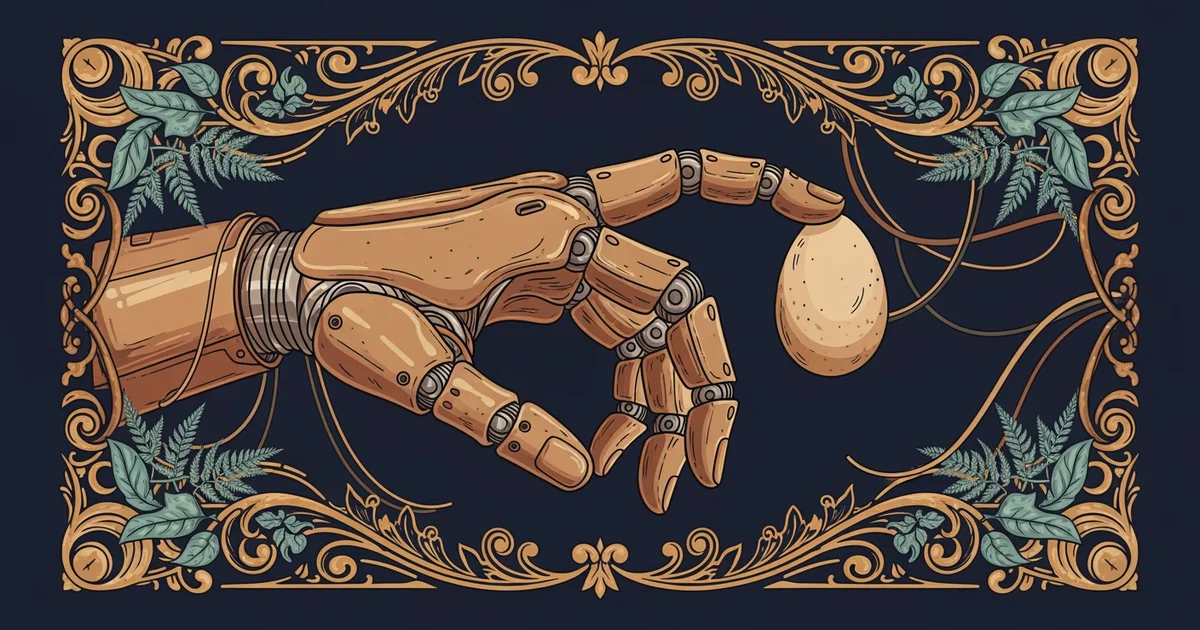
Building a Unified Robotic Framework
To make a robot perform human tasks, engineers must move beyond simple sensor inputs. They create an integrated system design that links sensory data directly to motor control loops in real-time. This structure functions much like a central nervous system, where the brain coordinates eyes and hands without conscious thought. When a robot reaches for an object, it must process visual distance, tactile pressure, and joint tension simultaneously. If one system lags, the robot becomes clumsy and prone to errors during delicate maneuvers.
Key term: Integrated system design — the process of combining sensory feedback and mechanical control into a single architecture for fluid movement.
Successful integration relies on high-speed data buses that allow components to communicate without delay. Engineers often use a layered approach to ensure the robot reacts quickly to its surroundings. The lower layers handle immediate reflexes, like adjusting grip strength if an object slips. The higher layers manage long-term goals, such as navigating across a room or planning a complex assembly task. This hierarchy ensures the robot remains stable while pursuing its primary objective.
Coordinating Multiple Sensory Inputs
When robots attempt to interact with the world, they must manage various data streams that represent different physical properties. The following table outlines how these inputs combine to form a coherent understanding of the environment:
| Input Source | Physical Property | Primary Robotic Function |
|---|---|---|
| Optical | Light and Depth | Spatial mapping and targeting |
| Tactile | Pressure and Force | Grip control and stability |
| Kinematic | Position and Angle | Limb movement and reach |
These inputs must be processed through a sensor fusion layer that reconciles conflicting data points. For instance, if a camera identifies a glass cup but the tactile sensor detects soft foam, the system must resolve this discrepancy. The robot uses these fused signals to update its internal model of the world constantly. Without this constant updating, the robot would rely on outdated information and fail to adapt to changes in its immediate surroundings.
- The system captures raw data from vision and touch sensors simultaneously.
- The fusion layer cleans the data by removing noise and correcting errors.
- The control module calculates the necessary torque for every robotic joint.
- The actuators execute the movement while monitoring for new feedback signals.
- The loop repeats until the task reaches a successful and stable conclusion.
Engineers often compare this process to a professional driver navigating a busy city street. The driver does not look at the speedometer, the road, and the mirrors as separate tasks. Instead, the driver integrates all inputs into a single, smooth experience that allows for rapid decisions. Robots achieve this same level of performance only when their internal software treats sensory data as a unified stream of information. This holistic approach is the key to overcoming the limitations that currently prevent robots from performing simple human chores with ease.
True robotic integration requires a unified architecture that processes vision, touch, and motion as a single, continuous stream of data.
Developing this unified intelligence will lead us into the challenges of adaptive learning and autonomous decision-making.