
Pin Tumbler Lock Anatomy
Imagine you are trying to open a stubborn door with a key that refuses to turn in the lock. You jiggle the key, hoping the internal parts align just right to allow the door to swing open freely. This everyday struggle happens because the internal mechanism inside the lock is currently blocking your path. The device is a complex puzzle designed to prevent unauthorized entry while allowing specific keys to bypass its defenses. Understanding this mechanism reveals how simple metal parts create a secure barrier for your home.
The Mechanics of Pin Tumblers
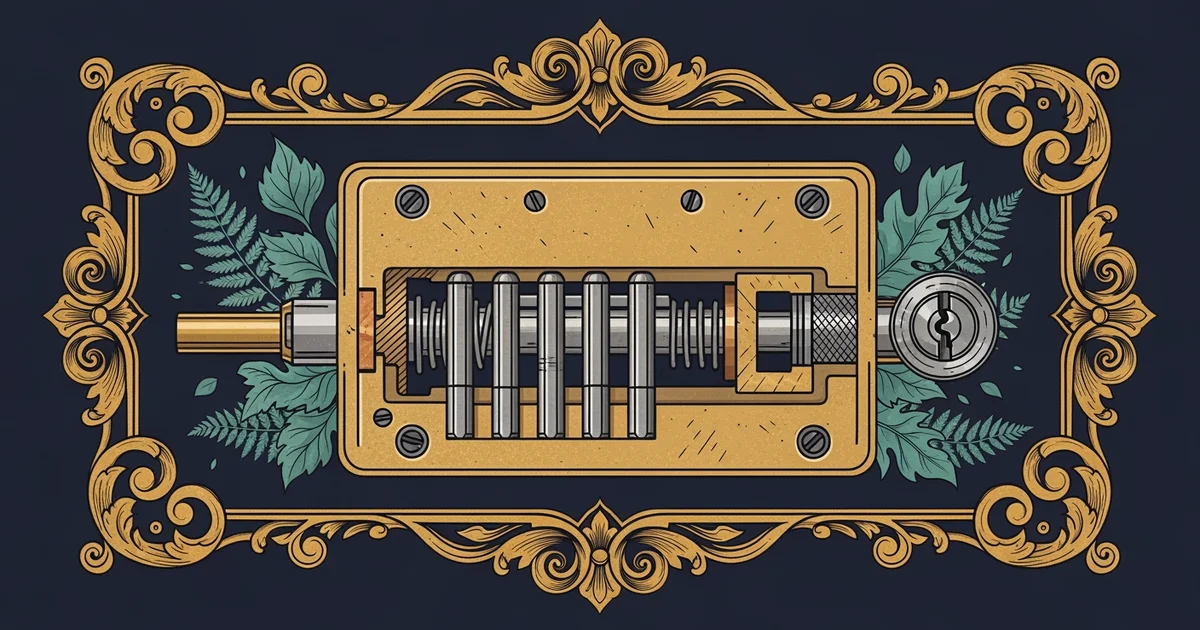
Most common residential locks rely on a system called pin tumblers to hold the plug in place. Inside the lock housing, small metal cylinders sit in vertical shafts that cross the path of the key. These pins are split into two pieces, known as key pins and driver pins, which stack on top of each other. When no key is inserted, the driver pins sit across the gap between the plug and the housing, effectively pinning the cylinder in place. This physical obstruction is what prevents the lock from rotating when you apply pressure with a tool or an incorrect key.
Think of these pins like a series of tumblers in a safe that must reach a specific height. If you look at the teeth on your house key, you will notice different peaks and valleys of varying depths. These cuts act as a physical map for the pins inside the lock. When you slide the correct key into the cylinder, the jagged edges push the pins up to different heights. The goal is to align the split between every single pair of pins exactly at the edge of the plug. This specific alignment creates a clear path for the lock to turn.
Key term: Shear line — the internal boundary between the rotating plug and the stationary lock housing where pins must align for the lock to turn.
Once the key has lifted every pin to the correct height, the break between the key pin and the driver pin sits perfectly on the shear line. With the driver pins now pushed entirely into the upper housing, there is no longer anything blocking the plug from rotating. The plug can then turn freely, which moves the internal cam to retract the latch of the door. This process is a delicate dance of geometry where every pin must reach the target height simultaneously to succeed.
Understanding Pin Alignment Dynamics
When a key is missing or incorrect, the pins fail to reach the required height, and the system remains locked. To visualize how these parts interact, consider this breakdown of the primary components within the standard pin tumbler lock mechanism:
- The plug is the central part of the lock that rotates when you turn your key.
- The key pins are the bottom components that touch the key and determine the specific height.
- The driver pins are the upper components that block rotation until they are pushed above the shear line.
- The springs provide the constant downward pressure needed to keep pins in place when the key is removed.
If even one pin is slightly off, the driver pin will still hang over the shear line and prevent the plug from moving. This is why a worn-out key might struggle to open a door, as it no longer pushes the pins to the precise height needed for alignment. The security of the lock relies entirely on these tight tolerances. If the pins were too loose, the lock would be easy to bypass, but if they are too tight, the lock would jam constantly during normal use.
| Component | Primary Function | Interaction Point |
|---|---|---|
| Key Pins | Match key cuts | Bottom of pins |
| Driver Pins | Block rotation | Shear line |
| Springs | Maintain pressure | Top of pins |
By ensuring that only a key with the exact matching profile can reach the shear line, the lock provides a reliable barrier. The entire system is a masterclass in mechanical engineering, using simple gravity and spring force to manage home security. Now that you understand how these internal pins interact to form a secure boundary, you can appreciate the precision required for modern locks to function safely.
The pin tumbler mechanism secures a door by requiring a specific key profile to align internal pins exactly at the shear line, which removes the physical obstruction preventing rotation.
The next Station introduces electronic sensor fundamentals, which determine how modern digital security systems detect movement and unauthorized entry without relying solely on mechanical pins.