
Introduction to Robotic Actuators
Imagine watching a professional athlete sprint across a track while their muscles fire in perfect, rhythmic harmony. Robots lack biological tissue, yet they must replicate this seamless movement to navigate our complex, human-centric world. Engineers achieve this by replacing organic muscle fibers with mechanical components that provide force, speed, and precision. These mechanical systems act as the bridge between digital commands and physical movement, allowing a machine to interact with its surroundings. Without these specialized parts, a robot would remain a static frame of metal and plastic, incapable of shifting its weight or taking a single step forward.
The Function of Mechanical Actuators
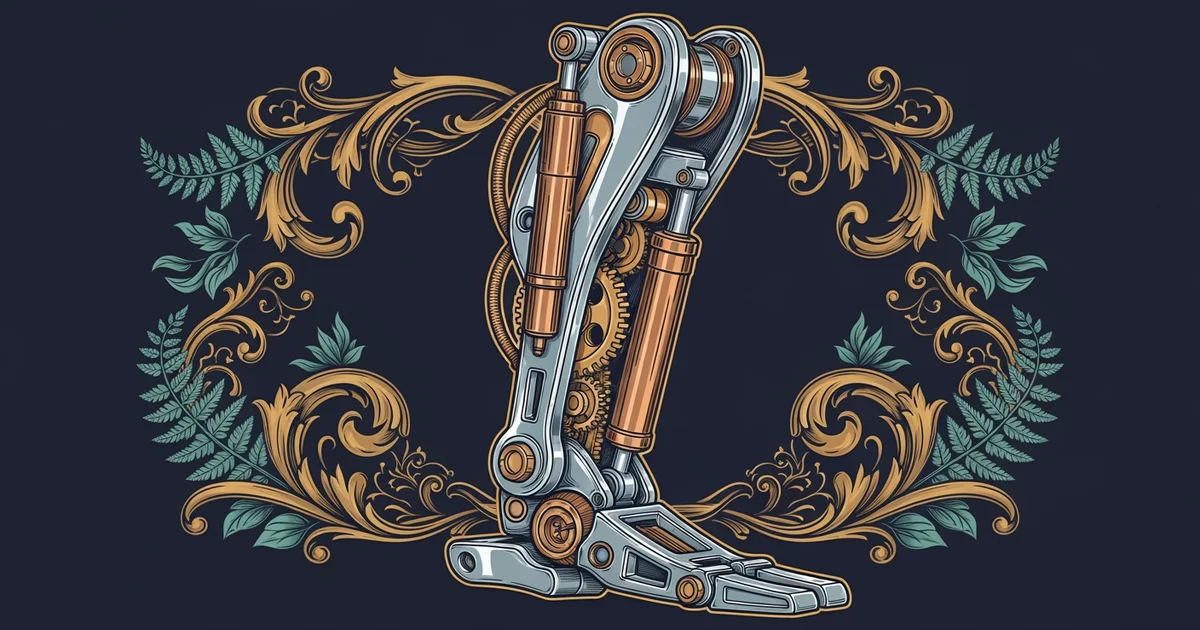
At the heart of every robotic joint lies the actuator, which functions as the engine for movement. Much like a human bicep contracts to pull the forearm upward, this device converts energy into physical torque. Engineers select these components based on the specific needs of the robot, such as carrying heavy loads or moving with extreme speed. When the robot's central processor sends an electrical signal, the device responds by rotating a gear or extending a shaft. This conversion of electricity into kinetic energy is the fundamental process that enables a machine to change its physical orientation in real-time.
Key term: Actuator — a mechanical component responsible for moving or controlling a mechanism by converting energy into physical motion.
Think of these devices like the budget of a small business, where you must balance spending against the desired outcome. If you invest too much in raw power, you might sacrifice the fine-tuned control needed for delicate tasks. If you prioritize speed, you might lose the ability to hold a heavy position for a long duration. Engineers must carefully choose the right type to ensure the robot can balance itself while performing its intended work. This delicate trade-off ensures that the robot remains efficient while maintaining the stability required for walking across uneven surfaces.
Types of Robotic Motion Systems
To achieve human-like movement, engineers utilize several distinct methods for translating power into motion. These systems differ in their internal mechanics, yet they all serve the same ultimate goal of providing controlled force. The following table highlights how different systems manage the physical demands placed upon a humanoid frame:
| System Type | Power Source | Primary Strength | Best Application |
|---|---|---|---|
| Electric | Current | High precision | Small joints |
| Hydraulic | Fluid | Massive force | Heavy lifting |
| Pneumatic | Air pressure | Soft compliance | Delicate touch |
Each system brings unique advantages that dictate how a robot behaves in the real world. Electric motors offer the most reliability for standard tasks, while fluid-based systems provide the raw power necessary for larger industrial machines. By mixing these technologies, engineers can create robots that possess both the strength to lift heavy objects and the grace to perform subtle movements. This versatility is essential for robots that must operate in environments originally designed for humans.
When we look at how these components integrate, we see a clear hierarchy of control:
- The central computer calculates the required movement to maintain balance while standing or walking.
- The controller sends a precise voltage signal to the specific motor located at the robot's joint.
- The mechanical gears within the device translate the motor's rotation into the desired limb position.
- Sensors provide immediate feedback to the computer to confirm the movement was successful and stable.
This cycle happens hundreds of times per second, creating the illusion of smooth, fluid motion. Every time the robot shifts its weight, these systems work in concert to prevent the machine from falling over. Understanding how these parts function is the first step toward building machines that can truly walk alongside us. As we continue to refine these systems, the line between biological grace and mechanical precision will only continue to blur.
Robotic actuators serve as the critical bridge between digital logic and physical action by converting electrical energy into precise mechanical force.
Next, we will explore how sensors provide the data input necessary for these actuators to make real-time adjustments.