
Stellarator Design Challenges
Imagine trying to keep a wild, swirling storm of superheated gas trapped inside a bottle made of invisible magnetic force. This is the precise challenge engineers face when they attempt to build a stable fusion reactor on Earth. While the sun uses its massive gravity to hold plasma together, we must build complex machines to mimic that same crushing pressure. Creating a consistent environment for fusion requires a delicate balance of heat and magnetic control that remains difficult to master. Engineers often struggle with the extreme heat that threatens to melt even the strongest reactor walls.
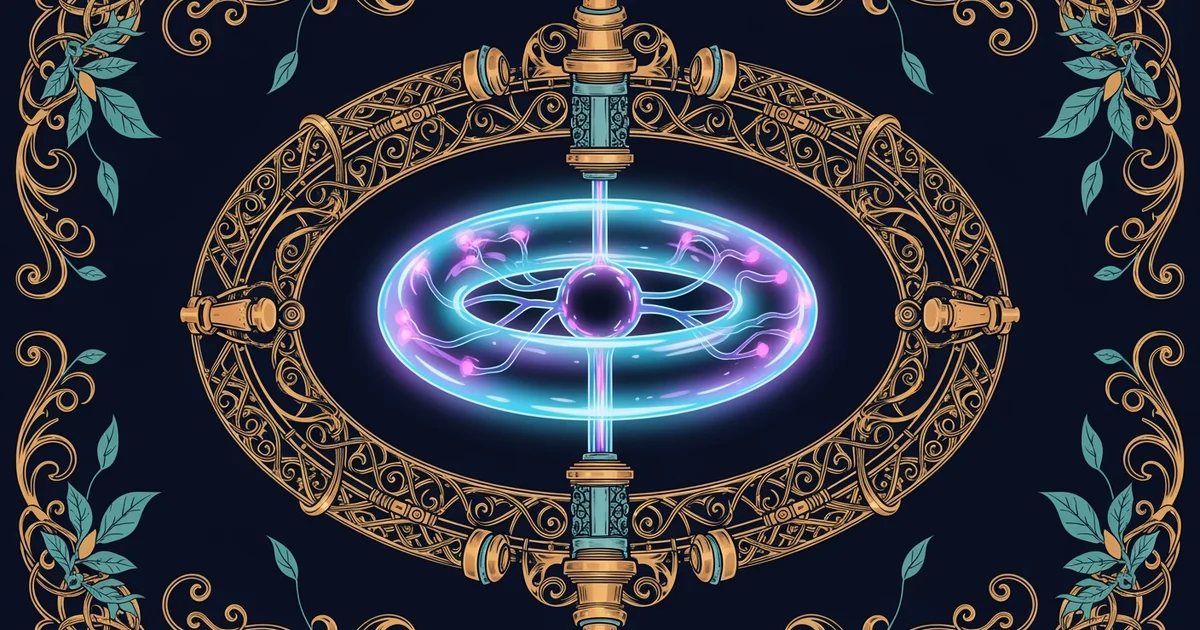
Understanding Reactor Geometry
To manage these intense plasma conditions, scientists have developed two main architectural designs for fusion reactors. The most common design is the tokamak, which uses a simple donut shape to contain plasma using large electric currents. These currents create a magnetic field that keeps the plasma moving in a steady, circular path around the center. While this design is effective at holding plasma, it relies on internal currents that can become unstable during rapid operations. If the plasma shifts even slightly, the entire magnetic field can collapse and damage the reactor interior.
In contrast, the stellarator uses a complex, twisted geometry to hold the plasma without needing internal currents. This design relies on external magnets shaped like intricate, winding ribbons to create a stable magnetic cage. Because the magnetic field is generated entirely from the outside, the plasma remains much more stable during long periods of operation. Think of the difference like steering a car on a flat track versus a winding mountain road. The tokamak is the flat track that requires constant, high-speed adjustment to keep from sliding off the edge. The stellarator is the winding road that uses its own shape to guide the driver safely through every sharp turn.
Navigating Design Complexity
Building a stellarator requires incredible precision because every single magnet must be placed in a specific, non-circular position. Engineers must use advanced computer modeling to calculate the exact shape of these magnets to ensure the magnetic field is perfectly smooth. Any small error in the placement of these components leads to leaks where superheated plasma escapes and hits the reactor wall. This level of engineering is significantly harder than building a standard circular reactor because the geometry lacks simple symmetry. The following table highlights the primary differences between these two approaches for managing plasma stability:
| Feature | Tokamak Reactor | Stellarator Reactor |
|---|---|---|
| Magnetic Source | Internal plasma current | External magnetic coils |
| Design Shape | Simple circular donut | Complex twisted ribbon |
| Stability Level | High risk of disruption | Naturally stable control |
| Construction | Easier to fabricate | Difficult, high precision |
Key term: Plasma — an ionized state of matter where electrons are stripped from atoms, creating a hot, glowing gas that fuels fusion reactions.
These design differences force engineers to choose between simple construction and long-term operating stability. The tokamak remains popular because it is easier to build with current manufacturing tools and basic metal parts. However, the stellarator offers a path toward continuous energy production that does not suffer from sudden plasma crashes. As we improve our ability to manufacture complex, three-dimensional parts, the stellarator design becomes more practical for large-scale energy projects. We must decide if the difficulty of building these twisted machines is worth the benefit of a more reliable power source. The future of fusion likely depends on our success in mastering these complex magnetic shapes to keep the stars burning within our reach.
Reliable fusion energy depends on our ability to build complex magnetic cages that can hold superheated plasma without the instability found in simpler reactor designs.
But what does it look like in practice when we try to pull heat away from these powerful reactors to generate electricity?