
Historical Diving Milestones
Imagine you are dangling at the end of a thin rope while thousands of tons of water press against your fragile metal shell. This high-stakes situation defines the early history of human efforts to reach the ocean floor and witness its hidden, dark wonders. Scientists and engineers faced a massive problem because they lacked the power and materials to survive the deep ocean on their own terms. They had to rely on surface vessels to provide air and light through long cables that often tangled or snapped under extreme pressure. This reliance on surface support created a dangerous tether that limited where they could travel and how long they could stay submerged in the abyss.
The Evolution of Pressure-Resistant Vessels
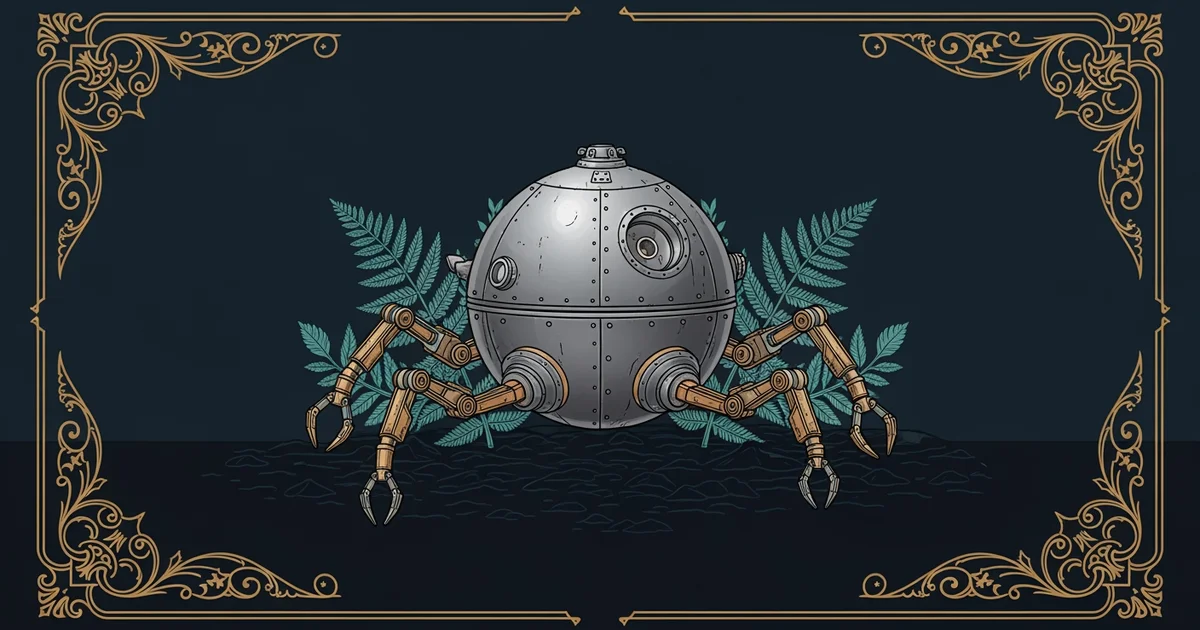
Early pioneers designed the bathysphere to withstand the immense forces found at great depths by using a thick steel sphere. Because a sphere distributes pressure evenly across its entire surface, it was the perfect shape to prevent the hull from collapsing inward. These vessels were essentially heavy steel balls lowered by cables from a mother ship floating on the surface of the sea. While the thick walls protected the crew from the crushing weight of the water, the tether remained a major weakness for every mission. If the cable snagged on an underwater rock formation, the entire vessel could become trapped in the darkness forever.
Key term: Bathysphere — a spherical, steel deep-sea submersible that relies on a surface cable for power and communication.
Think of the tether like a power cord for a vacuum cleaner that is plugged into a wall outlet in another room. You can move around as long as the cord reaches, but you are always limited by the length and the risk of the cord getting caught on furniture. In the deep sea, the tether was even more dangerous because it also supplied life-sustaining oxygen to the people inside. If the cord broke, the crew lost their connection to the surface, which meant they lost their air supply and their ability to return home safely. Engineers realized they needed to cut the cord to truly explore the deep ocean.
Breaking the Tether for Independent Exploration
To move beyond the limitations of tethered designs, inventors began developing the bathyscaphe to operate like an underwater balloon. Instead of being pulled by a ship, this new design used a large tank filled with gasoline to provide buoyancy for the heavy cabin. The crew could drop iron weights to rise back to the surface, which allowed them to move independently of the mother ship. This transition changed exploration from a simple vertical drop into a controlled journey through the deep water columns. It proved that humans could survive and navigate the depths if they carried their own power and ballast systems.
Below are the main differences between tethered and independent deep-sea designs:
- Tethered systems rely on a physical cable for power and air, which restricts the range of motion and creates a high risk of entanglement in deep currents.
- Independent systems carry their own internal power and life support, allowing for much greater freedom of movement across the vast, unexplored ocean floor.
- Tethered vessels require a constant connection to a surface ship, meaning that any failure in the cable results in an immediate and total loss of mission control.
- Independent vessels utilize heavy ballast weights that can be released at any moment, ensuring the craft can return to the surface even if all power systems fail.
This shift in engineering philosophy marked the start of modern submersibles that we use today to map the seafloor. By removing the tether, engineers turned deep-sea vessels into true vehicles rather than simple diving bells. We now use these lessons to build robots that can stay down for weeks without needing a lifeline to the surface. However, the challenge of surviving pressure remains the primary hurdle for every new machine we send into the deep.
Moving away from tethered designs allowed engineers to build vessels that navigate the deep ocean with true autonomy and safety.
The next step in our journey involves understanding how we provide enough energy to these independent machines so they can operate for long periods.