
Introduction to Financial Derivatives
Imagine you own a small bakery that needs to buy five thousand pounds of flour next month. You worry that a sudden heat wave will destroy the wheat crop and cause flour prices to double overnight. To protect your business, you sign a contract with a local farmer today that locks in a fixed price for that delivery. This simple agreement acts as a shield against the unpredictable nature of global commodity markets. Such an arrangement is the most basic example of how businesses use financial tools to manage their exposure to future price swings.
The Function of Financial Derivatives
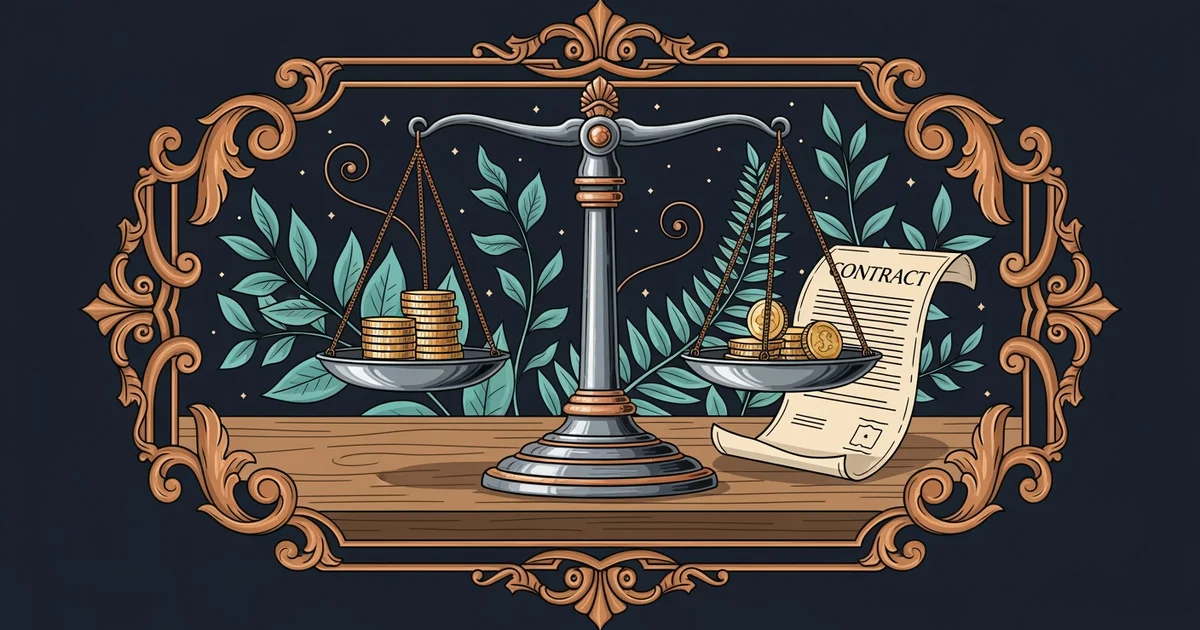
Financial derivatives are specialized contracts that derive their value from the performance of an underlying asset. These assets might include interest rates, currency exchange rates, or even raw materials like oil and wheat. By using these instruments, companies can transfer the risk of price changes to other parties who are willing to accept that uncertainty for a fee. You should think of a derivative as an insurance policy for your balance sheet. Just as you buy home insurance to guard against fire damage, you use a derivative to guard against unfavorable moves in the market. The contract does not change the actual price of the asset in the open market. Instead, it creates a separate financial obligation that offsets your losses if the market price moves against your business interests. This mechanism allows managers to focus on running their core operations rather than gambling on volatile price fluctuations.
Key term: Derivatives — financial contracts that gain value from the price movements of a separate underlying asset, such as a stock, bond, or interest rate.
Understanding the Mechanics of Contracts
Derivatives function through a structured agreement between two parties who hold opposing views on the future direction of a market. One person might fear that interest rates will rise and increase their borrowing costs, while another party might believe rates will remain stable or even drop. The derivative contract allows them to exchange these risks in a controlled environment. These instruments are not just for large banks or massive corporations with deep pockets. Small businesses often use them to stabilize their cash flows and predict their future expenses with higher accuracy. Without these tools, many companies would face constant instability whenever global economic conditions shifted suddenly. The structure of these contracts typically involves a set date, a specific quantity, and a pre-determined price point. By setting these terms in advance, both parties remove the guesswork from their long-term financial planning.
| Feature | Purpose in Hedging | Impact on Risk |
|---|---|---|
| Fixed Price | Locks in costs | Eliminates volatility |
| Expiry Date | Sets clear timing | Defines risk window |
| Underlying Asset | Defines the exposure | Targets specific risk |
These three components work together to ensure that a company knows exactly what its future obligations look like. If you are a business owner, you can use this structure to plan your budget with confidence. You no longer have to worry about sudden spikes in interest rates or supply costs. Instead, you can focus on growing your business and serving your customers while the derivative handles the market risk.
Strategic Benefits for Modern Businesses
Businesses often face complex challenges when their profits depend on factors they cannot control. By using derivatives, a company can transform an unpredictable variable cost into a fixed and manageable expense. This transition allows for better planning and more stable financial reporting over long periods. When you remove the threat of extreme price volatility, you create a safer environment for investment and expansion. This is why financial derivatives are considered essential tools for any organization that operates in a global economy. They provide the stability needed to survive during periods of economic turbulence and market uncertainty. You might wonder if these tools are risky themselves, but when used correctly, they serve as a stabilizer rather than a source of danger. The goal is always to reduce the impact of external forces on your bottom line. By mastering these concepts, you gain the ability to navigate the complex world of finance with a clear strategy and a steady hand.
Derivatives act as financial shock absorbers that allow businesses to lock in future costs and protect their profits from unpredictable market volatility.
Now that you understand the basic purpose of these contracts, we will explore how they are used to specifically offset risk in a process called hedging.
This content is educational only and does not constitute financial or investment advice.