
The Atomic Scale
Imagine you are holding a smooth stone found in a garden. You might see a solid object, but deep inside, it is a busy city of tiny particles held together by invisible forces. These building blocks determine if the stone is hard enough to scratch glass or soft enough to crumble under your thumb. Understanding this atomic scale is the key to unlocking the hidden secrets of every rock you encounter in nature.
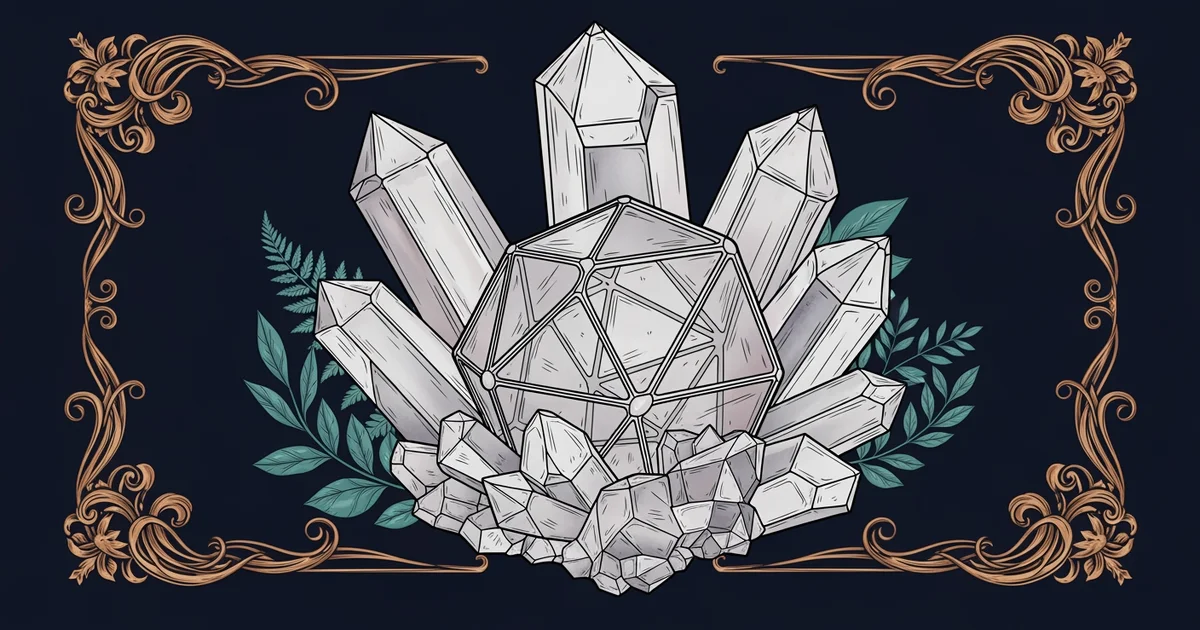
The Architecture of Solid Matter
Everything you touch is made of atoms that prefer to stay in stable groups. When atoms come together, they form bonds that act like invisible glue. Think of these bonds as a complex social contract between neighbors in a crowded room. Each atom wants to be stable, so it shares or trades electrons to reach a balanced state. This process creates a rigid structure that gives minerals their specific shape and strength. Without these strong connections, the Earth would be a pile of loose dust rather than solid ground. The way these atoms arrange themselves dictates how light passes through the mineral or how it breaks when you strike it. Every physical property you observe on the outside is just a reflection of the internal atomic arrangement.
Key term: Ionic bond — a strong chemical connection formed when one atom transfers electrons to another atom to create electrical attraction.
When we look at the atomic scale, we see that minerals are not random piles of matter. They follow strict rules of geometry to save energy and stay stable. Imagine you are packing a suitcase with items that must fit perfectly without wasting any empty space. Atoms do the same thing by organizing into repeating patterns that fill the available volume efficiently. This internal order is what scientists call a lattice structure, which acts like a scaffold for the entire mineral. If the atoms pack tightly, the mineral becomes very dense and hard to break apart. If they pack loosely, the mineral might be soft or prone to splitting along flat planes.
How Ionic Bonds Shape Minerals
Many common minerals rely on the power of attraction between charged particles to maintain their solid form. These charged particles, or ions, stick together because opposite electrical charges attract each other strongly. This force holds the structure together against external pressure or heat. You can compare this to a magnetic locking system where pieces snap into place and refuse to let go. The strength of this attraction determines how easily you can scratch the surface of the mineral with a metal tool. Minerals with very strong ionic bonds are usually quite hard, while those with weaker bonds might be easily scratched or deformed.
We can categorize how these bonds influence the physical traits of minerals by looking at their behavior under stress:
- Ionic bonds create high melting points because the energy needed to break the electrical pull is very significant.
- These structures are often brittle since the rigid alignment of atoms prevents them from bending under sudden physical force.
- The electrical nature of these bonds means that many minerals do not conduct electricity well in their solid state.
Understanding these bonds allows us to predict how a mineral will behave in different environments. Whether the rock is deep in the crust or resting on the surface, the atomic forces remain the primary drivers of its identity. By studying these tiny patterns, we learn to read the history of the planet through the minerals it produces. Each bond tells a story of the pressure and heat present when the crystal first formed. This microscopic view changes how you see the world around you, turning every pebble into a complex puzzle of atomic engineering.
The physical traits of a mineral are direct results of the invisible electrical bonds and geometric patterns holding its atoms together.
Now that we understand how atoms bond to form stable structures, we will explore how these patterns repeat to create the beautiful symmetry found in crystals.