
Advanced Scrap Utility
Imagine staring at a pile of carrot tops and onion skins that you would usually toss into the trash bin. These items hold hidden value that most people ignore during their daily cooking routines. By treating these scraps as raw ingredients, you can unlock layers of flavor that would otherwise vanish. You are essentially mining for gold in a pile of kitchen remnants. This shift in perspective turns your trash into a vital resource for your culinary projects. When you view every part of a vegetable as a building block, you stop seeing waste and start seeing potential. This mindset is the cornerstone of a truly efficient kitchen system.
Unlocking Hidden Flavors Through Extraction
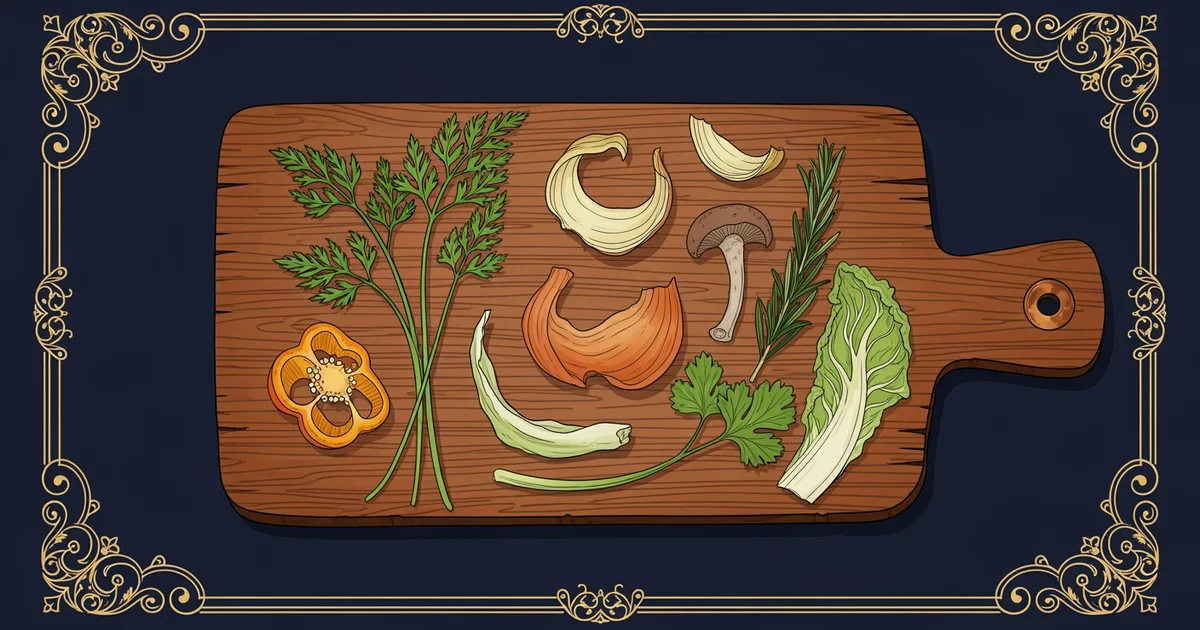
When you begin to save vegetable trimmings, you create a foundation for building complex flavor profiles in your dishes. Most home cooks discard things like mushroom stems, herb stalks, and leek ends without a second thought. These parts contain high concentrations of aromatic compounds that dissolve easily into hot liquids. Think of these scraps like a savings account that builds interest over time. Every time you add a new piece of waste to your collection bag, you are adding to a future investment. When you eventually simmer these items, you turn that investment into a rich, flavorful liquid that serves as a base for soups and sauces.
To ensure your results remain consistent, you must organize your scraps based on their flavor profiles. Mixing bitter greens with sweet root vegetables can create a muddy taste that ruins your final product. Instead, group your scraps into categories that complement each other during the long simmering process. This method ensures that your finished liquid remains balanced and useful for various recipes. Proper storage is also essential to maintain the quality of your ingredients until you are ready to use them. Keeping your scraps in a sealed container in the freezer prevents unwanted spoilage while you accumulate a sufficient amount for a batch.
Key term: Stock — a flavorful liquid base created by simmering vegetable scraps, bones, or aromatics in water for an extended period.
Maximizing Nutrient Density in Kitchen Scraps
Since many nutrients reside in the outer layers of vegetables, your scraps often contain more vitamins than the parts you serve on the plate. Peels and ends are frequently the most nutrient-dense portions of the plant because they protect the interior. When you boil these items, you extract those nutrients into your liquid base. This process makes your cooking more efficient by ensuring that you waste nothing. You are effectively recycling the energy that went into growing the produce. This practice allows you to serve meals that are both delicious and highly nutritious without needing extra ingredients.
To manage your scrap collection effectively, you should follow a simple protocol for preparation and storage:
- Sort by profile: Separate your scraps into light, dark, or neutral flavor categories to ensure your final liquid remains versatile for different culinary applications.
- Wash thoroughly: Scrub all dirt and debris from your vegetable ends before freezing them to prevent your final liquid from having a gritty texture.
- Maintain temperature: Keep your scrap collection in the coldest part of your freezer to prevent ice crystals from forming, which can damage delicate cellular structures.
By following these steps, you transform the way you interact with your food supply. You stop being a consumer who creates waste and become a manager of a closed-loop system. This transition requires little extra effort but produces significant results in terms of flavor and sustainability. When you master these mechanics, you gain total control over your kitchen output. You will find that your grocery bills decrease as your reliance on pre-made stocks fades away. This change in habit is a small step toward a larger goal of total kitchen efficiency.
Transforming kitchen scraps into nutrient-dense foundations allows you to maximize ingredient utility while creating deeper, more complex flavor profiles in your daily cooking.
But what does it look like in practice when we apply these scrap utility principles to our weekly meal planning?
Want this with sources you can check?
Premium Learning Paths for Culinary Arts & Gastronomy are researched against open-access libraries — PubMed, arXiv, government databases, and more — with their distinctive claims cited to real sources and independently checked.
See what Premium includes