
The Global Food Network
Imagine you are eating a fresh strawberry in the middle of a cold winter month. That single piece of fruit likely traveled thousands of miles across oceans and borders to reach your local store. The journey of your food is not a simple line from a farm to your kitchen table. It is a complex web of connections that spans the entire globe every single day. Understanding this network helps you see how your breakfast is linked to people and places far away from your home. This global food system relies on layers of coordination to keep shelves stocked and produce moving across the world.
The Anatomy of Global Food Logistics
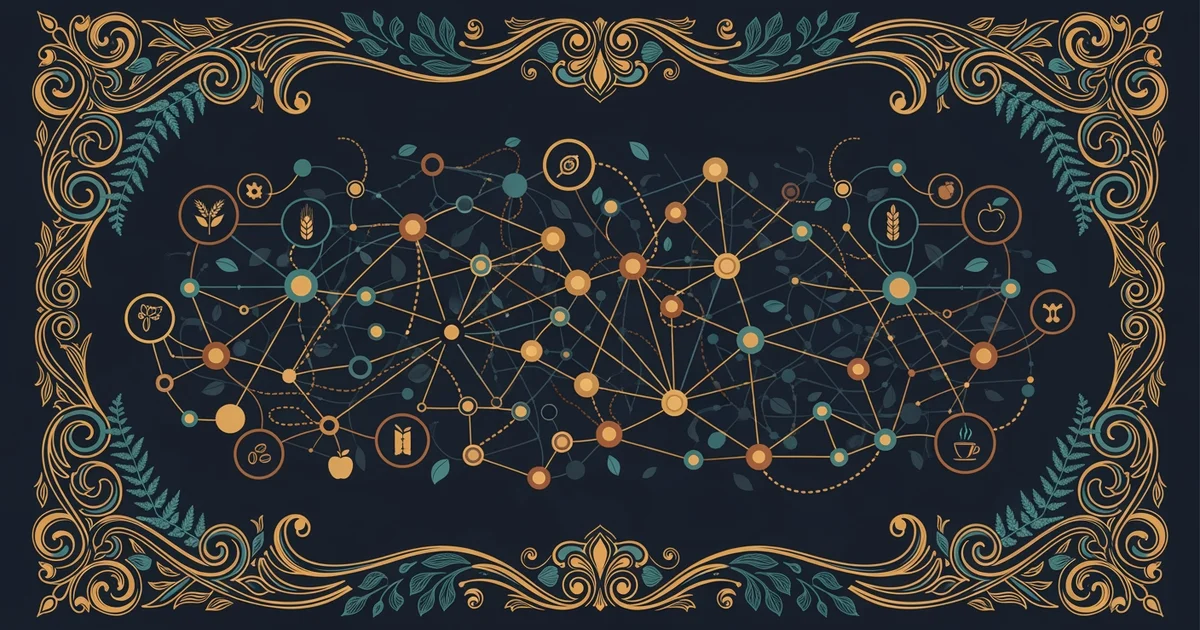
Modern food distribution functions like a massive, invisible relay race where every handoff must happen perfectly. Farmers produce the raw goods, but these items must be processed, packaged, and transported by various specialized agents. Think of the global food chain as a giant spider web that vibrates whenever one strand is touched. If a weather event hits a major growing region, the impact ripples through the entire network quickly. This interconnectedness allows us to enjoy variety, but it also creates significant risks when any single node fails.
To visualize how this works, we can look at the primary stages that move food from the field to your plate:
- Production involves the initial growth of crops or livestock which requires specific climates and regional resources to thrive.
- Processing transforms raw ingredients into stable products that can survive long journeys without spoiling during the shipping process.
- Distribution manages the complex logistics of moving goods across international borders using ships, planes, and large trucks.
- Retail serves as the final point of contact where consumers finally purchase the products for their own use.
Each stage requires precise timing to ensure that perishable items remain safe and edible for the final customer. When one part of this system slows down, the entire chain experiences a bottleneck that affects availability.
Mapping the Nodes of Trade
Global trade relies on specific hubs that act as central points for gathering and sorting food products. Large ports and distribution centers serve as the heart of this system by funneling goods toward local markets. These hubs are essential because they allow for the consolidation of smaller shipments into massive, efficient transport loads. Without these central points, the cost of moving food would be too high for most people to afford. The following table highlights how different types of food move through these various global logistics nodes.
| Food Category | Primary Transport | Storage Requirement | Global Reach |
|---|---|---|---|
| Fresh Produce | Air or Sea | Temperature Control | Very High |
| Dry Grains | Bulk Cargo Ships | Moisture Protection | Extremely High |
| Frozen Meats | Refrigerated Sea | Constant Freezing | High |
This system ensures that food from diverse climates reaches every corner of the planet regardless of local weather. The efficiency of these nodes allows for a steady supply of ingredients that would otherwise be unavailable. By observing these patterns, you can start to appreciate the massive effort required to keep your local grocery store fully stocked. The complexity of this network is what makes modern dining possible, yet it remains largely invisible to the average person shopping for dinner.
As you consider the path your dinner took, you might wonder how we maintain safety across such vast distances. The reliance on this network means that a small change in one country can change the price of your meal. This system is not just about moving boxes, but about keeping a delicate balance of supply and demand active. Every time you buy an item, you are participating in a global exchange of labor, resources, and logistics expertise. Reflecting on this scale changes your perspective on the simple act of choosing your next meal today.
The global food network functions as an interconnected web where every stage of production and transport relies on the stability of all other nodes.
As we move forward, we will examine how this immense scale impacts the trust and safety standards that protect consumers.