
Operational Flow Design
A busy restaurant kitchen often feels like a chaotic dance where chefs collide while holding hot pans. Without a clear plan, this movement leads to wasted time, cold food, and frustrated staff members.
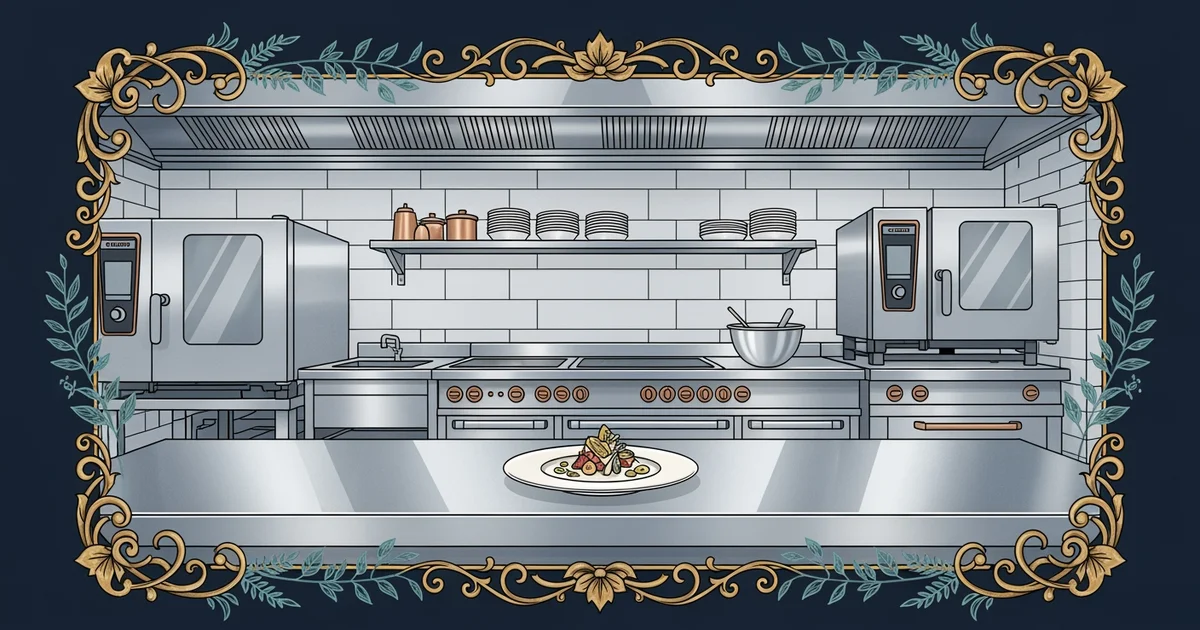
Designing the Productive Kitchen
Operational flow design acts as the blueprint for your culinary business to ensure smooth daily production. Think of your kitchen like a professional assembly line in a car factory where every step follows a logical order. Raw materials enter at one end and finished products exit at the other without crossing paths or causing delays. When staff members must walk across the entire room to grab a single tool, they lose precious seconds during every service. By mapping out the movement of ingredients from storage to the plate, you create a system that maximizes output while keeping stress levels low. This process requires you to analyze how people move through the space while they perform their specific tasks throughout the day.
Key term: Workflow — the sequence of industrial, administrative, or other processes through which a piece of work passes from initiation to completion.
To build an effective layout, you must group your equipment based on the specific tasks they support. You should place refrigerators near the preparation stations to keep ingredients cold until the moment you need them. Cooking ranges belong next to the plating area so that hot food travels the shortest distance possible before reaching the customer. This arrangement prevents the common mistake of placing heavy-duty equipment in areas that block the main walking paths. You can organize your space by categorizing activities into distinct zones that handle specific stages of food preparation. Proper zoning ensures that your team can operate independently without bumping into each other during the busiest hours of the dinner rush.
Mapping the Path to Efficiency
When you design your kitchen floor, you should focus on the four primary stages of food handling. Each stage represents a critical stop on the journey from raw delivery to the final customer experience. You can visualize this path as a straight line or a circle that prevents backtracking and unnecessary movement. Following this logical progression helps your team maintain speed and consistency even when the orders start piling up quickly. If you ignore these patterns, your kitchen will suffer from bottlenecks that slow down your entire business model significantly.
- Receiving and Storage: Ingredients arrive at the loading dock and move directly into walk-in coolers or dry storage shelves.
- Preparation Area: Raw items move from storage to stations where staff members wash, chop, and portion food for service.
- Cooking Station: Prepared items move to the line where chefs apply heat using stoves, ovens, or specialized equipment.
- Service and Plating: Finished dishes are garnished and placed on the pass for servers to deliver to the dining room.
| Zone Type | Primary Activity | Key Equipment Needed | Goal of Zone |
|---|---|---|---|
| Cold Prep | Cleaning/Cutting | Sinks and Tables | Efficiency |
| Hot Line | Cooking/Searing | Ranges and Ovens | Speed |
| Plating | Final Assembly | Heat Lamps/Pass | Consistency |
This structured approach to space management allows your business to scale operations without losing quality. If your layout is logical, you can add more staff members without creating new traffic jams in the kitchen. Remember that your physical environment dictates the rhythm of your work and the quality of your final product. A well-designed flow turns a stressful kitchen into a high-performance machine that consistently delivers great meals to every single guest. By focusing on these spatial relationships, you turn your creative cooking skills into a reliable and profitable business model that stands the test of time.
Operational flow design transforms a chaotic workspace into a streamlined system by organizing physical zones to match the logical progression of food preparation.
The next Station introduces brand storytelling methods, which determines how your operational efficiency connects with the emotional experience of your customers.