
Packet Switching
Imagine trying to send a massive library of books across the country using only tiny postcards. You cannot ship the entire collection as one heavy crate because the delivery trucks are too small for the load. Instead, you break every book into individual sentences and mail them separately across different routes. When the postcards arrive at your friend's house, they sort the pieces and rebuild the original books page by page. This strategy allows information to travel efficiently across busy networks without clogging the lanes for other users.
The Logic of Dividing Data
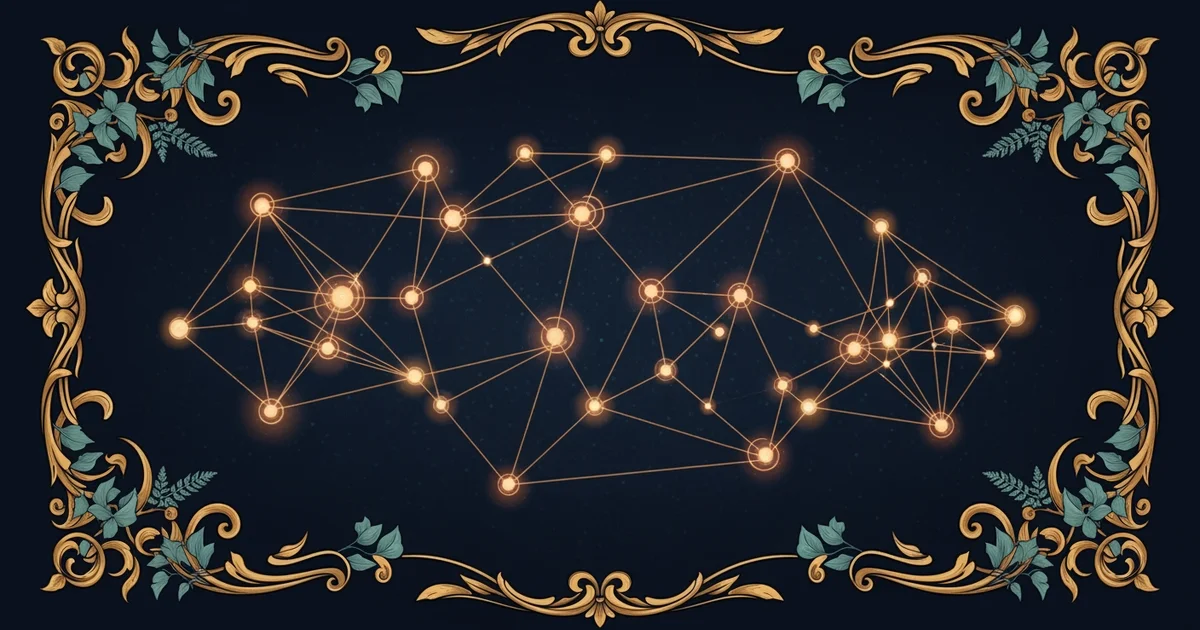
When we send digital information, we use a process called packet switching to manage the flow. Instead of keeping a file whole, the system chops the data into small, manageable chunks called packets. Each packet contains a small piece of the original file and an address label. This label tells the network exactly where the piece belongs and how it fits into the larger picture. By breaking data down, computers ensure that no single message occupies the entire bandwidth of a connection for too long. If a specific path becomes crowded or blocked, the network can reroute individual packets through different lanes to reach the same destination. This flexibility makes the internet incredibly resilient and fast for everyone involved.
Key term: Packet switching — a method of grouping data into small units that travel independently across a network to be reassembled later.
Once the data is fragmented, the network treats each packet as an independent traveler. These packets do not need to follow the same path to reach their destination. They might take different routes depending on current traffic conditions or hardware availability. Think of this like mailing individual puzzle pieces through different mail carriers. Some pieces might arrive early, while others could take a scenic route through a different city. The destination computer holds all incoming packets in a temporary buffer until every single piece arrives safely. Once the collection is complete, the computer uses the sequence numbers on the labels to arrange the pieces back into the correct order. This process happens in milliseconds, making the delay invisible to the user.
Managing Traffic Through Segmentation
To understand how these packets move, we must look at the specific steps involved in the transmission process. The system relies on a standardized sequence to ensure that no data is lost or corrupted during the journey. The following steps outline how a file transitions from a single entity into a stream of independent packets:
- Segmentation occurs when the source device divides the original file into smaller, uniform chunks of data.
- Addressing happens as the system attaches a header to each chunk, noting the sender and receiver identity.
- Routing involves the network hardware analyzing the destination address to determine the most efficient path for each packet.
- Reassembly takes place at the destination, where the computer uses sequence numbers to put the pieces back together.
This structured approach ensures that complex information stays intact even when traveling over unreliable or busy digital pathways. Without this segmentation, a single large download could paralyze an entire network for other users. By sharing the available pathways, packet switching allows millions of devices to communicate simultaneously without creating permanent traffic jams. The network essentially acts like a smart traffic controller that keeps all vehicles moving at a steady pace. This efficiency is the reason you can stream video while someone else in your house browses the web. Each action is merely a series of small, well-managed packets flowing through the same infrastructure.
Data moves efficiently through networks by breaking large files into independent pieces that are reassembled only after they reach their destination.
But what does it look like when these pathways face threats that try to intercept or corrupt the moving data?