
The Purpose of Bipedalism
Imagine you are navigating a crowded hallway while carrying a heavy stack of books in your arms. You must constantly adjust your balance to avoid bumping into others or dropping your precious cargo. This physical balancing act mirrors how engineers design robots to move through our complex world. If a robot cannot manage its own weight, it becomes a stationary object instead of an active participant. By studying how humans stay upright, we unlock the secrets to building machines that can help us in our daily lives.
The Mechanics of Upright Stability
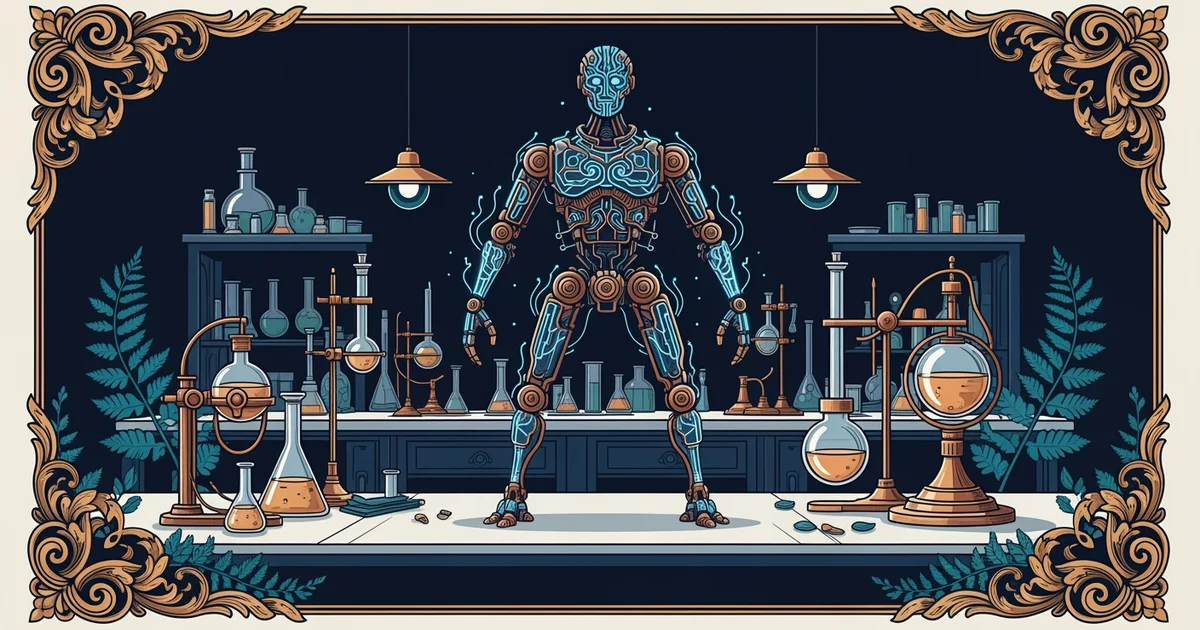
Moving on two legs allows a machine to traverse uneven surfaces that would stop a rolling wheel. When a robot uses bipedalism, it mimics the way humans shift their center of gravity to stay upright. This process requires constant adjustments because the robot is essentially falling forward with every single step it takes. Imagine trying to balance a broomstick on your fingertip while walking across a room full of furniture. The robot must calculate its position and weight distribution many times per second to prevent a total collapse. This constant recalculation is the primary challenge for engineers working on modern humanoid designs.
Key term: Bipedalism — the capability of an organism or a machine to move effectively using only two rear limbs or legs.
Engineers often compare this movement to the way a business manages its budget during a busy fiscal year. Just as a company must shift resources to cover unexpected costs, a robot shifts its weight to maintain balance during movement. If the robot ignores these small shifts, it will lose its footing and fail to complete the task. This dynamic stability is what separates a simple automated machine from a true humanoid robot. Without the ability to recover from minor slips, a machine remains trapped in a controlled environment where the floor is always perfectly flat.
Advantages of Humanoid Design
Building robots that stand on two legs provides specific benefits for interacting with human environments. Our world is filled with stairs, narrow doorways, and furniture designed for people who walk on two feet. A robot that walks like a human can navigate these spaces without requiring expensive renovations or structural changes to our homes. The following list highlights why this design choice is so important for future technology:
- Energy efficiency improves when a robot uses its own momentum to swing its legs forward during walking cycles.
- Versatility increases because a bipedal robot can step over obstacles that would trap a machine using wheels or tracks.
- Interaction becomes more natural since the robot occupies a similar physical space and height as the people it assists.
These factors mean that a humanoid robot can work in a kitchen or an office without causing disruptions. By choosing this form, designers ensure the machine can use tools and reach shelves meant for human hands. This design choice turns a complex machine into a helpful assistant that fits perfectly into our existing lifestyle.
| Feature | Bipedal Robot | Wheeled Robot | Tracked Robot |
|---|---|---|---|
| Stairs | Excellent | Impossible | Poor |
| Speed | Moderate | Fast | Slow |
| Space | Compact | Wide | Very Wide |
As shown in the table above, the choice of movement method dictates where a robot can actually function. While wheels are faster on flat ground, they struggle with the vertical nature of our daily lives. Bipedal robots solve this problem by mimicking our own biological movement patterns. This allows them to move through our homes with the same ease that we do ourselves. Understanding this balance is the key to creating machines that act as true partners in our daily work.
Designing robots that walk on two legs allows them to navigate human spaces and interact with our tools effectively.
Now that we understand how robots stay upright, we must explore how they perceive the world around them through sensory input systems.