
Decision Tree Structures
Imagine you are standing at a busy intersection trying to decide which path to take home. You look at the traffic lights, check your watch for the time, and assess if you feel hungry enough to stop for dinner. Non-player characters make similar choices by using a decision tree, which acts like a map of logical branches that guide them toward a final action. This structure allows game developers to create characters that react to the world in ways that feel smart and predictable to the human player.
Understanding Logical Branching
When a game developer builds a character, they must define every possible scenario the character might face during play. A decision tree organizes these scenarios by starting at a single root node and branching out into smaller choices based on specific conditions. If the character sees an enemy, the tree asks a simple question to determine the next step in the logic. This process is like a professional budget plan where you decide to save or spend money based on your current monthly income level. If your income is high, you might choose to save more, but if your income is low, you must prioritize essential bills first.
Key term: Decision tree — a hierarchical model that uses a series of branching logical tests to determine the final behavior of an artificial intelligence agent.
These structures are essential because they turn complex human-like behavior into simple mathematical paths that a computer can process quickly. By testing conditions like distance, health, or weapon status, the character moves down the tree until it reaches a leaf node that defines an action. This action might be to attack, hide, or patrol the area until a new condition triggers a different path. Because the computer checks these paths many times per second, the character appears to be thinking in real time as the game world evolves around the player.
Implementing Tree Logic
To see how this works in a practical setting, consider a simple enemy encounter where the character must choose between attacking or retreating. The logic follows a set flow that evaluates the environment before the character performs any visible movement in the game world. We can represent this process using a standard flow chart that illustrates how the character processes data to reach a final decision.
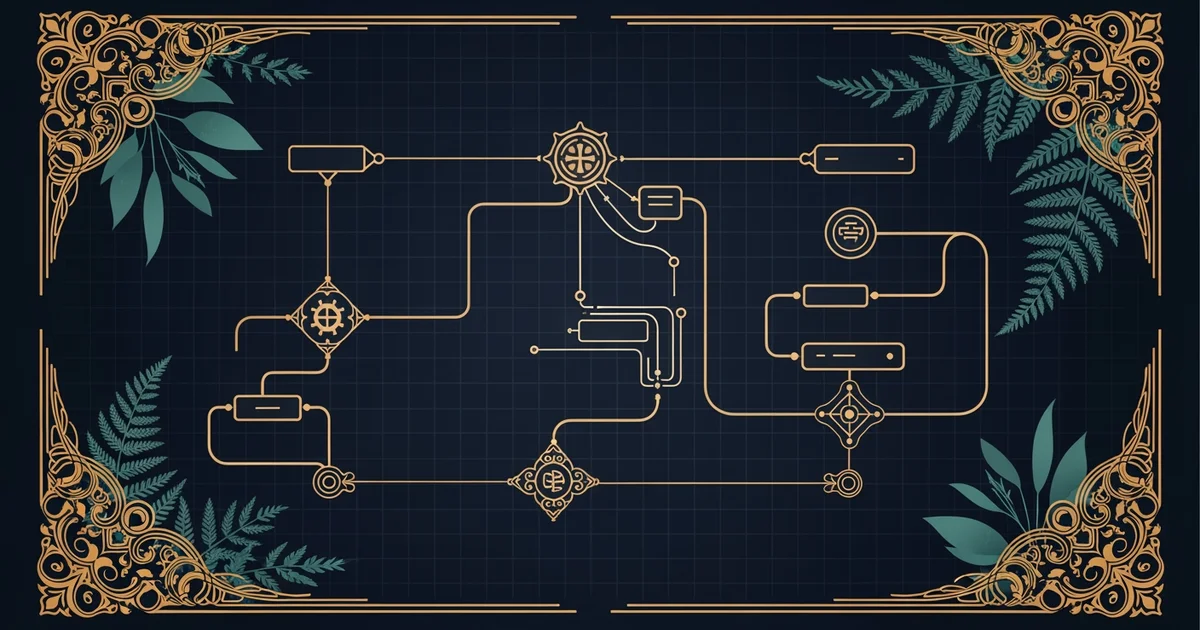
The diagram above shows how the character uses binary choices to navigate its environment effectively. The character starts by checking its own health status to ensure safety before engaging in any combat. If the health is low, the character immediately chooses to retreat, avoiding a loss in the game. If the health is high, the character checks the distance to the enemy to decide if it should attack or continue patrolling the area. This simple loop provides the foundation for more complex behaviors that developers add later in the project.
When you design these systems, you must ensure that every branch leads to a valid outcome for the character. If a branch is missing, the character might freeze or act in a way that breaks the immersion for the player. Developers often use a table to track these conditions to ensure they cover every possible state the character might encounter during a mission.
| Condition | Check Value | Resulting Action |
|---|---|---|
| Health | Below 20% | Retreat |
| Distance | Under 5m | Attack |
| Enemy | Not Found | Patrol |
This table helps programmers visualize the logic without needing to read through hundreds of lines of code. By organizing the data this way, you can easily adjust the difficulty of the game by changing the threshold values. For example, making the character retreat at 40% health instead of 20% makes the enemy seem much more cautious and realistic during difficult fights. This flexibility is the primary reason why developers rely on trees for basic character intelligence in modern gaming.
Decision trees allow game characters to perform complex actions by following a series of logical branches that evaluate the current state of the game environment.
The next Station introduces pathfinding basics, which determines how characters move across the map after they have decided on an action.