
The Photocatalytic Cycle
Imagine a tiny solar panel that powers a factory instead of a house. This device sits inside a flask and captures light to drive chemical changes. When we use light as our primary power source, we change how we build complex molecules. We no longer rely on harsh heat or heavy metals to force reaction steps. Instead, we use the energy of a single photon to jumpstart a chain reaction. This process is the heart of modern chemistry. It turns simple visible light into a tool for creating vital medicines. By controlling this flow of light energy, we can build structures that were once impossible to make.
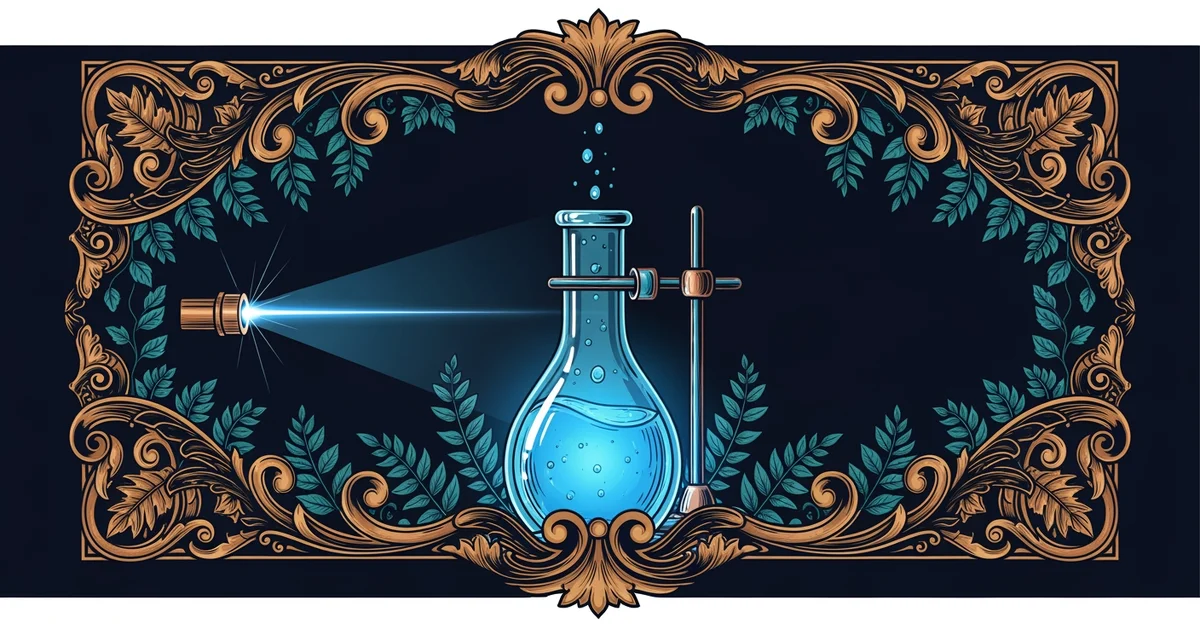
The Anatomy of the Photocatalytic Cycle
Every reaction cycle starts when a light-sensitive molecule enters an excited state. We call this molecule a photocatalyst. When this catalyst absorbs a photon, its internal energy level rises significantly. The molecule is now primed to give or take an electron from other nearby chemicals. Think of this process like a runner waiting for a starting pistol to sound at a race. The runner has potential energy stored, but they need that external signal to start moving. Once the catalyst is excited, it interacts with a starting material to spark the transformation. This initial step is the most critical part of the entire cycle.
Key term: Photocatalyst — a substance that uses light energy to speed up a chemical reaction without being consumed itself.
Once the catalyst has done its work, it must return to its original form. This return trip is known as the catalytic turnover. If the catalyst does not reset, the reaction will stop after just one single event. We need the catalyst to cycle back to its ground state so it can capture more light. This is similar to a delivery driver who must return to the warehouse after every drop. If the driver stays at the customer's house, no more packages can be moved. The cycle depends on a constant flow of materials in and out of the reaction space.
Mapping the Reaction Steps
We can break down the full cycle into four distinct stages that repeat in a loop. Each stage must happen in the right order to ensure the final product forms properly. If one stage fails, the entire chain of events breaks down quickly. The following list explains these steps in detail:
- Excitation occurs when the catalyst absorbs a photon to reach a high-energy state.
- Electron transfer happens when the excited catalyst interacts with a reactant molecule.
- Product formation follows as the reactant changes into the desired chemical structure.
- Regeneration takes place when the catalyst returns to its original ground state.
This cycle works because the catalyst acts as a bridge between light and matter. The light provides the energy, while the catalyst provides the pathway for that energy to move. Without the catalyst, the light would simply pass through the mixture without causing any lasting change. By using the catalyst, we turn photons into a controlled stream of chemical work. We can monitor this process by watching the color changes in our reaction flask. These changes tell us if the cycle is moving at the right speed. If the color remains static, we know the cycle has stalled and needs more light.
| Cycle Stage | Action Taken | Resulting Change |
|---|---|---|
| Activation | Photon absorbed | Energy level rises |
| Interaction | Electron moved | Reactant is altered |
| Release | Product formed | New molecule created |
| Turnover | Catalyst reset | Cycle starts again |
This table shows how each step contributes to the final goal of molecule building. Each stage is necessary for the next one to occur in sequence. When we balance these steps, we create a steady stream of product molecules. This efficiency is why light-driven chemistry is so useful for making new drugs. We can scale these reactions to produce large amounts of material quite easily. The beauty of this method lies in its simplicity and its reliance on clean energy. We are moving toward a future where light replaces expensive and toxic chemical reagents.
The photocatalytic cycle converts light energy into chemical potential to drive reactions while ensuring the catalyst resets for continuous use.
But what does it look like when the cycle is interrupted by external molecules?
Want this with sources you can check?
Premium Learning Paths for Chemistry & Molecular Science are researched against open-access libraries — PubMed, arXiv, government databases, and more — with their distinctive claims cited to real sources and independently checked.
See what Premium includes