
Social Hierarchy Dynamics
Imagine you are waiting in a long line for a concert ticket. Someone pushes ahead of you to grab the final spot in the queue. You feel an immediate, sharp sense of unfairness that demands a response to restore your standing. This reaction is not just a personal mood but a deep biological drive linked to our ancestral survival needs. Humans constantly evaluate their position relative to others to secure access to resources and mates.
The Evolutionary Basis of Status Seeking
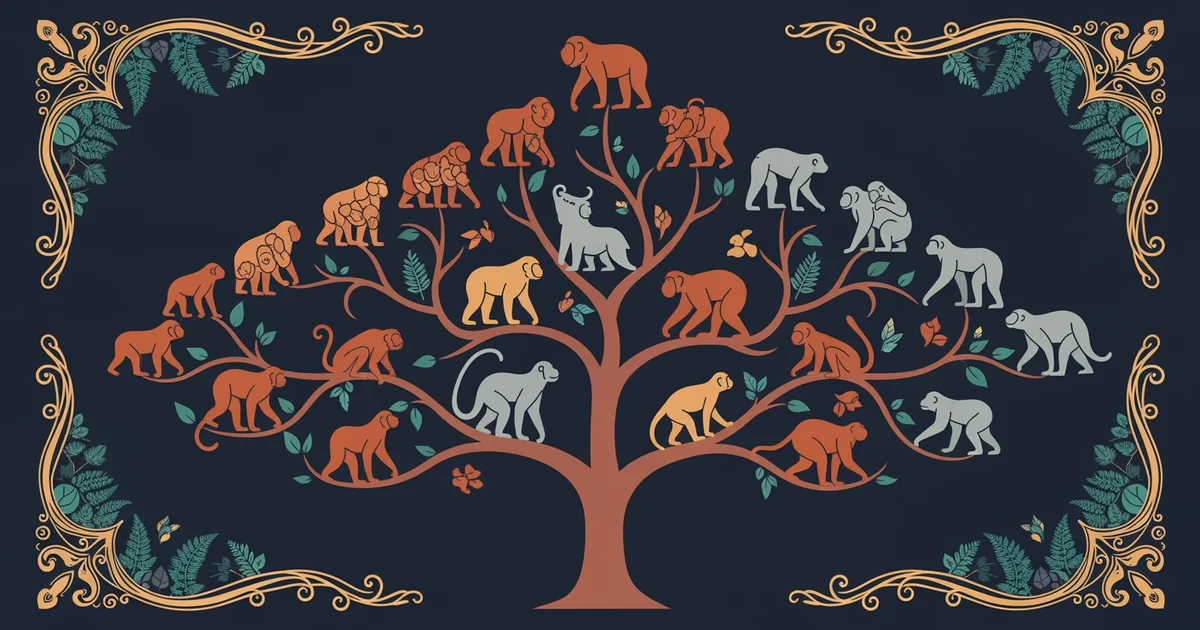
Our ancestors lived in small, tight groups where social rank determined who ate first during times of scarcity. Those who successfully navigated these hierarchies gained greater access to food, shelter, and healthy partners. This advantage directly increased their chances of survival and passing on their genes to the next generation. Over thousands of years, natural selection favored individuals who were sensitive to their social standing. This drive for status functions like a internal compass that constantly monitors group dynamics to ensure an individual remains near the top of the social ladder. When we feel the need to prove our worth or defend our reputation, we are responding to these ancient pressures. The desire for status is not merely about vanity but serves as a fundamental mechanism for managing individual fitness within a competitive group environment.
Key term: Fitness — the biological measure of an individual's success in surviving and reproducing within its specific environment.
Maintaining a high rank requires constant vigilance because social structures are fluid and subject to change. An individual must balance the benefits of dominance with the risks of social conflict or group exclusion. If an individual pushes too hard for dominance, they risk being ostracized by the group for being overly aggressive. If they do not push at all, they may lose access to vital resources needed for their own health. This balance is similar to managing a budget where you must weigh the immediate gain of a purchase against the long-term stability of your savings. You cannot spend everything at once without risking future bankruptcy, just as you cannot dominate every interaction without risking future social isolation. This delicate economic management of social capital defines how we interact in modern workplaces or schools.
Mechanisms of Social Hierarchy Maintenance
Social hierarchies are maintained through complex signals that communicate rank without needing physical violence in every instance. These signals help members of a group understand their relative positions, which prevents unnecessary energy waste from constant fighting. We use subtle cues like body language, tone of voice, and professional titles to establish and reinforce these hierarchies daily. By recognizing these signals, individuals can navigate social spaces with less conflict and more efficiency. The following table outlines how different status signals function to stabilize the group:
| Signal Type | Primary Function | Behavioral Outcome |
|---|---|---|
| Non-verbal | Establish presence | Reduces confrontation |
| Resource display | Signals capability | Attracts group support |
| Verbal influence | Directs group action | Enhances social rank |
These signals act as a silent language that everyone in the group learns to interpret from a young age. When someone displays confidence, others often defer to them, which reinforces that person's high status within the local hierarchy. This process is not random but follows predictable patterns that keep the group functioning as a cohesive unit. Even in modern society, we see these same mechanisms at play when leaders are chosen or when social groups form around shared interests or goals. Understanding these dynamics helps us see that even our most complex social behaviors are rooted in the same biological imperatives that guided our ancestors in the wild. We are hardwired to seek, maintain, and defend our place in the hierarchy to ensure our continued success and well-being.
The drive for social status is a biological tool used to secure resources and increase reproductive success by navigating the complex hierarchies of human groups.
But what does this look like in practice when we attempt to share information or influence others through communication?