
The Mystery of Early Growth
Imagine watching a tiny grain of sand suddenly grow into a massive, complex skyscraper. This transformation seems impossible in our daily lives, yet it happens inside every living thing. Nature starts this process with a single, humble cell that holds the instructions for everything to come. Understanding how this microscopic start becomes a complex being is the ultimate puzzle of life. This journey requires precise timing, careful division, and a clear plan that guides each new cell toward its future role.
The Journey from One to Many
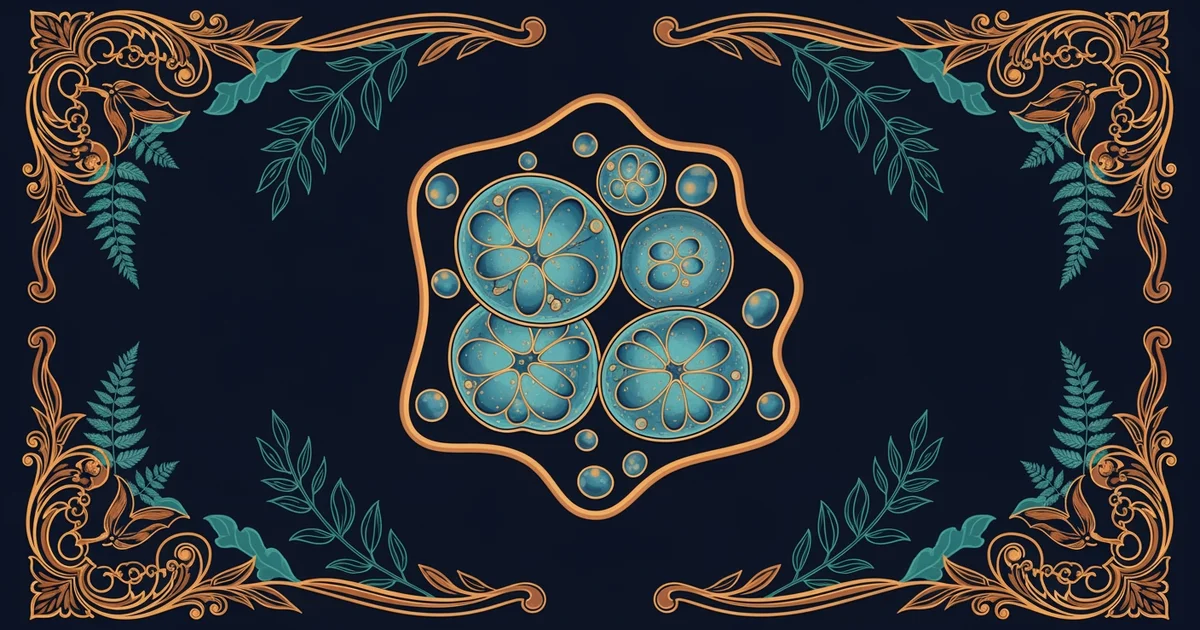
When life begins, the first stage involves a single, unified cell known as a zygote. This cell acts like a master architect who holds the entire blueprint for the building inside a single room. It does not stay alone for long because growth requires rapid division to create the necessary building blocks. Each division doubles the number of cells, turning one unit into two, then four, and eventually many. Think of this like starting a business with one person who must quickly hire a team to handle different tasks. If the team does not organize, the business cannot function, just as a cluster of cells needs structure to thrive.
As these cells multiply, they eventually form a hollow, ball-like shape that scientists call a blastula. This stage represents a major shift from a simple pile of cells into a structured, organized form. The transition is vital because it creates the space needed for cells to move and specialize later on. Without this hollow center, the organism would remain a dense, unorganized mass that cannot develop complex organs or limbs. The blastula stage is like the foundation of a house where the walls are set, defining the inner and outer boundaries of the future structure.
Key term: Blastula — a hollow sphere of cells that forms during the early stages of development and serves as the foundation for future growth.
Organizing the Blueprint of Life
The process of moving from a zygote to a blastula follows a very strict set of rules. Cells do not just divide randomly; they follow a path that ensures every part of the organism has enough material to grow. This early development relies on a process where the cell volume stays the same while the number of individual cells grows rapidly. It is much like a large cake being sliced into smaller and smaller pieces without changing the total size of the dessert. This allows the organism to create many specialized units while keeping the overall size manageable for the early environment.
To see how this progression works, we can look at the stages of early growth through a clear, sequential process:
- Fertilization occurs when two halves join to create the initial zygote, which contains all the instructions for the organism.
- Rapid cell division begins immediately, where the zygote splits into smaller cells without increasing the total mass of the embryo.
- The cells continue to pack together until they form a solid cluster, which then rearranges itself into a hollow sphere.
- The final blastula stage marks the end of this foundational period, preparing the embryo for the next step of specialized growth.
This sequence ensures that the organism has a solid base before it attempts to build complex features like hearts or brains. If these steps happen out of order, the entire development process would fail to produce a healthy, functioning living thing. By mastering these early stages, the embryo sets itself up for the complicated work of turning simple cells into eyes, muscles, and bones.
Development starts with a single cell that divides and organizes into a hollow structure to prepare for building complex body parts.
This path will show you how genetic blueprints provide the specific instructions that tell these organized cells exactly what they should become.