
The Fossil Record
Imagine you are digging in your backyard and discover a perfectly preserved seashell buried deep beneath the soil. Finding such a relic feels like uncovering a secret message from the distant past of our planet. This simple discovery reveals how geological layers act like a library of life. Each layer of dirt acts like a page in a history book that tells us about animals that lived long ago. When we study these layers, we see the story of how complex life grew from tiny beginnings. We learn about ancient creatures by looking at the hard remains they left behind in the earth.
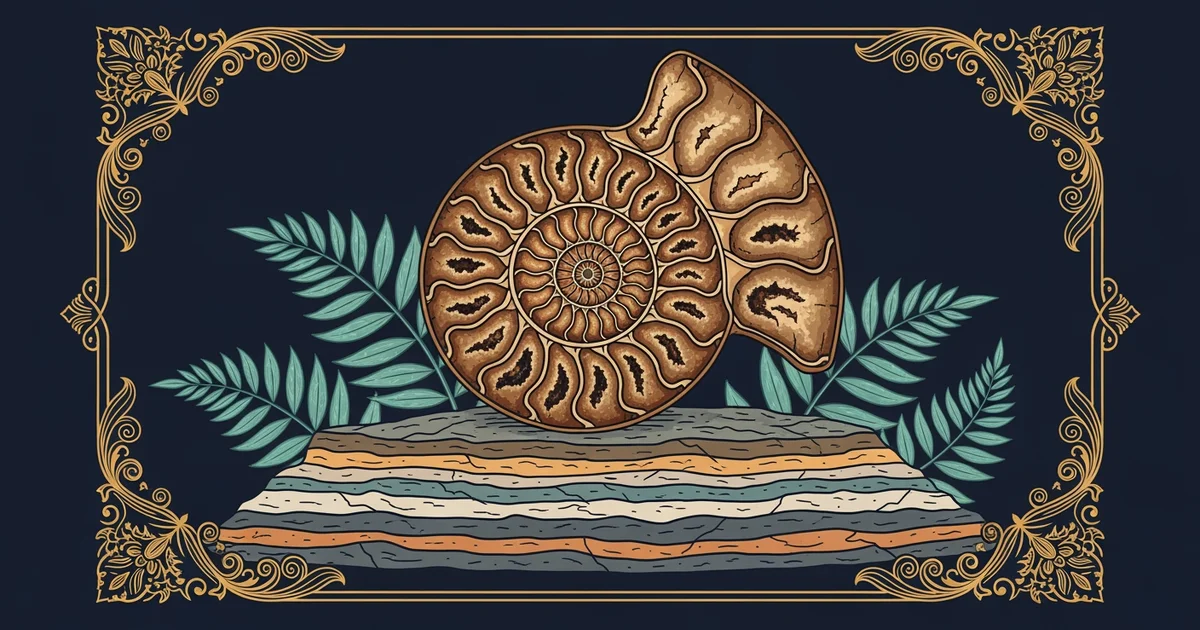
The Process of Creating a Fossil
To understand this history, we must first look at how a living thing becomes a permanent record. Most organisms decay quickly after they die, returning their nutrients to the soil for new plants. Only a tiny fraction of life ever becomes a fossil, which is the preserved trace of an ancient organism. This process usually requires the creature to be buried rapidly by mud, sand, or volcanic ash. This quick burial protects the body from scavengers and slows down the natural process of bacterial decay. Over many millions of years, minerals from groundwater seep into the bones or shells.
Key term: Fossilization — the natural process where organic remains are replaced by minerals, turning them into stone over vast geological time.
Think of this process like an investment account that gains interest over time. If you bury a valuable item in a safe vault, it stays protected from the elements for years. In nature, the sediment layers act as the vault, while the minerals act as the slow deposit that replaces the original bone. Without this specific environment, the history of life would remain a total mystery to us today. The earth acts as a massive archive, but only the items placed in the right conditions survive to be seen by modern eyes.
Reading the Layers of Earth
Once a fossil forms, it stays locked in a specific layer of rock until erosion brings it to the surface. Scientists use the position of these layers to figure out the age of the creatures they find. Older fossils are typically found in the deepest layers of the ground, while younger ones rest closer to the surface. This method of dating allows us to see a timeline of biological development across the history of the globe. We can track how simple forms of life gradually transformed into the complex species we recognize today.
| Feature | Description | Importance |
|---|---|---|
| Sediment | Layers of sand or mud | Protects the remains |
| Mineralization | Replacing bone with rock | Ensures long-term survival |
| Erosion | Wearing away of rock layers | Exposes fossils to view |
By comparing these layers, researchers have built a massive map of evolutionary changes. We see that early life started in the oceans before moving onto land. The evidence shows that species often change in response to major shifts in their environment. When the climate changes, only the organisms best suited to the new conditions tend to survive and leave descendants. This constant cycle of adaptation and survival explains the vast variety of life that exists on our planet right now.
We must remember that the record is not perfect, as many creatures never left behind any traces. Because soft tissues decay so fast, we mostly see the hard parts like teeth, shells, and bones. Despite these gaps, the pieces we do have provide a clear enough picture to understand the path of life. Every new find helps us fill in the missing chapters of this long and complex story. By looking at these ancient markers, we gain a deeper respect for the resilience of life on Earth.
The fossil record acts as a physical archive that allows us to reconstruct the timeline of life by observing how organisms changed over millions of years.
Next, we will explore how scientists classify these diverse organisms into organized groups to better understand their relationships.