
Defining Bio-inspired Design
Understanding Bio-inspired Design
Bio-inspired design seeks solutions to human problems by observing natural systems. When engineers look at nature, they see billions of years of trial and error. Nature solves complex problems through evolution, refining designs over many generations. This process creates highly efficient structures, materials, and processes for organisms to survive. By studying these biological secrets, humans can create better technologies for our own needs.
The Logic of Natural Selection
Nature does not waste energy on designs that fail to perform their specific tasks. If a bird has wings that are too heavy, it will not survive long. If a plant has leaves that cannot capture sunlight, it will slowly starve to death. Evolution acts as a strict editor, removing ineffective traits while rewarding those that work well. This constant pressure creates a library of successful blueprints for us to study today.
Observing Biological Systems
Scientists often start by watching how animals move through their natural environments every day. For example, a shark skin has tiny scales that reduce drag while it swims forward. Engineers study these scales to create better surfaces for ships and fast airplanes. By copying these patterns, we can reduce fuel use and improve speed for human vehicles. This is just one way that small details in nature provide massive benefits for us.
The Role of Patterns in Nature
Patterns are everywhere in the natural world, from the veins in a leaf to webs. These shapes often serve a structural purpose, providing strength while using very little material. When we build bridges or tall towers, we can use these same patterns to save weight. Using less material while keeping high strength is a goal for every modern structural engineer. Nature provides the best examples of how to achieve this balance in our world.
Illustrating Structural Integrity
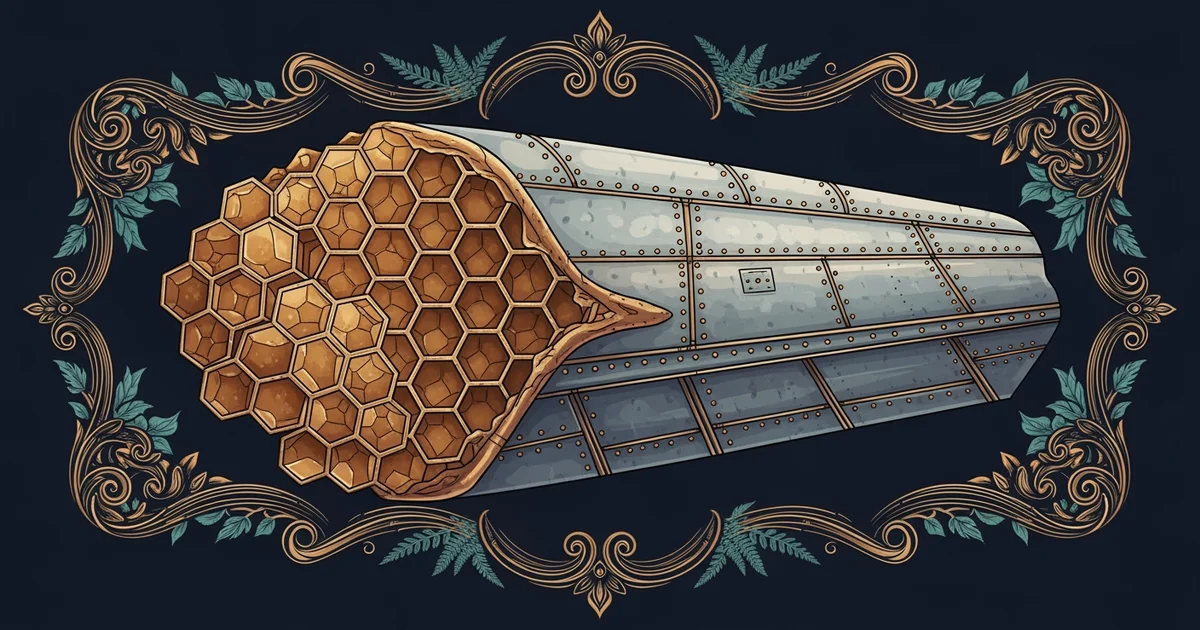
Consider the honeycomb structure found in beehives, which provides incredible strength with minimal wax usage. This geometric arrangement is a classic example of how biological systems optimize space and material.
This diagram shows how the hexagonal shape creates a balance between strength and volume. Humans now use this exact pattern in aerospace materials to create lightweight, durable panels for aircraft. By looking at the hive, we learn how to make planes that are both light and safe.
Connecting Biology to Engineering
To bridge the gap between biology and engineering, we must translate nature into technical terms. We look at the function of an organism and then identify the specific mechanism used. Once we understand the mechanism, we can model it using math and physics principles. This process turns a biological observation into a usable blueprint for a new human invention. It requires patience and a deep respect for the complexity of the natural world.
Why This Matters for Innovation
Our current methods of manufacturing often consume vast amounts of energy and raw material resources. Nature, by contrast, operates in a circular manner, recycling nutrients and energy with great efficiency. If we can learn to mimic these natural cycles, we will create a more sustainable future. Bio-inspired design is not just about making cool gadgets, but about rethinking our whole approach. We are learning to work with nature rather than trying to conquer it through force.
The Future of Living Designs
We are moving toward a future where our buildings might grow like trees or plants. This is the next frontier of bio-inspired design, where structures adapt to their changing environments. Imagine a house that heals its own cracks or a bridge that adjusts to wind. These ideas seem like science fiction, yet they are based on biological reality. By studying how organisms grow and repair themselves, we are unlocking new ways to build. We are becoming students of the ultimate engineer, which is the natural world itself.
Summary of the Bio-inspired Path
Throughout this course, you will explore how nature guides human technology and engineering progress. We will look at materials, movement, and energy systems to see how biology informs design. You will learn to see the world as a giant laboratory filled with solutions for us. By the end of this journey, you will understand the deep connection between biology and technology. Get ready to rethink how we build, move, and grow in our modern human society.