
Future Settlement Architectures
Building a permanent home on a harsh moon requires more than just bringing supplies from Earth. We must learn to turn raw lunar dust into the very walls that protect our fragile human bodies.
Integrating Industrial Systems for Survival
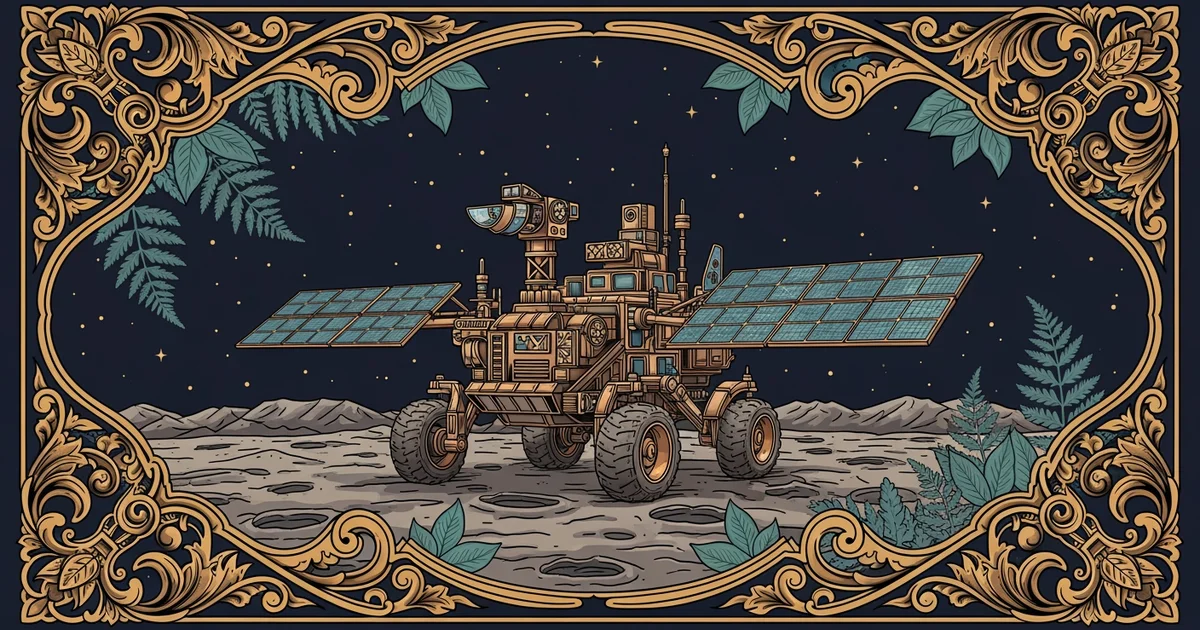
To survive long-term, we must view a lunar outpost like a living, breathing organism that consumes local resources. We take the raw materials gathered through mining and feed them into massive automated manufacturing units. These units transform loose dust, known as regolith, into sturdy bricks or metallic components for habitat expansion. This process mirrors how a city relies on a local power grid and water supply to keep its citizens safe. By linking mining directly to our building needs, we reduce the heavy cost of shipping materials from our home planet. This creates a closed-loop system where every gram of mined material serves a vital role in keeping us alive.
Key term: In-situ Resource Utilization — the practice of using materials found on a planetary body to sustain human life and operations.
When we combine these industrial systems, we turn a dead rock into a functional habitat. We must manage energy, air, and structural integrity as one single, complex machine. If the mining equipment fails, the manufacturing unit stops, which eventually leads to a halt in habitat growth. This interdependence is the core challenge of space settlement design today. We are essentially building a house while living inside it, using only the tools we can forge from the ground beneath our feet. Success depends on our ability to keep these systems running in perfect harmony without any outside help from Earth.
Designing for a Self-Sustaining Ecosystem
Creating a stable living environment requires us to balance many different needs at the same time. We must ensure that our air, water, and food systems work together to keep the population healthy. A self-sustaining lunar base relies on several core pillars to maintain its internal environment:
- Atmospheric Recycling: Advanced systems scrub carbon dioxide from the air and convert it back into breathable oxygen for the crew.
- Water Reclamation: Every drop of moisture from sweat, breath, and waste is captured and purified for constant reuse within the base.
- Thermal Management: Specialized insulation layers protect the interior from extreme temperature swings that occur between the lunar day and night.
These components are not just separate gadgets but parts of a single, unified life support architecture. If we look at how these systems compare, we see how they balance the limited resources we have available.
| System | Primary Function | Input Source | Output Product |
|---|---|---|---|
| Air Scrub | Breathable gas | Regolith oxygen | Clean air supply |
| Water Loop | Hydration supply | Recycled waste | Potable water |
| Power Grid | Energy delivery | Solar radiation | Base electricity |
We must also face the tension between economic viability and the high safety standards required for human survival. Previous studies suggested that mining might be profitable, but safety costs often balloon once we add living quarters. If we prioritize profit over safety, we risk losing the entire mission to a single system failure. We must instead design architectures that treat safety as a core part of the manufacturing process itself. This requires a shift in how we think about space exploration, moving from short missions to permanent residence. The goal is to build a foundation that can grow as our technology improves over the coming decades.
How do we ensure that these complex systems remain functional over many years of isolation? We must design them to be modular, allowing for easy repairs and upgrades without shutting down the entire base. Each module should serve multiple roles, such as a wall that provides radiation shielding while also housing electrical wiring. By thinking of our settlement as a modular puzzle, we can adapt to new needs as the population grows. This flexibility is the final piece of the puzzle for a truly permanent human presence beyond Earth. We are no longer visitors in space, but residents learning to build our own stable future.
True sustainability in space requires an integrated architecture where mining, manufacturing, and life support function as a single, self-correcting ecosystem.
Our next step involves navigating the policy and ethical frontiers that will govern how we own and manage these distant territories.