
Pathways to Interplanetary Life
Floating in the silent vacuum of space, we face a massive hurdle in our quest to colonize other worlds. We cannot rely on supply chains that stretch millions of miles back to our home planet Earth.
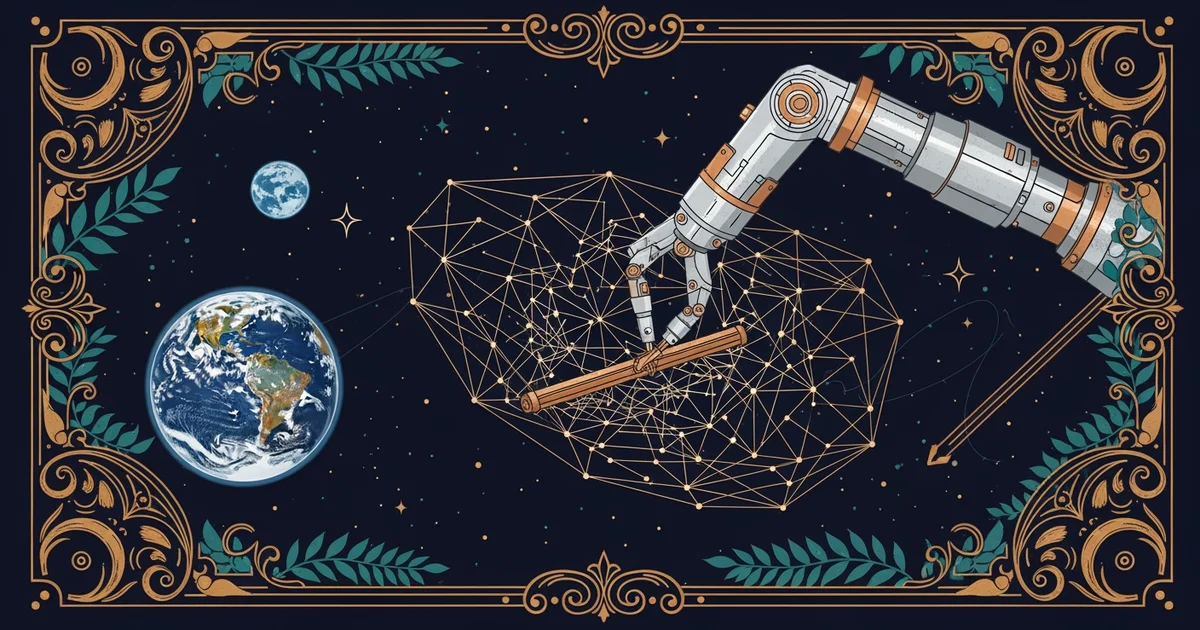
The Shift to In-Situ Manufacturing
To survive long-term, we must master In-Situ Resource Utilization, which means creating what we need from local materials found on moons or asteroids. Just as a pioneer builds a cabin from nearby timber instead of hauling boards across a continent, we must craft our habitats using lunar dust or metallic space rocks. This shift represents a move from being space visitors to becoming space residents. Relying on Earth for every spare bolt or structural beam makes exploration too slow and expensive for permanent human life.
Building complex tools while floating in a vacuum requires us to harness advanced printing techniques that can operate without gravity. Previous stations highlighted how orbital hubs serve as test beds for these systems. We now see that integrating these hubs into a wider network allows us to scale our production capabilities. This creates a self-sustaining cycle where initial robots print parts for larger machines, which then build even more complex infrastructure.
Key term: In-Situ Resource Utilization — the practice of extracting and processing local planetary or asteroid materials to create essential goods and fuel for space missions.
Scaling Infrastructure for Deep Space
Once we perfect the art of printing parts in orbit, we can begin to construct massive arrays that support human life. Consider the way a city grows around a central railroad hub; our space stations act as the initial anchor points for interplanetary growth. By using Additive Manufacturing techniques, we can print components that are too large to fit inside a standard rocket fairing. This removes the size limits that currently restrict our engineering designs.
| Production Stage | Primary Material | Output Goal | Dependency Level |
|---|---|---|---|
| Early Phase | Earth Polymers | Small Tools | High Reliance |
| Growth Phase | Recycled Scrap | Spare Parts | Moderate Need |
| Mature Phase | Lunar Regolith | Habitats | Self-Sustaining |
We must solve the problem of power management to keep these printing factories running at full capacity. The energy demand for melting metal or sintering dust in space is immense, requiring us to deploy large solar or nuclear arrays. These power systems themselves must eventually be printed or maintained by the very machines they help operate. This creates a closed-loop system where energy and materials are constantly recycled to push the boundaries of our reach further into the solar system.
- Initial probes identify mineral-rich sites on asteroids for mining operations.
- Autonomous machines refine raw materials into usable powders or metallic filaments.
- Large-scale printers construct pressurized living quarters and radiation shields.
- Human crews arrive to occupy these pre-built structures for long-term study.
This progression ensures that we do not waste precious launch capacity on heavy items that we can build on-site. By focusing on the synthesis of local resources, we solve the foundation question of building structures in the vacuum of space. We move away from the fragility of single-point supply lines and toward a robust, distributed network of interplanetary outposts. This evolution is the only way to ensure that human life can persist beyond the protective bubble of our home planet.
True interplanetary independence requires us to treat extraterrestrial environments as sources of raw materials rather than merely obstacles to our expansion.
Mastering the ability to manufacture tools and habitats from local space resources is the fundamental requirement for establishing permanent human settlements across the solar system.