
Historical Evolution of Home Automatio
Imagine waking up in a home where the lights, heat, and coffee maker operate without you lifting a single finger. While this sounds like a modern dream, the roots of these systems stretch back decades into the past. Early inventors dreamed of a future where manual labor inside the home would vanish through clever mechanical designs. They viewed the house as a complex machine that required constant input from the owner to function properly. We have moved from simple physical switches to complex digital networks that learn our daily habits and preferences over time. Understanding this history helps us see why modern systems feel both remarkably intuitive and occasionally frustrating to manage today.
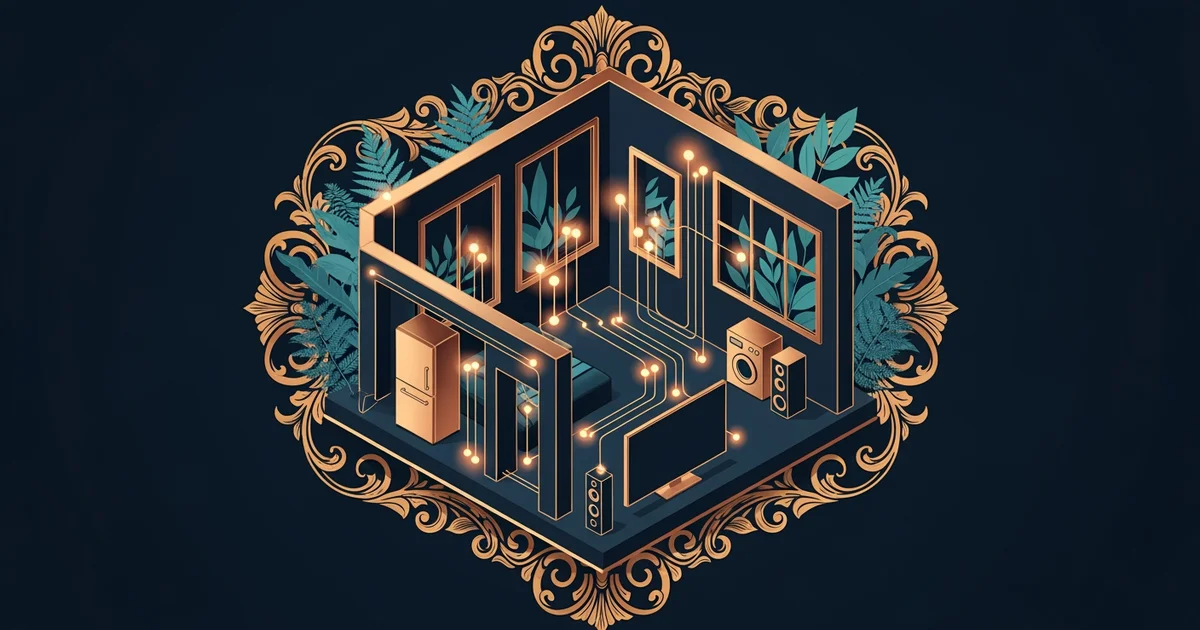
The Era of Mechanical Control
Early home control relied on physical interactions rather than invisible wireless signals or smart software logic. Homeowners had to be physically present to adjust a thermostat or turn on a distant set of lights. This is like managing a complex business by sending handwritten letters to every single department instead of using email. You had to physically walk to the source of the power to make any change happen. These systems were reliable but lacked the flexibility we expect from modern technology today. They served a single purpose and could not communicate with other devices in the same living space.
Key term: Home Automation — the use of technology to control household features automatically without needing direct human intervention for every task.
As technology advanced, engineers began finding ways to link these isolated systems together into more cohesive units. They introduced centralized control panels that allowed users to manage multiple devices from one specific room. This shift changed the home from a collection of independent tools into a unified environment. It was the first step toward the intelligent living spaces we inhabit in the present day. These early centralized systems required specialized wiring that made them expensive and difficult to install in older houses.
Transitioning to Digital Networks
Moving away from hardwired systems allowed for the rapid growth of wireless communication protocols in residential spaces. Modern homes now use invisible signals to send data between light bulbs, sensors, and central hubs. This evolution mirrors the transition from local paper files to cloud-based storage in the business world. We no longer need to connect every single device to a central wall panel to achieve coordination. Instead, small sensors and controllers talk to each other through shared digital languages across the entire home.
To see how these systems changed over time, consider the following major stages of residential evolution:
- Manual control systems required direct human contact with switches to operate any household device or utility feature.
- Centralized control panels allowed users to manage multiple connected devices from one single location inside the house.
- Wireless digital networks enabled devices to communicate across rooms without the need for extensive new home wiring.
- Intelligent adaptive systems now observe user behavior to predict needs before the human even asks for help.
These stages show a clear path toward greater convenience and efficiency for the average person living at home. We have traded the simplicity of physical switches for the power of complex, interconnected digital environments. Every step in this history brought us closer to a home that understands its own internal state. This progress creates a foundation for the seamless interaction we now seek in our daily lives.
| Era | Primary Method | User Interaction | Complexity Level |
|---|---|---|---|
| Early | Mechanical | Direct Contact | Low |
| Middle | Centralized | Control Panels | Medium |
| Modern | Digital | Networked Apps | High |
This table illustrates how the complexity of our homes has grown alongside our desire for automation. While the technology is more advanced, the ultimate goal remains the same as it was in the past. We want our living spaces to be more responsive to our needs while requiring less effort from us. The shift toward intelligence means our homes now act as partners in our daily routines instead of just being passive shelters. This evolution is the reason we can now expect our homes to anticipate our needs without any manual input.
The history of home automation represents a steady shift from manual physical control toward intelligent and interconnected digital systems.
Understanding these historical patterns provides the necessary context for exploring how modern local network standards function today.