
Future Workforce Dynamics
When a large masonry firm in Chicago replaced manual bricklaying with automated robotic arms, the site foreman witnessed a total shift in daily operations. Workers who previously spent hours lifting heavy materials moved into roles managing digital interfaces and overseeing complex mechanical workflows. This transition mirrors the evolution of the modern construction site where human labor transforms into technical oversight. As machines handle repetitive physical tasks, the workforce must adapt to a landscape defined by digital precision and machine maintenance. This shift represents the core concept of workforce augmentation from Station 12, which highlights how technology enhances human output rather than simply replacing it entirely.
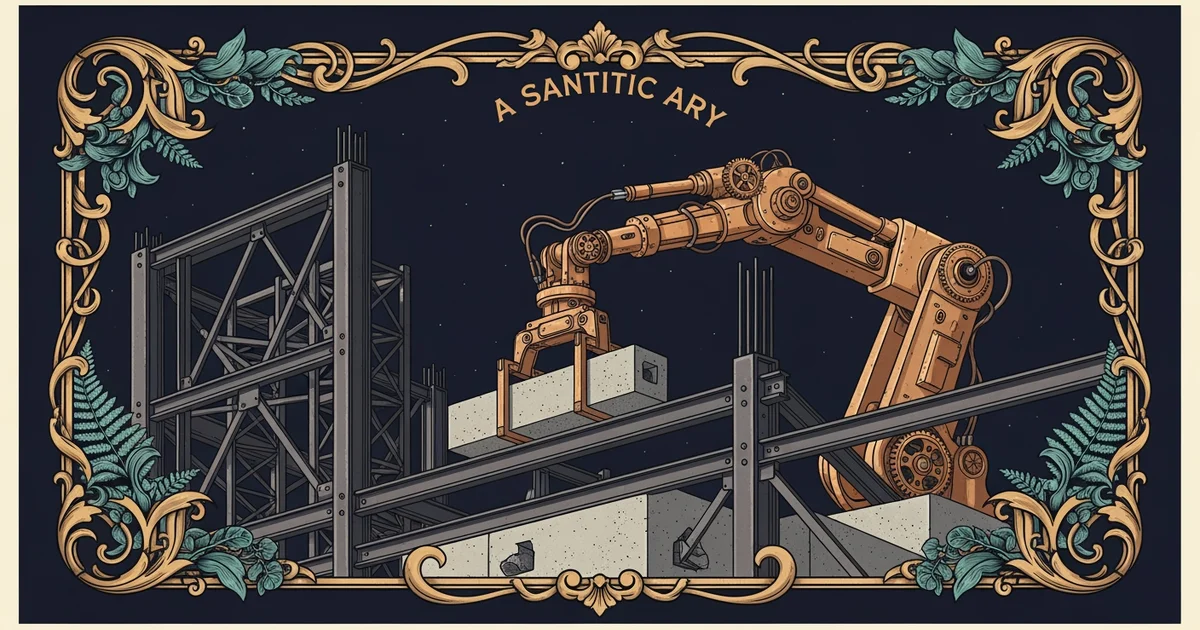
Shifting Roles in Automated Construction
Construction professionals today face a unique reality where traditional manual skills exist alongside high-tech system management. Instead of swinging hammers or hauling mortar, the modern builder often interacts with software that dictates structural placement with millimeter accuracy. This change requires a workforce that understands both physical site conditions and digital data streams. The builder of the future acts as a conductor for an orchestra of machines, ensuring that every automated movement aligns with the architectural design. This evolution suggests that the future of construction lies in the collaboration between human judgment and robotic speed.
Key term: Workforce augmentation — the integration of automated technology to support human workers by increasing their efficiency and safety in complex environments.
Automation functions much like a high-speed assembly line in a car factory, where robots handle the dangerous or heavy lifting while humans perform the final quality checks and adjustments. Just as a factory worker ensures the robotic welding is precise, a site supervisor monitors the robotic arm to ensure structural integrity. This analogy demonstrates that the human element remains vital for decision-making and problem-solving in unpredictable site conditions. Machines provide the raw power and consistency, while humans provide the necessary context and oversight to keep projects moving forward safely.
Adapting Skills for the Digital Site
As the industry changes, workers must acquire new abilities that emphasize technology and safety management. The following table outlines how traditional roles are evolving into modern, tech-integrated positions that require different skill sets.
| Traditional Role | Modern Tech-Integrated Role | Primary Skill Requirement |
|---|---|---|
| Manual Bricklayer | Robotic System Operator | Digital Interface Literacy |
| Site Surveyor | Drone Data Analyst | Spatial Software Proficiency |
| Material Handler | Automated Logistics Manager | Predictive Inventory Control |
These roles demonstrate that the path forward involves a blend of physical expertise and technical knowledge. Workers who embrace these changes gain stability in a market that increasingly values those who can manage automated systems. The transition is not about losing jobs but rather about elevating the nature of the work itself to a more sophisticated level.
Understanding these changes requires looking at how we prepare for this new environment. Developing a resilient workforce involves continuous learning and a willingness to adapt to emerging tools that redefine standard building practices. When workers learn to operate these machines, they become more than just laborers; they become technical specialists who are essential to the success of every modern project. This shift creates a safer environment by reducing the physical strain associated with heavy lifting and repetitive manual labor tasks.
Ultimately, the goal of automation is to create a symbiotic relationship between humans and machines. By focusing on training and adaptation, the industry can ensure that every worker remains a valuable asset in an increasingly automated world. This evolution of the workforce ensures that construction remains a dynamic and rewarding field for future generations of builders and designers.
The future of construction relies on workers transitioning from manual labor toward managing and overseeing sophisticated robotic systems to enhance project output.
But this model faces significant challenges when site conditions become too unpredictable for standard automated systems to navigate effectively.