
Additive Manufacturing Methods
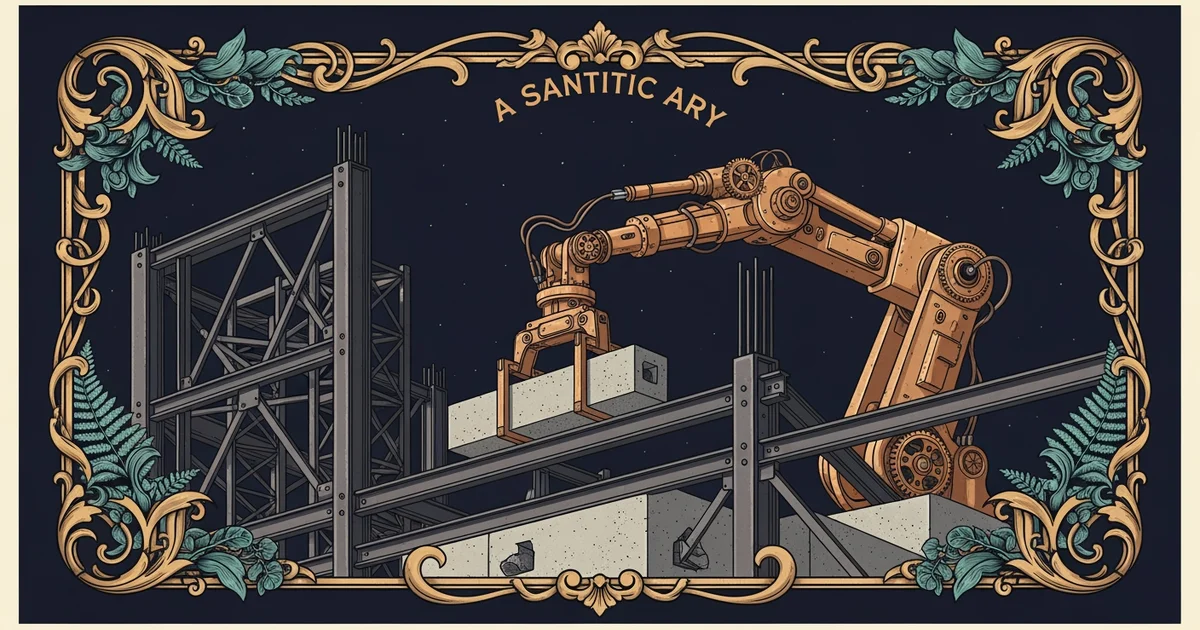
Imagine a construction site where the heavy lifting happens through precise digital instructions instead of manual labor. You might see a massive nozzle moving across a concrete foundation with robotic grace. This process represents a shift in how we approach the creation of physical structures. By layering material directly from a digital file, we move away from traditional methods that rely on stacking heavy bricks one by one. This approach changes the speed, cost, and design potential of modern building projects significantly.
The Mechanics of Layered Construction
Additive manufacturing functions much like a common desktop printer but on a massive scale. Instead of ink, the machine uses a specialized concrete mixture that cures quickly to support the layers above. This technique is known as additive manufacturing because it adds material only where needed. Traditional masonry involves building a wall and then cutting away excess material or filling gaps with mortar. By contrast, this new method builds the structure from the ground up, layer by layer, with extreme precision. Think of it like icing a cake with a steady hand. You build the structure by tracing the shape repeatedly until the final height is reached. This removes the need for complex molds or temporary supports that often clutter traditional building sites. Each layer bonds to the one below it to create a strong, unified wall system.
Key term: Additive manufacturing — a process of creating objects by depositing material in successive layers based on a digital design file.
Efficiency in this field comes from the ability to optimize material usage throughout the entire build process. We can print hollow walls with internal patterns that provide structural strength while using less concrete overall. Traditional masonry requires solid blocks that are heavy, expensive to transport, and labor-intensive to stack correctly. By using software to define the exact path of the nozzle, we eliminate human error during the assembly phase. This precision allows for complex curves and organic shapes that would be nearly impossible to achieve with standard bricklaying tools. The following table highlights the core differences between these two common construction approaches.
| Feature | Traditional Masonry | Additive Manufacturing |
|---|---|---|
| Material | Standard bricks | Liquid concrete mix |
| Labor | High manual skill | Robotic supervision |
| Design | Mostly linear walls | Complex curved shapes |
| Waste | High cutting scrap | Very low material loss |
Benefits for Modern Building Sites
Transitioning to these automated systems offers several distinct advantages for the future of the construction industry. First, the speed of assembly increases dramatically because robots do not require breaks or rest periods. Second, the safety of the workforce improves as machines handle the heavy, repetitive tasks that cause injuries. Third, the environmental impact drops because we produce less waste by printing only the exact amount of material required for the design. These systems also allow for faster iteration during the design phase of a project. If an architect wants to change a wall thickness, they simply update the digital file rather than ordering new physical materials. This flexibility makes it easier to test new ideas without the high cost of traditional trial and error. The shift toward these digital tools is transforming how we think about building homes and large infrastructure projects globally.
Additive manufacturing transforms construction by using digital precision to build structures layer by layer, which reduces waste and enables complex architectural designs that traditional masonry cannot easily achieve.
The next Station introduces subtractive fabrication tools, which determine how machines remove excess material to refine the final shape of a project.