
Defining Modular Architecture
Imagine you are building a complex structure using only small, pre-made blocks that snap together perfectly. You do not need to build the entire house on a single muddy field in the rain. Instead, you assemble the main parts in a clean, dry factory before moving them to the site. This approach changes everything about how we create the spaces where we live and work today. By shifting the focus from manual labor on a construction site to precision engineering in a controlled environment, we change the rules of the game. This method, known as modular construction, turns building into a manufacturing process that prioritizes speed and efficiency.
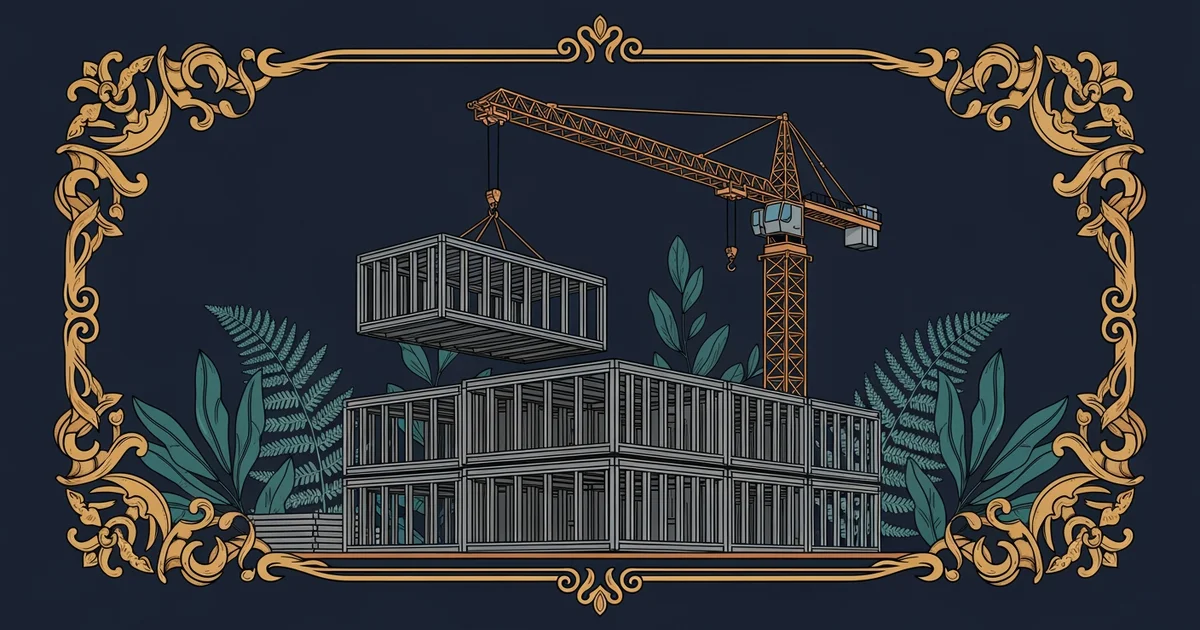
The Logic of Factory Assembly
Construction projects often face delays because weather and logistics disrupt the work on an open site. When you use modular systems, you solve these problems by moving the assembly line indoors where conditions remain stable. Think of this like buying a computer where every component is already tested and integrated before it reaches your desk. You do not need to solder parts or write code to make it function because the heavy lifting happened elsewhere. This process allows builders to create entire rooms or wall sections with high accuracy while the site foundation is still being prepared. The factory environment ensures that every piece fits exactly as designed, which reduces waste and lowers the risk of human error.
Key term: Modular construction — a process where building components are manufactured in a factory setting before being transported to a site for final assembly.
Principles of Efficient Design
Standard building practices often rely on custom work that happens from the ground up at the final destination. Modular systems require a different mindset because they depend on standardized parts that must fit together seamlessly. This design philosophy forces architects to think about the building as a series of connected units rather than one giant puzzle. When you utilize these systems, you gain the ability to scale projects quickly because you can produce multiple units at the same time. The following table highlights why this shift in thinking makes such a big difference for modern projects:
| Feature | Traditional Building | Modular Construction |
|---|---|---|
| Timing | Sequential steps | Parallel work |
| Quality | Variable by site | Controlled factory |
| Waste | Higher on site | Lower via precision |
By comparing these two methods, we see that modular systems prioritize consistency and speed above all else. You can build the foundation of a house while the kitchen and bathroom modules are being finished in a factory miles away.
Scaling the Future of Cities
Efficiency in our modern cities depends on our ability to build faster without sacrificing the safety or quality of the structures. Modular systems provide a way to meet the rising demand for housing by streamlining the entire production cycle. Because the parts arrive at the site nearly finished, the local community experiences less noise, dust, and traffic congestion during the process. This method allows developers to turn empty lots into functional housing units in a fraction of the time required by traditional crews. As we look at the challenges of urban growth, these systems offer a path toward sustainable and rapid development that respects the needs of the neighborhood while meeting the goals of the project owner.
- Design the modules to fit within strict transport limits.
- Manufacture the structural frames and internal finishes in the factory.
- Transport the finished sections to the final site for connection.
- Secure the modules to the foundation and link the utility lines.
This workflow ensures that each step is predictable and repeatable, which is the primary goal of any modern manufacturing system. By embracing these principles, we can rethink how we construct the skyline and provide homes for a growing population with greater ease and lower environmental impact.
Modular construction transforms the building process into a controlled manufacturing sequence that allows for faster assembly, higher precision, and reduced waste compared to traditional site-built methods.
By the end of this learning path, you will understand how these modern techniques integrate with historical building traditions to shape the future of global urban architecture.