
Material Science in Luthiery
A luthier selects a piece of wood for a guitar top, knowing that its internal structure will define the instrument's entire sonic character. You might think that any sturdy board would work, but the secret lies in how the wood cells vibrate and project energy.
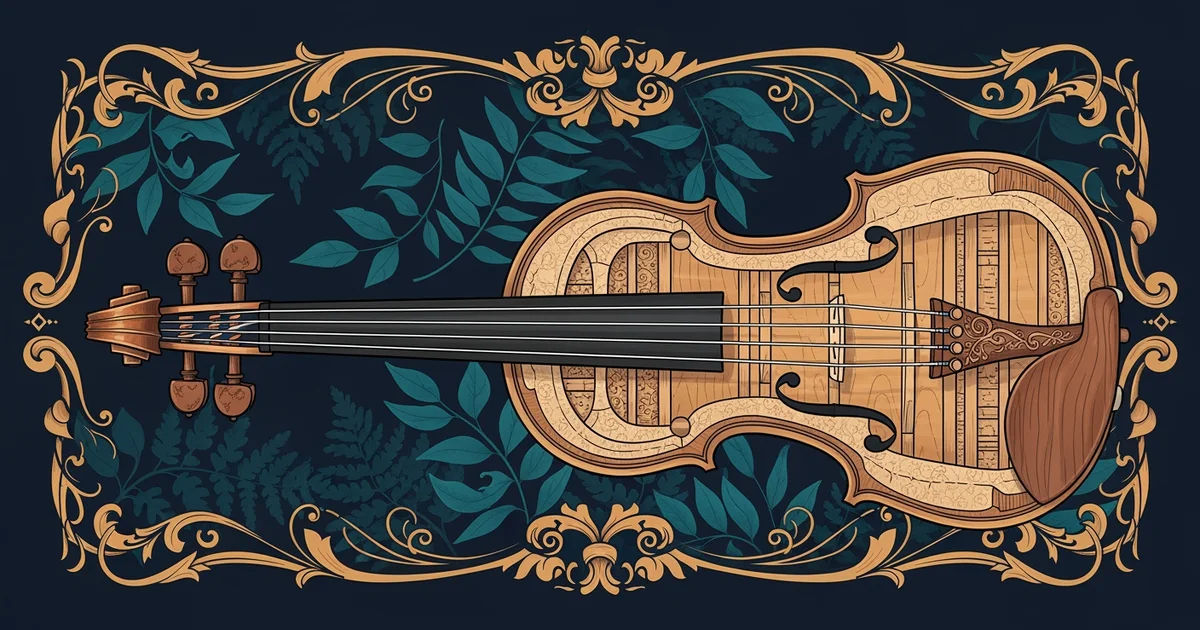
Understanding Wood Density and Acoustic Energy
When sound waves strike the surface of a guitar, the material acts like a filter for those vibrations. Wood density plays a vital role in determining how fast these waves travel through the body of the instrument. Low-density woods, like spruce, are prized because they are lightweight yet stiff, allowing them to move air with great efficiency. Think of this like a lightweight runner on a track; because the runner carries less weight, they can accelerate quickly and maintain a high pace. If the wood were too dense or heavy, it would require much more energy to vibrate, resulting in a dull or muted tone. Luthiers choose specific species to balance this weight against the necessary structural strength required to hold high string tension. By matching the wood to the desired sound, they ensure that every note rings out clearly without losing energy to the material itself.
Key term: Luthiery — the specialized craft of building or repairing stringed musical instruments like guitars, violins, and cellos.
The Role of Cellular Structure in Sound Projection
Beyond simple density, the internal cellular arrangement of the wood dictates how sound reflects and sustains. Softwoods often contain long, hollow fibers that act like tiny conduits for sound waves, helping them travel across the soundboard. Hardwoods, by contrast, possess a more complex and dense cellular matrix that absorbs high-frequency energy while enhancing lower registers. This structural difference is why a guitar top made of cedar produces a warm, dark sound compared to the bright, punchy tone of a maple-backed instrument. The following table highlights how different wood types influence the resulting sound profile of an acoustic instrument:
| Wood Species | Density | Primary Sonic Trait | Typical Usage |
|---|---|---|---|
| Sitka Spruce | Low | Wide dynamic range | Soundboards |
| Indian Rosewood | High | Deep, resonant bass | Back and sides |
| Hard Maple | High | Bright, focused tone | Necks and backs |
Selecting the right combination of these materials allows the builder to sculpt the instrument's final voice. A builder might pair a light, responsive spruce top with dense rosewood sides to achieve a balance of quick attack and long, ringing sustain. This intentional pairing creates a complex harmonic output that provides the player with a versatile and expressive musical tool.
Beyond these structural choices, the way a builder carves the wood further refines the vibration patterns. When a luthier thins the wood, they reduce its mass, which lowers its natural resonant frequency and increases its flexibility. If the wood is carved too thin, it loses the strength to support the strings, leading to structural failure over time. Skilled craftspeople find the perfect middle ground where the wood is thin enough to vibrate freely but thick enough to remain stable. This delicate process of material refinement is what separates a mass-produced instrument from a master-built piece of art. The physics of wood is always a trade-off between the ease of vibration and the long-term durability of the instrument under constant tension.
The physical density and internal cellular structure of wood determine how effectively an instrument converts string energy into audible sound waves.
But what happens when we replace these physical vibrations with purely electronic signals in modern sound synthesis?