
The Legacy of Human Memory
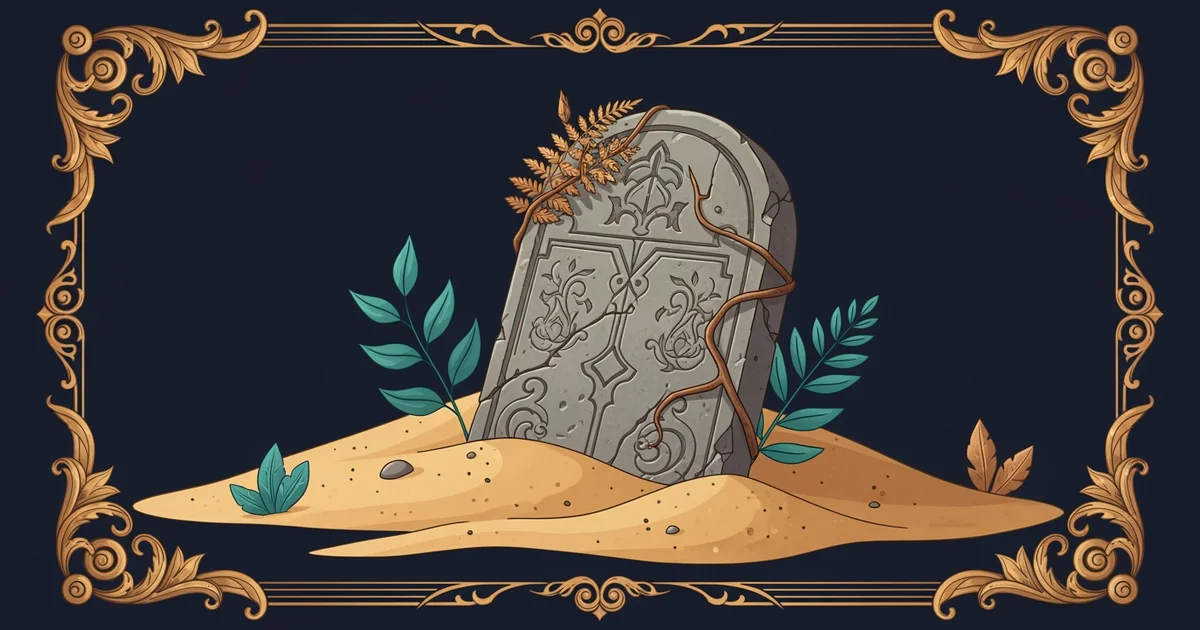
Imagine you are trying to hold a handful of sand tight in your fist. The harder you squeeze your hand, the more grains slip through your fingers and fall away forever. Human history behaves much like that handful of sand because every generation loses details as they pass stories along. We often assume that written words provide a permanent shield against this natural decay of memory. However, the physical reality of history proves that even stone tablets and ancient scrolls face constant threats from time, fire, and neglect.
The Fragility of Recorded Knowledge
When we look back at the vast wisdom of our ancestors, we must acknowledge that survival is a rare exception rather than a rule. Knowledge requires a medium to exist, and every medium carries its own unique risk of total destruction. Think of information like a currency that loses value if it is not constantly spent or traded. If the people who hold the currency disappear or stop using it, that wealth vanishes from the global economy of ideas. We lost most ancient wisdom because the physical vessels holding that data were far more fragile than the ideas themselves.
Key term: Cultural amnesia — the process where societies lose access to their collective history due to the destruction of records or the death of knowledge keepers.
Most societies relied on oral traditions, which functioned like a game of telephone played across hundreds of years. While these stories held immense value, they lacked the rigid structure needed to survive a major societal collapse. Once the specific community holding those oral traditions vanished, the knowledge vanished with them. This creates a cycle where human memory is constantly resetting, forcing every new civilization to rediscover basic truths from scratch. We see this pattern repeated throughout the archaeological record as empires rise, fall, and leave behind only scattered fragments.
Synthesis of Knowledge Loss
Building a durable future requires us to understand exactly how the chain of information breaks under pressure. We can categorize the primary threats to our collective memory by looking at how they disrupt the flow of data across time. The following table illustrates the main factors that cause historical knowledge to slip away into the shadows of the past:
| Threat Type | Mechanism of Loss | Typical Result |
|---|---|---|
| Environmental | Decay of materials | Total loss of data |
| Political | Intentional purging | Erasure of identity |
| Linguistic | Loss of translation | Inaccessible records |
These factors do not act alone, but they often feed into one another to accelerate the loss of information. For instance, when a language dies, the physical records written in that language become useless, even if they remain physically intact. This is the central tension we face when studying the past, as we are forced to reconstruct missing pieces using only the scraps that survived the fire. We must accept that the vast majority of human experience is already lost, which makes the preservation of our current knowledge even more vital.
To understand how these forces interact, we should look at how earlier techniques failed to secure the future. Linguistic reconstruction, which we explored in the previous station, acts as a bridge to recover lost meaning. However, that bridge can only be built if enough fragments remain to form a pattern. Without consistent effort to maintain these records, the cycle of loss will continue to repeat. We are currently living in a unique era where we have the tools to stop this cycle, but we lack the long-term stability to guarantee our own data will survive for thousands of years.
Human knowledge survives only when the physical medium and the cultural context remain intact, making the loss of information an inevitable outcome of societal change.
Building a durable future requires us to design systems that can withstand the inevitable collapse of our current digital and physical infrastructure.