
Future Trends in Edge AI
Imagine a world where your refrigerator knows you are out of milk and orders more before you even notice. This vision of smart hardware relies on processing data right where it lives rather than sending it to a distant cloud server. As we reach the final stage of our journey, we must look at how future hardware shifts will make this vision a reality for everyone. We started by asking how to make complex artificial intelligence run smoothly on small devices without needing the cloud. The answer lies in the constant evolution of custom hardware designed for specific tasks.
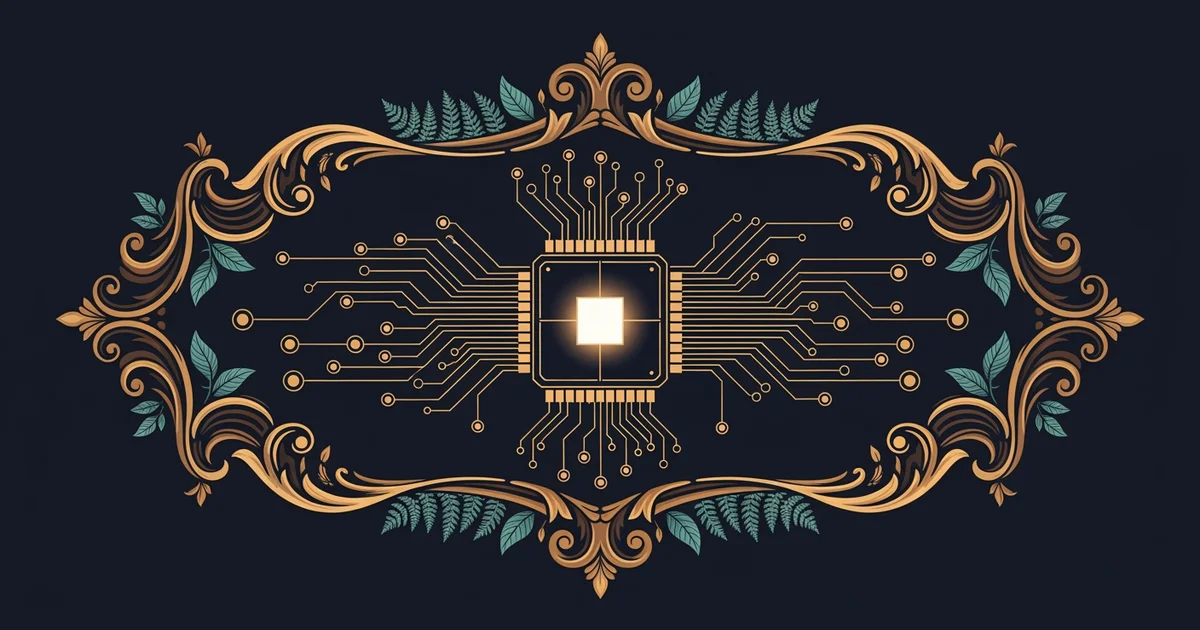
The Shift Toward Specialized Hardware
Future trends point toward the rise of Neuromorphic Computing, which mimics the structure of the human brain to process data with extreme efficiency. Traditional computers struggle with these tasks because they separate memory from processing, creating a bottleneck that wastes energy. By contrast, neuromorphic chips integrate memory and processing in a single unit, allowing them to learn from patterns in real time. Think of this like a seasoned chef who keeps all their tools within arm's reach while cooking a meal. Because the chef does not have to walk to the pantry for every single ingredient, they can prepare dishes much faster. This efficiency is the key to running complex models on battery-powered sensors or small wearable devices without draining their power.
Key term: Neuromorphic Computing — a specialized hardware design that mimics the neural structure of a human brain to process information with high energy efficiency.
Another major trend involves the adoption of Hardware-Aware Neural Architecture Search, or HANAS for short. This method uses artificial intelligence to design other artificial intelligence models that are perfectly suited to a specific piece of hardware. Instead of engineers manually trimming down models, the system tests thousands of variations to find the best fit for a device. This ensures that the software uses every single bit of available memory and processing power without wasting resources. It is similar to a logistics company that uses a smart algorithm to pack a delivery truck perfectly every morning. By calculating the exact shape and weight of every box, the company ensures that no space is left empty inside the truck.
Emerging Trends in Tiny Machine Learning
We can compare the path of current and future hardware improvements using the following table to see how different approaches handle the demands of modern edge devices.
| Technology | Primary Benefit | Best Use Case | Efficiency Gain |
|---|---|---|---|
| Neuromorphic | Low power use | Brain-like sensing | Very high |
| HANAS | Custom fit | Small devices | High |
| Quantization | Smaller size | Basic hardware | Moderate |
These advancements build directly upon the optimization workflows we studied in previous stages of this path. While early stages focused on shrinking models through simple math, future stages focus on building the physical stage that these models occupy. We are moving away from general-purpose chips toward silicon that is physically shaped to run artificial intelligence algorithms. This transition solves the tension between needing high performance and maintaining long battery life in mobile devices. The research community currently faces an open question regarding how to standardize these custom chips across different manufacturers. If every chip requires unique code, software developers will struggle to create universal applications that run everywhere.
We have seen how tiny machine learning moves intelligence from the cloud to the edge of our networks. By combining smarter hardware designs with automated model creation, we can bring advanced features to any device. The future of this field depends on our ability to make these complex systems affordable and easy to build for everyone. We have moved from simple data pruning to building hardware that learns like a human brain. This progress ensures that our devices will become more helpful, private, and efficient as the technology matures over the coming years.
Future edge intelligence will rely on specialized hardware that integrates memory and processing to handle complex tasks locally without the need for constant cloud connectivity.
Understanding these hardware trends is the final step in mastering the deployment of artificial intelligence on edge devices.