
Formulation Development
Imagine you have a bowl of oil and a pitcher of water sitting on your kitchen counter. You want to mix them into a smooth, creamy lotion, but they naturally refuse to stay together because of their chemical differences. This daily struggle to combine oil and water represents the central challenge in creating stable cosmetics that feel good on your skin. If you cannot master this balance, your product will quickly separate into a messy, unusable liquid layer and a greasy, heavy sludge. Achieving a smooth texture requires more than just pouring ingredients together; it demands a deep understanding of molecular interactions.
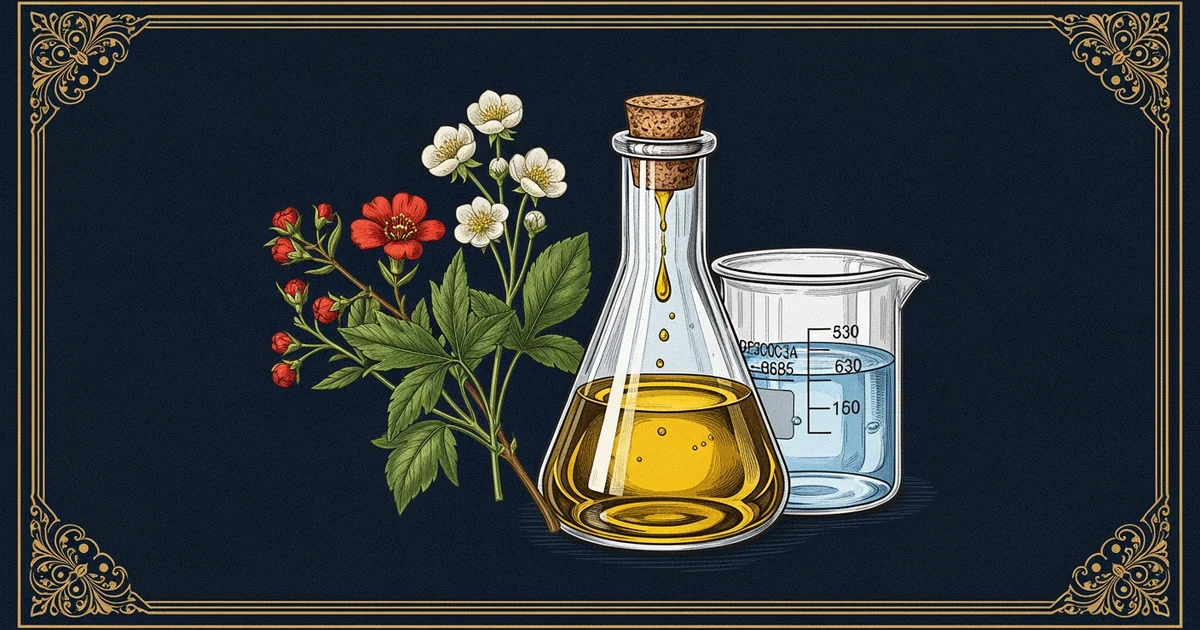
The Science of Emulsification
To bridge the gap between oil and water, chemists must use a special ingredient known as an emulsifier. An emulsifier molecule is unique because it possesses two distinct ends that serve different chemical functions. One end of the molecule loves water, while the other end has a strong attraction to oil molecules. When you add this substance to your mixture, the molecules act like tiny bridges that connect the two phases. This prevents the oil droplets from finding each other and merging back into a large, floating blob. Just as a project manager keeps two teams working together on a difficult task, the emulsifier ensures that your lotion remains a consistent, smooth blend over time.
Key term: Emulsification — the process of dispersing two liquids that do not normally mix into a stable, uniform emulsion.
Formulating a lotion involves more than just mixing oil and water with an emulsifier to achieve a stable product. You must also consider the viscosity, which describes how thick or resistant to flow your final lotion will be. If you want a light, sprayable product, you need a low viscosity, while a thick body butter requires a much higher viscosity. You can control this by adding thickening agents or waxes that physically restrict the movement of molecules within the mixture. Think of these agents like adding sand to a path; they make it harder for the liquid molecules to slide past one another, resulting in a creamier texture.
Designing Your Product Prototype
When you begin your design process, you must follow a specific sequence to ensure the chemicals interact correctly under the right conditions. This process requires careful attention to temperature and mixing speed to create a lasting product:
- Heat the oil phase and the water phase separately to reach the same temperature.
- Add the emulsifier to the oil phase and stir until it is fully dissolved.
- Pour the water phase into the oil phase while using high-speed mixing equipment.
- Cool the mixture slowly while stirring to allow the structure to set properly.
By following these steps, you create an environment where the internal structure of the lotion can stabilize without breaking down. If you skip the heating step, the wax will not melt, and the emulsifier will fail to coat the oil droplets effectively. If you mix too slowly, the droplets will be too large, causing the lotion to feel grainy or separate within a few days. This process shows how chemistry turns raw ingredients into a functional product that changes your skin texture. By controlling the molecular environment, you ensure that the active ingredients stay evenly distributed throughout the lotion until you are ready to apply them.
Successful product formulation requires balancing chemical compatibility with physical structure to keep ingredients stable and effective.
Next, we will examine how regulatory standards dictate which chemicals are safe to include in your final formula.