
Policy and International Law
When the International Space Station launched its first module in 1998, nations had to agree on who owned which part of the station and who held liability for damages. This real-world coordination serves as a vital blueprint for the future of orbital power plants, which face similar hurdles in international law. Just as those early partners navigated complex treaties to share space, we must now determine how to regulate energy assets that hover above national borders. This is the core challenge of orbital sovereignty, which builds on the environmental oversight frameworks we explored in Station 12.
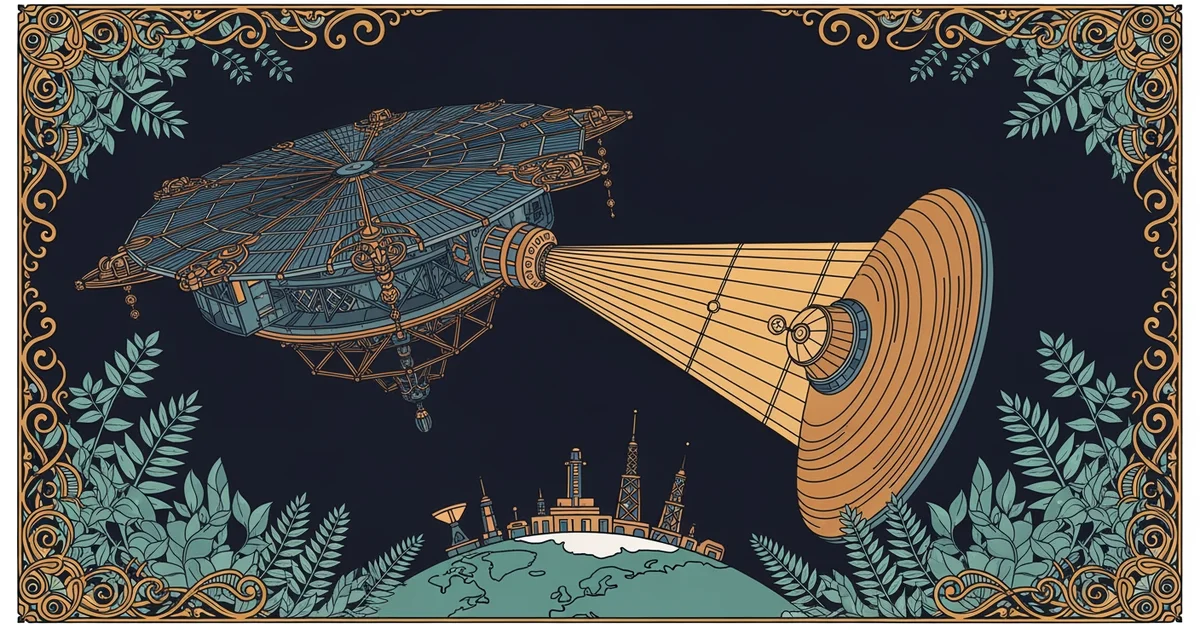
The Legal Framework for Orbital Assets
Operating power infrastructure in orbit requires adherence to established treaties that govern how countries use space. Because no single nation owns the vacuum of space, orbital stations must follow international agreements that prohibit claims of national appropriation. This means that a power company cannot simply stake a claim to a specific orbital slot as if it were private land on Earth. Instead, companies must work through their home governments to secure authorization under the oversight of international bodies. This legal structure ensures that space remains a global commons while still allowing for the commercial development of clean energy technology.
Key term: Outer Space Treaty — the primary international agreement that prevents nations from claiming sovereignty over celestial bodies or space regions.
When we compare the management of space-based assets to terrestrial power grids, the differences in legal jurisdiction become clear. On Earth, a utility company owns the land and the equipment, providing a stable basis for legal enforcement. In orbit, the lack of territorial ownership creates a complex situation where equipment is tied to the flag of the launching nation. This creates a reliance on international cooperation, as any energy beam sent to Earth must pass through the airspace of multiple countries. If an energy beam causes interference or damage, the liability falls back on the nation that launched the satellite.
Regulatory Challenges and Liability
Managing the flow of energy from space to Earth creates unique risks that our current laws are not fully equipped to handle. Because these power stations move at high speeds, they constantly cross over the borders of different countries within minutes. This movement makes it difficult to assign specific legal responsibility if a technical failure occurs during the transmission of power. To address these gaps, international regulators must create new protocols that define safe operating zones and emergency shutdown procedures for all orbital power assets.
| Regulatory Aspect | Terrestrial Power Grid | Space-Based Power Grid |
|---|---|---|
| Jurisdiction | National/Local Law | International Treaties |
| Asset Ownership | Private Property | State-Registered Object |
| Liability Scope | Localized Damages | Cross-Border Impacts |
These differences show why building an orbital energy network is more than an engineering task. It is a massive diplomatic project that requires consensus among diverse global powers. We must establish clear rules for the following areas to ensure the project remains viable:
- Orbital traffic management systems prevent collisions between power stations and existing satellites, which protects valuable assets from destruction.
- Frequency allocation protocols ensure that energy transmission beams do not interfere with global communication networks, which rely on specific radio bands.
- Trans-boundary liability agreements provide a clear path for compensation if a malfunction occurs, which maintains trust between the launching nation and affected countries.
By addressing these factors, we create a stable environment for investment and long-term operation. Without these rules, the risk of legal disputes could stop the development of space-based solar power before the first panel even reaches orbit. Diplomacy must move as fast as the technology to keep the dream of infinite solar energy alive.
International law acts as the essential grid that stabilizes space-based power, transforming individual national efforts into a shared and secure global infrastructure.
But this legal foundation faces its greatest test when we attempt to integrate these systems into the existing energy markets of sovereign nations.